
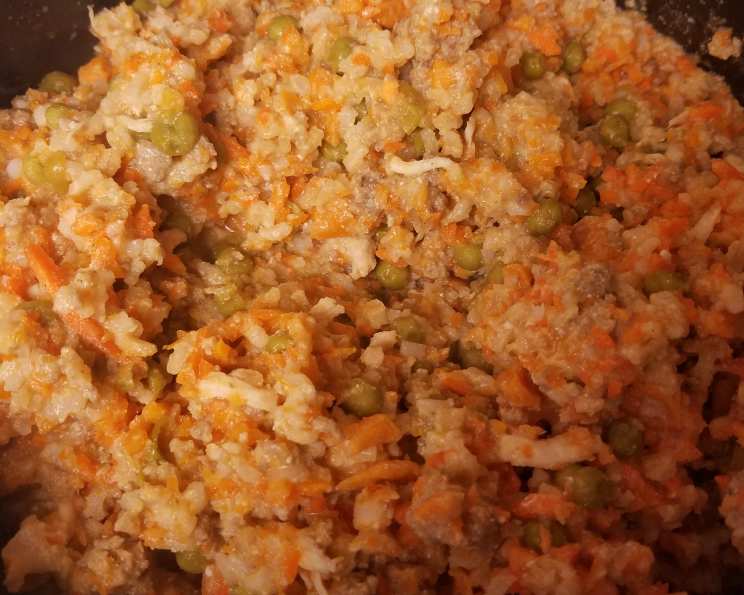
Homemade Dog Food: A Recipe for Happy, Healthy Pups
I’ll never forget the look on Buster’s face the first time I served him a bowl of this homemade dog food. Buster, my old, grizzled Jack Russell, was always a picky eater, turning his nose up at even the most expensive kibble. But this? He devoured it in seconds, tail wagging furiously, a sheen of pure, unadulterated joy in his eyes. It was then I knew I had stumbled upon something special, something that not only filled their bellies but also filled them with vitality.
Recipe Overview
- Prep Time: 15 minutes
- Cook Time: 50 minutes
- Total Time: 1 hour 5 minutes
- Yields: 6 quarts
- Serves: 24
- Dietary Type: Suitable for most dogs (consult your vet)
Ingredients
- 1 lb ground beef
- ½ lb ground chicken
- ½ lb ground turkey
- 1 lb baby carrots
- 2 small baking potatoes
- 3 cups brown rice
- 3 eggs, slightly beaten
- 3 cups chicken broth
- 2 cups water
Equipment Needed
- Large 6-quart Dutch oven or stockpot
- Measuring cups
- Storage containers
Instructions
- Begin by combining the ground beef, ground chicken, and ground turkey in a large, 6-quart Dutch oven or stockpot.
- Cook the ground meats over medium heat, breaking them up with a spoon, until they are fully browned. Drain off any excess grease.
- Add the brown rice, chicken broth, and water to the pot.
- Bring the mixture to a simmer, then reduce the heat to medium-low, cover, and cook for 30 minutes, or until the rice is partially cooked.
- While the rice is cooking, wash and dice the potatoes and carrots into bite-sized pieces for your dogs.
- After the 30 minutes are up, add the diced potatoes and carrots to the pot.
- Gently pour in the slightly beaten eggs, stirring them into the mixture. This will help bind the ingredients together.
- Continue to cook for an additional 20-30 minutes, or until the potatoes and carrots are tender and the rice is fully cooked. Stir occasionally to prevent sticking.
- Once everything is cooked through, remove the pot from the heat and let the mixture cool slightly before transferring it to storage containers.
- Allow to cool completely before refrigerating or freezing.
Expert Tips & Tricks
- Vary the Protein: Feel free to substitute other lean ground meats like lamb or venison. Just make sure to adjust cooking times as needed.
- Vegetable Power: Add other dog-friendly vegetables like spinach, peas, or sweet potatoes for an extra nutritional boost. Remember to finely chop them for easier digestion.
- Egg-cellent Addition: The eggs provide protein and help bind the food. If your dog has an egg allergy, you can omit them.
- Broth Boost: Using low-sodium chicken broth is essential. You can also make your own broth from leftover chicken bones for added flavor and nutrients.
- Portion Control: When serving, be mindful of your dog’s size and activity level. Adjust the amount of food accordingly.
- Texture Adjustment: If your dog prefers a smoother texture, you can pulse the cooked food in a food processor before storing. However, be careful not to over-process it into a puree.
Serving & Storage Suggestions
Serve this homemade dog food at room temperature or slightly warmed. You can mix it with a small amount of your dog’s regular kibble if you’re transitioning them to a homemade diet.
- Refrigeration: Store leftovers in an airtight container in the refrigerator for up to 3-4 days.
- Freezing: For longer storage, freeze the dog food in individual portions using freezer-safe containers or bags. It can be frozen for up to 2-3 months. Thaw in the refrigerator overnight before serving.
- Reheating: Reheat the food gently in the microwave or on the stovetop until warmed through. Ensure it’s not too hot before serving.
Nutritional Information
Please note that this is an estimated nutritional breakdown and may vary depending on the specific ingredients used.
| Nutrient | Amount per Serving (approx. 1 cup) |
|---|---|
| Calories | 250-300 kcal |
| Protein | 15-20g |
| Fat | 8-12g |
| Carbohydrates | 25-30g |
| Fiber | 3-5g |
| Calcium | 50-75mg |
| Phosphorus | 150-200mg |
Variations & Substitutions
- Grain-Free Option: Substitute the brown rice with quinoa or sweet potato for a grain-free version.
- Vegetarian Dog Food: Replace the meat with lentils or tofu. Be sure to add supplements as recommended by your vet.
- Allergy Considerations: If your dog has allergies, carefully select ingredients and consult with your veterinarian or a veterinary nutritionist.
- Senior Dog Adaptation: For older dogs with dental issues, you can mash or puree the food for easier chewing.
FAQs (Frequently Asked Questions)
Q: Is homemade dog food better than commercial dog food?
A: It can be, as you have complete control over the ingredients, avoiding artificial additives and potential allergens. However, it’s crucial to ensure the recipe is nutritionally balanced to meet your dog’s specific needs.
Q: How do I know if my dog is getting the right nutrients from homemade food?
A: Consult with your veterinarian or a veterinary nutritionist to ensure your homemade diet is complete and balanced. They can help you create a customized recipe or recommend appropriate supplements.
Q: Can I use different types of meat in this recipe?
A: Yes, you can substitute other lean meats such as lamb, venison, or fish. Just be sure to adjust cooking times accordingly and avoid meats with high fat content.
Q: How often should I feed my dog homemade food?
A: This depends on your dog’s age, size, breed, and activity level. Talk to your veterinarian to determine the appropriate portion sizes and feeding schedule for your dog.
Q: Can I add supplements to this homemade dog food?
A: Yes, but it’s important to do so under the guidance of your veterinarian. They can recommend specific supplements, such as calcium, phosphorus, or omega-3 fatty acids, to ensure your dog’s nutritional needs are met.
Final Thoughts
Making your own dog food may seem daunting at first, but trust me, it’s incredibly rewarding. Not only will you have peace of mind knowing exactly what’s going into your furry friend’s bowl, but you’ll also likely see a positive impact on their overall health and well-being. I encourage you to give this recipe a try and experience the joy of providing your beloved companion with a nutritious and delicious homemade meal. Remember to consult with your veterinarian to ensure it aligns with your dog’s specific dietary requirements. Happy cooking, and happy tails!