
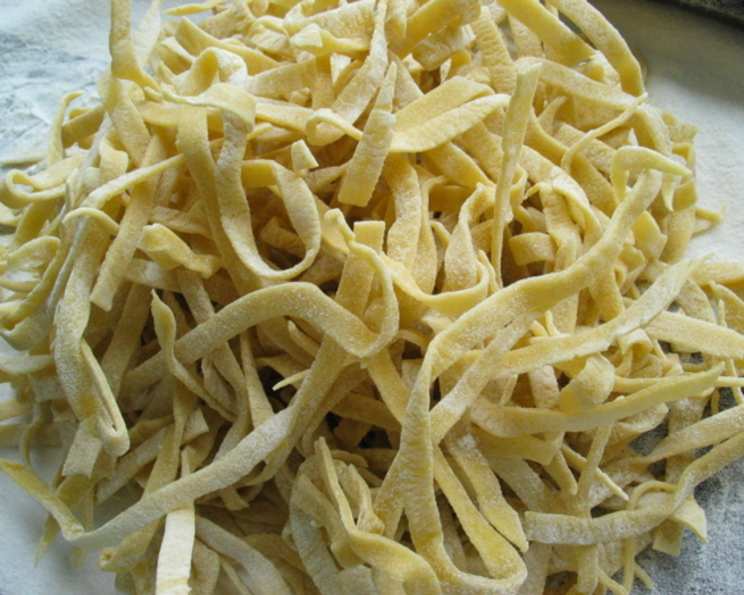
The Soul of Comfort: Homemade Noodles
My earliest memories are filled with the rhythmic clatter of my grandmother’s rolling pin and the soft whoosh of her knife slicing through sheets of golden dough. She would stand at her worn, wooden table, flour dusting her apron like a fresh snowfall, transforming simple ingredients into the most comforting thing imaginable: homemade noodles. The aroma alone, a blend of flour, egg, and a whisper of salt, was enough to transport me back to her cozy kitchen, a place where love was always the main ingredient.
Recipe Overview
- Prep Time: 20 minutes
- Cook Time: Varies, depending on use
- Total Time: At least 1 hour 20 minutes (including drying time)
- Yields: Approximately 1 pound of noodles
- Dietary Type: Not Vegetarian (contains eggs)
Ingredients
- 3 egg yolks
- 1 whole egg
- 3 tablespoons cold water
- 1 teaspoon salt
- 2 cups flour, plus more for dusting
Equipment Needed
- Mixing bowl
- Fork or whisk
- Clean work surface (preferably a large wooden board)
- Rolling pin
- Sharp knife or pizza cutter
- Clean kitchen towels or drying rack
Instructions
- In a mixing bowl, beat the egg yolks and the whole egg together until they are very light and slightly frothy. This step is crucial for creating a tender noodle.
- Beat in the salt and cold water. The water helps to bring the dough together, while the salt enhances the flavor.
- Gradually stir in the flour, a little at a time. As the dough starts to come together, you may need to work it with your hands to fully incorporate the flour. The dough should be firm but not sticky. If it’s too sticky, add a little more flour, one tablespoon at a time.
- Divide the dough into two equal parts. This makes it easier to manage when rolling.
- On a lightly floured board, roll out one part of the dough as thin as possible. Aim for a thickness similar to that of a business card. The thinner the noodles, the more delicate they will be. If the dough springs back as you roll, let it rest for a few minutes before continuing.
- Repeat step 5 with the second piece of dough.
- Let stand until the dough is partially dry. You’ll want it to reach a leathery texture, similar to chamois skin. This usually takes at least 1 hour, but it can take longer depending on the humidity. This drying process is vital for preventing the noodles from sticking together when cooked.
- Once the dough is partially dry, roll up each sheet like a jelly roll.
- Using a sharp knife or pizza cutter, cut the rolled dough into strips of your desired width. For a classic noodle, aim for strips that are about 1/4 inch wide. You can make them wider or thinner depending on your preference.
- Shake out the strips to separate them and prevent them from sticking together.
- Allow the noodles to finish drying completely before using or storing them. This can take several hours or even overnight. The drier the noodles, the better they will hold their shape when cooked.
Expert Tips & Tricks
- Use high-quality flour: The type of flour you use can significantly impact the texture of your noodles. All-purpose flour works well, but bread flour will create a slightly chewier noodle.
- Don’t overwork the dough: Overworking the dough will develop the gluten too much, resulting in tough noodles. Mix the dough just until it comes together, then let it rest.
- Dust generously: Keep your work surface and rolling pin lightly floured to prevent the dough from sticking.
- Drying is key: Proper drying is essential for preventing the noodles from sticking together when cooked. Make sure they are completely dry before storing them. Aim for the texture of dried spaghetti.
- For richer noodles: Substitute milk or cream for the water in the recipe. This will add richness and flavor to the noodles.
- Freeze for later: If you don’t plan to use all the noodles right away, you can freeze them for later. Spread them out on a baking sheet and freeze them until solid, then transfer them to a freezer bag. They will keep for several months.
- Season the dough: Experiment with adding different herbs and spices to the dough, such as garlic powder, onion powder, or Italian seasoning.
Serving & Storage Suggestions
Homemade noodles are incredibly versatile and can be used in a variety of dishes. They are delicious in soups, stews, casseroles, or simply tossed with butter and herbs. Serve them immediately after cooking for the best texture.
Store dried noodles in an airtight container at room temperature for up to several months. Properly dried noodles should last a long time. If you cook the noodles and have leftovers, store them in an airtight container in the refrigerator for up to 3 days. Reheat gently in a saucepan with a little broth or water to prevent them from drying out.
Nutritional Information
Please note that these values are estimates and may vary based on specific ingredients and portion sizes.
| Nutrient | Amount per Serving | % Daily Value |
|---|---|---|
| Calories | 250 kcal | 13% |
| Total Fat | 8g | 12% |
| Saturated Fat | 2g | 10% |
| Cholesterol | 120mg | 40% |
| Sodium | 200mg | 8% |
| Total Carbohydrate | 35g | 12% |
| Dietary Fiber | 1g | 4% |
| Sugars | 1g | – |
| Protein | 8g | 16% |
Variations & Substitutions
- Gluten-Free Noodles: Substitute all-purpose flour with a gluten-free blend. You may need to add a binder such as xanthan gum to help the dough hold together.
- Whole Wheat Noodles: Replace half of the all-purpose flour with whole wheat flour for a nuttier flavor and added fiber.
- Egg-Free Noodles: While this recipe heavily relies on egg, some recipes use just water and flour, but the texture will be different. Research “eggless pasta recipes” for guidance.
- Herb Infused Noodles: Add finely chopped fresh herbs like parsley, thyme, or rosemary to the dough for a burst of flavor.
- Vegetable Noodles: Puree cooked vegetables like spinach or beets and add them to the dough for color and added nutrients. Adjust the amount of water accordingly.
FAQs (Frequently Asked Questions)
Q: Why are my noodles sticking together when I cook them?
A: This is usually due to not drying the noodles properly before cooking. Make sure they are completely dry before storing and cooking them.
Q: Can I use a pasta machine to make these noodles?
A: Absolutely! A pasta machine can make the rolling and cutting process much easier and faster.
Q: How long should I cook the noodles?
A: The cooking time will vary depending on the thickness of the noodles. Generally, fresh homemade noodles cook very quickly, usually in just 2-5 minutes. Cook them until they are tender but still slightly firm to the bite (al dente).
Q: Can I make the dough ahead of time?
A: Yes, you can make the dough ahead of time and store it in the refrigerator for up to 24 hours. Wrap it tightly in plastic wrap to prevent it from drying out. Let it come to room temperature before rolling it out.
Q: How do I know if the noodles are dry enough?
A: The noodles should feel firm and slightly brittle to the touch. They should not be sticky or soft. If they are still pliable, they need to dry longer.
Final Thoughts
Making homemade noodles might seem like a daunting task, but trust me, the effort is well worth it. The taste and texture of fresh, homemade noodles are simply incomparable to anything you can buy in a store. So, gather your ingredients, roll up your sleeves, and embark on this culinary adventure. You’ll be rewarded with a comforting and delicious dish that will warm your heart and soul. Share your creations with loved ones and savor the joy of homemade goodness. Perhaps serve these noodles in a rich chicken broth with roasted vegetables for a truly comforting meal.