
The Easiest Homemade Peanut Butter: A Chef’s Secret
The scent of freshly roasted peanuts always takes me back to my childhood. My grandmother, a true Southern matriarch, always had a jar of homemade peanut butter on hand. Not the sugary, overly processed stuff from the store, but the real deal – nutty, slightly gritty, and bursting with pure peanut flavor. I remember sitting at her kitchen table, happily spreading it on slices of warm bread, a simple pleasure that remains a cherished memory. This recipe captures that same authentic taste, and I can’t wait to share it with you.
Recipe Overview
- Prep Time: 3 minutes
- Cook Time: 0 minutes
- Total Time: 3 minutes
- Yields: 1 cup
- Serves: 1
- Dietary Type: Vegan, Gluten-Free, Dairy-Free
Ingredients
- 2 cups peanuts (roasted)
- 1-3 tablespoon oil (any kind)
- 1 pinch salt (if unsalted peanuts)
Equipment Needed
- Food Processor
Instructions
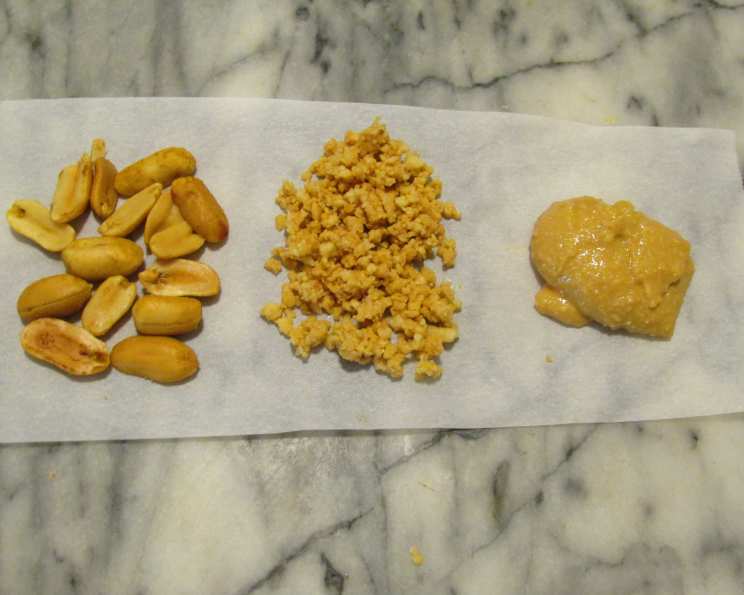
- In a food processor, add the peanuts and grind until the mixture resembles tiny beads (this should take about 20 seconds). Be aware that this will be loud for a few seconds! It’s crucial that you don’t add the oil until this stage. The peanuts need to be dry to break down properly into these beads.
- Add the oil, starting with 1 tablespoon, and process to your desired consistency. You may need to stop the food processor a few times to scrape down the corners and sides with a spoon to ensure even processing. It’s normal for the mixture to form a ball several times during this process; don’t worry, it will resolve.
- The peanut butter will begin to whip after the last “ball” stage. At this point, it will be almost done (approximately 2 minutes). Add more oil in 1 tablespoon increments if you prefer a smoother, creamier consistency.
- Repeat the process until you’ve made the desired amount.
- Store the homemade peanut butter in the refrigerator or at room temperature.
Expert Tips & Tricks
- Peanut Selection is Key: Start with high-quality, roasted peanuts. Plain roasted peanuts are best; avoid those with added seasonings like garlic powder or torula yeast, as these will negatively impact the flavor of your peanut butter. Always check the ingredient list!
- The “Bead” Stage is Critical: Ensuring the peanuts are properly broken down into tiny beads before adding oil is crucial for achieving the right texture. If you add the oil too early, the peanuts won’t grind properly.
- Oil Amounts Vary: The amount of oil needed can vary depending on how “dry” the peanuts are. Start with 1 tablespoon and add more gradually, up to 3 tablespoons, until you reach your desired consistency. Don’t add too much at once, as this can make the peanut butter too heavy.
- Don’t Overload: Stick to the recipe quantity (2 cups of peanuts) at a time. Processing larger quantities can strain your food processor and prevent proper whipping.
- Patience is a Virtue: The process may seem slow at first, but trust the process. The peanut butter will eventually transform from a crumbly mixture to a smooth, creamy delight.
- Salt Enhancement: If you’re using unsalted peanuts, add a pinch of fine sea salt for enhanced flavor. For the best distribution, consider grinding the salt with the peanuts in the initial stage.
- Flavor Boost: For a touch of sweetness, consider adding a drizzle of maple syrup or honey during the final processing stage.
Serving & Storage Suggestions
Homemade peanut butter is incredibly versatile. Spread it on toast, use it in sandwiches, add it to smoothies, or simply enjoy it by the spoonful! For optimal freshness, store it in an airtight container in the refrigerator. It will last for up to 2-3 weeks. You can also store it at room temperature, but the oil may separate slightly. If this happens, simply stir it back in before using. Freezing is not recommended, as it can alter the texture.
Nutritional Information
(Estimated, based on using 2 tablespoons of oil and no added salt)
| Nutrient | Amount per Serving | % Daily Value |
|---|---|---|
| Calories | 1776 kcal | 80% |
| Total Fat | 157.4 g | 242% |
| Saturated Fat | 21.7 g | 108% |
| Cholesterol | 0 mg | 0% |
| Sodium | 207.6 mg | 8% |
| Total Carbohydrate | 47.1 g | 15% |
| Dietary Fiber | 24.8 g | 99% |
| Sugars | 11.6 g | 46% |
| Protein | 75.3 g | 150% |
Variations & Substitutions
- Honey Roasted Peanut Butter: Use honey roasted peanuts for a sweeter, more complex flavor.
- Chocolate Peanut Butter: Add 2-3 tablespoons of unsweetened cocoa powder during the final processing stage. You may need to add a touch more oil to compensate for the added dryness.
- Spicy Peanut Butter: Add a pinch of cayenne pepper or a few drops of your favorite hot sauce for a kick.
- Maple Peanut Butter: Add 1-2 tablespoons of pure maple syrup for a naturally sweetened version.
- Cashew Butter: Substitute the peanuts with roasted cashews for a different flavor profile.
- Almond Butter: Substitute the peanuts with roasted almonds for a different flavor profile.
FAQs (Frequently Asked Questions)
Q: Why is my peanut butter grainy?
A: This can happen if the peanuts weren’t ground finely enough in the initial stage. Make sure to process them until they resemble tiny beads before adding the oil.
Q: My peanut butter is too thick. What can I do?
A: Add a little more oil, one tablespoon at a time, until you reach your desired consistency.
Q: How long does homemade peanut butter last?
A: It will last for up to 2-3 weeks in the refrigerator.
Q: Can I use a regular blender instead of a food processor?
A: While a high-powered blender might work, a food processor is generally better suited for making peanut butter because it can handle the thick consistency more effectively.
Q: Why is my peanut butter separating?
A: Some separation is normal, especially if you’re storing it at room temperature. Just stir it back together before using.
Final Thoughts
Making your own peanut butter is a simple, satisfying way to enjoy a classic treat. The taste is far superior to store-bought versions, and you have complete control over the ingredients. Don’t be intimidated – it’s easier than you think! Give this recipe a try, experiment with different variations, and let me know what you think. I’m confident you’ll never go back to the store-bought stuff again. Enjoy it with a glass of cold milk, or slathered on a warm slice of banana bread. Happy churning!