
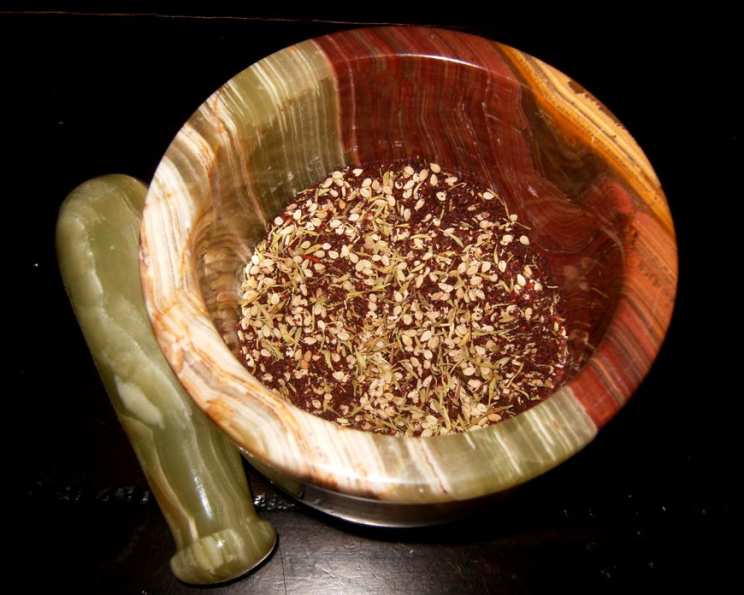
Homemade Zahtar: A Taste of the Middle East
The first time I tasted zahtar, I was wandering through the shuk in Jerusalem. The air buzzed with a thousand scents: spices piled high, fresh bread baking, and the sweet perfume of dates. An old woman with twinkling eyes pressed a warm piece of flatbread, generously sprinkled with zahtar and drizzled with olive oil, into my hand. The earthy, tangy, and slightly nutty flavor exploded on my tongue, a symphony of the Middle East in every bite. I knew then I had to learn to make this magical spice blend myself.
Recipe Overview
- Prep Time: 5 minutes
- Cook Time: 0 minutes (Roasting sesame seeds takes a few minutes)
- Total Time: 5 minutes
- Servings: Varies depending on usage
- Yield: Approximately 1/4 cup
- Dietary Type: Vegan, Gluten-Free, Dairy-Free
Ingredients
- 1 tablespoon dried thyme
- 1 tablespoon ground sumac
- 1 tablespoon sesame seeds, roasted
- ⅛ teaspoon coarse sea salt
Equipment Needed
- Small bowl
- Small pan for roasting sesame seeds (optional)
- Airtight jar or container for storage
Instructions
- If your sesame seeds are not already roasted, toast them first. Place the sesame seeds in a dry skillet over medium heat. Watch them very carefully, as they can burn quickly. Stir frequently until they turn a light golden brown and release a nutty aroma, about 3-5 minutes. Remove from the pan immediately and let cool completely.
- In a small bowl, combine the dried thyme, ground sumac, roasted sesame seeds, and coarse sea salt.
- Mix all ingredients thoroughly until well combined.
- Store the zahtar in an airtight jar or container in a cool, dark place.
Expert Tips & Tricks
- Toast the Sesame Seeds: Roasting the sesame seeds is crucial for enhancing the nutty flavor of the zahtar. Don’t skip this step! Keep a close eye on them while roasting to prevent burning.
- Source High-Quality Sumac: The sumac is a key ingredient in zahtar, lending its distinctive tangy flavor. Look for sumac that is a vibrant red color, which indicates freshness.
- Adjust Salt to Taste: The amount of salt can be adjusted to your preference. Start with ⅛ teaspoon and add more if desired.
- Dried Thyme Matters: Different varieties of dried thyme have different intensities. Experiment with different types to find your favourite.
- Make a Large Batch: Zahtar keeps well for several months, so feel free to double or triple the recipe for future use.
Serving & Storage Suggestions
Zahtar is incredibly versatile and can be used in countless ways. Here are a few suggestions:
- Sprinkle it over flatbreads, pita bread, or naan with a drizzle of olive oil for a simple and delicious appetizer.
- Use it as a dry rub for chicken, fish, or lamb before roasting or grilling.
- Mix it with olive oil to create a flavorful dipping sauce for vegetables or bread.
- Sprinkle it over hummus or yogurt for added flavor and texture.
- Toss it with roasted vegetables like potatoes, carrots, or Brussels sprouts.
- Use it to season salads or grain bowls.
Store zahtar in an airtight container in a cool, dark place. It will keep for up to 6 months. Over time, the flavors may fade slightly, but it will still be safe to use. There is generally no need to refrigerate or freeze zahtar.
Nutritional Information
Note: Nutritional information is an estimate and may vary based on specific ingredients used.
| Nutrient | Amount per Serving | % Daily Value |
|---|---|---|
| Calories | 15 kcal | 1% |
| Total Fat | 1 g | 1% |
| Saturated Fat | 0 g | 0% |
| Cholesterol | 0 mg | 0% |
| Sodium | 20 mg | 1% |
| Total Carbohydrate | 1 g | 0% |
| Dietary Fiber | 0 g | 0% |
| Sugars | 0 g | 0% |
| Protein | 0 g | 0% |
Variations & Substitutions
- Sesame-Free Zahtar: If you have a sesame allergy, you can omit the sesame seeds altogether or substitute them with toasted sunflower seeds or pumpkin seeds.
- Spicy Zahtar: Add a pinch of red pepper flakes or cayenne pepper for a spicy kick.
- Herby Zahtar: Experiment with different dried herbs, such as oregano, marjoram, or savory.
- Citrusy Zahtar: Add a teaspoon of dried lemon or orange zest for a bright, citrusy flavor.
- Nutty Zahtar: Add toasted and ground walnuts or almonds for a richer, nuttier flavor.
- Regional Variations: Zahtar recipes vary from region to region. Lebanese zahtar often includes more sumac, while Palestinian zahtar may include caraway seeds. Experiment with different variations to find your favorite.
FAQs (Frequently Asked Questions)
Q: What is sumac, and where can I find it?
A: Sumac is a tangy, citrusy spice made from the dried and ground berries of the sumac shrub. It is commonly used in Middle Eastern and Mediterranean cuisine. You can usually find sumac in the spice section of well-stocked grocery stores, Middle Eastern markets, or online retailers.
Q: Can I use fresh thyme instead of dried thyme?
A: While you can use fresh thyme, dried thyme is generally preferred in zahtar because it has a more concentrated flavor. If using fresh thyme, you will need to use about three times the amount of dried thyme. Make sure to remove the leaves from the stems before adding them to the spice blend.
Q: How long does homemade zahtar last?
A: Homemade zahtar will last for up to 6 months if stored in an airtight container in a cool, dark place. The flavors may fade slightly over time, but it will still be safe to use.
Q: Can I make zahtar without roasting the sesame seeds?
A: While you can make zahtar without roasting the sesame seeds, roasting them is highly recommended. Roasting enhances the nutty flavor of the sesame seeds and adds depth to the overall flavor of the spice blend.
Q: What is the best way to use zahtar?
A: Zahtar is a versatile spice blend that can be used in countless ways. Sprinkle it over flatbreads, use it as a dry rub for meat or fish, mix it with olive oil for a dipping sauce, or toss it with roasted vegetables.
Final Thoughts
Making your own zahtar is incredibly easy and rewarding. Not only will you have a delicious and versatile spice blend on hand, but you’ll also be able to customize it to your own taste preferences. So, gather your ingredients, experiment with different variations, and experience the vibrant flavors of the Middle East in your own kitchen. I encourage you to share your zahtar creations with friends and family and explore the endless possibilities of this amazing spice blend. Perhaps serve it with a traditional hummus and some warm pita bread for a truly authentic Middle Eastern experience!