
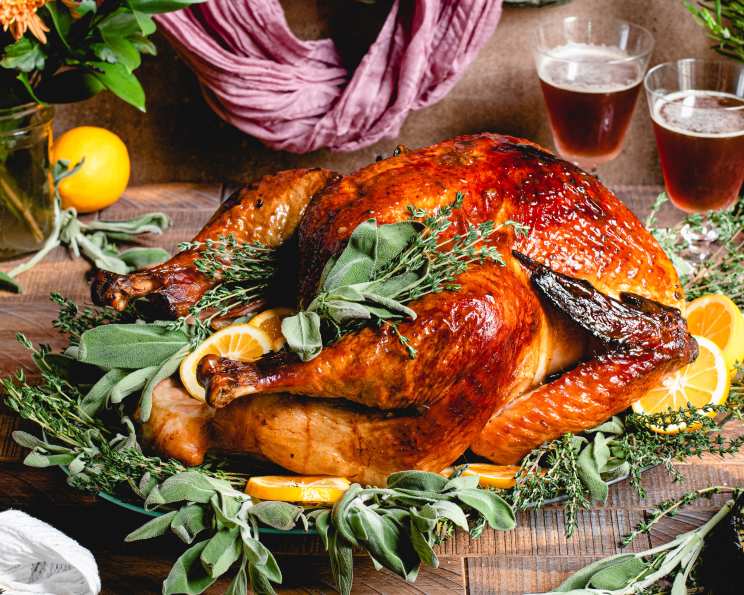
Honey Brined Herb Roasted Turkey: A Thanksgiving Masterpiece
The aroma still lingers in my memory – a symphony of sweet honey, savory herbs, and perfectly roasted turkey. As a child, Thanksgiving at my grandmother’s house was a sacred event, and her honey-brined turkey was the undisputed star. The glistening skin, the succulent meat practically falling off the bone…it was a taste of pure comfort and familial love. Though she’s no longer with us, I carry on her tradition, and this recipe is as close as I can get to replicating her magic. It’s not just a meal; it’s a memory, a celebration, and a testament to the power of good food and shared moments.
Recipe Overview
- Prep Time: 30 minutes
- Brining Time: 12-18 hours
- Cook Time: 3-4 hours (depending on turkey size)
- Total Time: 16 hours (including brining)
- Servings: 16
- Dietary Type: Gluten-Free, Dairy-Free
Ingredients
- 1 fresh or frozen whole turkey, thawed
- 8-10 quarts water
- 2 cups kosher salt
- 1 cup honey
- 3-4 teaspoons fresh coarse ground black pepper
- 10-12 garlic cloves, peeled
- 2 bunches fresh thyme
- 1 bunch fresh sage
- 4-5 cups chicken stock
- 2-3 lemons
- 2-4 teaspoons olive oil
Equipment Needed
- Extra-large stock pot (large enough to hold the turkey and brine)
- Food-safe plastic bag (turkey-sized)
- Large shallow roasting pan (about 2 1/2″ deep)
- Roasting rack
- Oven-safe meat thermometer
- Large bowl
Instructions
-
Begin by preparing your turkey. Remove the giblets and neck from the turkey cavity, reserving them for gravy if desired. Rinse the turkey thoroughly with cold running water, inside and out. Drain well and pat the entire bird dry with paper towels. This step is crucial for achieving crispy skin later on.
-
Now, let’s create the brine. In a large bowl, combine the water, honey, and kosher salt. Stir vigorously until the honey and salt are completely dissolved. This is the foundation of the moist, flavorful turkey we’re aiming for.
-
Add half of the fresh thyme and fresh sage to the brine mixture, along with the peeled garlic cloves and freshly ground black pepper. Set this aromatic brine aside for now. Next, add the chicken stock to the brine. This will add even more flavor.
-
Line an extra-large stock pot with a food-safe plastic bag. Gently place the rinsed turkey inside the bag. Carefully pour the prepared brine over the turkey, ensuring it’s fully submerged.
-
Gather the plastic bag tightly around the turkey, minimizing any air pockets and ensuring the turkey is completely surrounded by the brine. Seal the bag securely. Refrigerate the pot, bag, and brined turkey for at least 12 hours, but ideally between 12 and 18 hours. This extended brining time allows the flavors to penetrate deeply into the meat. Don’t skip this step; it’s the secret to success!
-
Once the brining process is complete, preheat your oven to 350°F (175°C). Remove the turkey from the brine and pat it dry thoroughly, both inside and out, with fresh paper towels. Discard the used brine. Never reuse brine that has been in contact with raw poultry.
-
Place the turkey, breast side up, on a roasting rack inside a large, shallow roasting pan (approximately 2 1/2 inches deep).
-
Squeeze the juice from the lemons into the main cavity of the turkey. Place the squeezed lemon halves inside the cavity, along with the remaining fresh thyme and fresh sage. These aromatics will infuse the turkey with a bright, herbaceous flavor from the inside out.
-
Lightly coat the entire turkey with olive oil. Season the inside and outside of the turkey generously with salt and pepper. This helps to crisp the skin and enhance the overall flavor profile.
-
Insert an oven-safe meat thermometer into the thickest part of the thigh, being careful to avoid touching the bone. This is the most reliable way to ensure the turkey is cooked to a safe internal temperature.
-
Roast the turkey, basting it with chicken stock every 30 minutes or so. Basting helps to keep the turkey moist and adds flavor to the skin.
-
Loosely cover the turkey with aluminum foil to prevent over-browning during the initial roasting period. Remove the foil during the last 1 1/2 hours of cooking to allow the skin to crisp up and achieve that beautiful golden-brown color.
-
Continue to roast the turkey until the meat thermometer registers 180°F (82°C) in the thigh or 170°F (77°C) in the breast. Remember, carryover cooking will continue to raise the temperature slightly after the turkey is removed from the oven.
-
Once the turkey reaches the desired internal temperature, remove it from the oven. Allow it to rest for 15-20 minutes before carving. This resting period allows the juices to redistribute throughout the meat, resulting in a more tender and flavorful final product.
Expert Tips & Tricks
- For extra crispy skin: After patting the turkey dry, leave it uncovered in the refrigerator for a few hours (or even overnight) to further dry out the skin.
- Don’t overcrowd the roasting pan: Ensure there’s enough space around the turkey for proper air circulation, which promotes even cooking.
- If the turkey is browning too quickly: Create a foil “tent” over the breast to shield it from the direct heat.
- Make-ahead: The brine can be prepared up to 2 days in advance and stored in the refrigerator.
- Gravy boost: Use the reserved giblets and neck to make a rich, flavorful gravy. Simmer them in chicken stock with aromatic vegetables for several hours, then strain and thicken with a roux.
Serving & Storage Suggestions
Present your Honey Brined Herb Roasted Turkey proudly on a large platter, surrounded by your favorite Thanksgiving side dishes. Garnish with fresh herbs like thyme and sage for an elegant touch. Carve the turkey at the table for a dramatic presentation.
Leftover turkey should be stored in an airtight container in the refrigerator. It will keep for 3-4 days. To freeze leftover turkey, wrap it tightly in plastic wrap and then place it in a freezer-safe bag. Frozen turkey can be stored for up to 2-3 months. Reheat sliced turkey in the oven with a little chicken broth to keep it moist, or use it in sandwiches, salads, or soups.
Nutritional Information
| Nutrient | Amount per Serving | % Daily Value |
|---|---|---|
| Calories | 610 kcal | N/A |
| Total Fat | 27 g | 41% |
| Saturated Fat | 7.5 g | 37% |
| Cholesterol | 219.8 mg | 73% |
| Sodium | 14456.5 mg | 602% |
| Total Carbohydrate | 21.1 g | 7% |
| Dietary Fiber | 0.4 g | 1% |
| Sugars | 18.6 g | N/A |
| Protein | 67.3 g | 134% |
Please note that nutritional information is an estimate and may vary based on specific ingredients and portion sizes.
Variations & Substitutions
- Herb Variations: Feel free to experiment with different herbs based on your preferences. Rosemary, oregano, or marjoram would all be delicious additions.
- Citrus Zest: Add the zest of an orange or grapefruit to the brine for a bright, citrusy flavor.
- Spicy Kick: Incorporate a pinch of red pepper flakes into the brine for a subtle heat.
- Smoked Turkey: Use a smoked turkey as your base for even more depth of flavor.
FAQs (Frequently Asked Questions)
Q: Can I brine a frozen turkey?
A: Yes, but the turkey must be fully thawed before brining. Brining a partially frozen turkey can result in uneven seasoning.
Q: Why is kosher salt specified in the recipe?
A: Kosher salt dissolves more easily than table salt and doesn’t contain iodine, which can impart an undesirable flavor to the turkey.
Q: How do I know if my turkey is done without a thermometer?
A: The most reliable method is to use a thermometer, but if you don’t have one, pierce the thigh with a fork. If the juices run clear, the turkey is likely done. The legs should also move freely in their sockets.
Q: Can I use a smaller roasting pan?
A: While you can use a smaller pan, make sure it’s still large enough to hold the turkey without it touching the sides. An overly crowded pan can hinder proper air circulation.
Q: My turkey is too salty! What went wrong?
A: Ensure you are using the correct amount of salt and that the brining time doesn’t exceed 18 hours. Over-brining can result in an overly salty turkey.
Final Thoughts
This Honey Brined Herb Roasted Turkey is more than just a recipe; it’s an experience. The combination of sweet honey, savory herbs, and perfectly cooked turkey is a guaranteed crowd-pleaser. Don’t be intimidated by the brining process; it’s a simple step that yields incredible results. Gather your loved ones, share a delicious meal, and create memories that will last a lifetime. I encourage you to try this recipe and make it your own. Experiment with different herbs, add your personal touch, and let me know how it turns out. Happy Thanksgiving!