
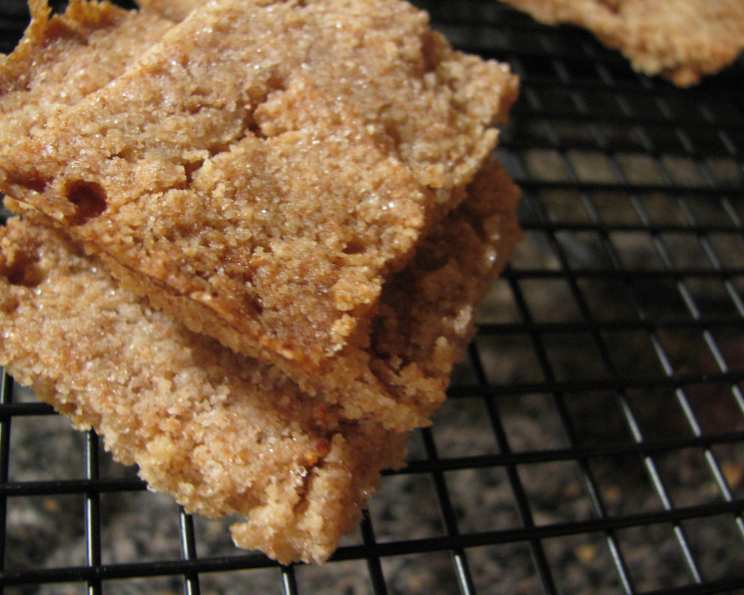
Honey-Coated Shortbread: A Sweet and Salty Symphony
There’s something utterly comforting about the simple pleasures in life, and for me, shortbread embodies that perfectly. I remember baking it with my grandmother during the holidays, the buttery aroma filling her cozy kitchen, the rhythmic pulse of her old food processor the soundtrack to our afternoon. I wasn’t allowed to touch the processor itself, but I was chief dough-presser and fork-stabber, ensuring every inch of that soon-to-be-golden canvas had the proper texture. The best part? That first bite, still warm from the oven, the crumbly shortbread melting on my tongue. This Honey-Coated Shortbread takes that classic comfort and elevates it with a touch of honeyed sweetness and a delightful salty counterpoint.
Recipe Overview
- Prep Time: 35 minutes
- Cook Time: 28-33 minutes
- Total Time: 1 hour 8 minutes
- Yields: 12-16 cookies
- Dietary Type: Vegetarian
Ingredients
- Nonstick cooking spray
- 1 2/3 cups all-purpose flour
- 1/3 cup granulated sugar
- 3/4 cup cold unsalted butter, cut into 1-inch pieces
- 3 tablespoons honey
- 1 teaspoon kosher salt or 1 teaspoon sea salt
Equipment Needed
- 9-10″ tart pan with removable bottom, shortbread mold, or 9×11 baking pan
- Food processor
- Fork
- Microwave
- Pastry brush
- Cooling rack
- Sharp knife
Instructions
- Prepare your pan: Lightly spray your chosen pan (a 9-10″ tart pan with removable bottom, a shortbread mold, or even a 9×11 baking pan) with nonstick cooking spray. If using a baking pan, keep in mind that removing the first few pieces might be a little tricky.
- Combine dry ingredients: Place the flour and sugar in a food processor. Pulse a few times to combine.
- Incorporate the butter: Add the cold butter pieces to the food processor. Pulse until the mixture resembles fine, sandy crumbs. Be careful not to over-process; you want the butter to remain cold and distinct for a tender shortbread.
- Press the dough: Transfer the dough to your prepared pan. Using your fingertips, press the dough evenly into the bottom of the pan.
- Dock the dough: Use a fork to stab the dough all over. This prevents the shortbread from puffing up unevenly during baking.
- Chill the dough: Refrigerate the pan for at least 30 minutes to allow the gluten to relax and the butter to firm up. This step is crucial for preventing the shortbread from shrinking in the oven.
- Preheat the oven: Position a rack in the center of the oven and preheat to 350°F (175°C).
- Bake the shortbread: Bake the shortbread until it is just pale gold in the center, about 25-30 minutes. Keep a close eye on it, as overbaking will result in a very hard shortbread. Remove from the oven.
- Prepare the honey glaze: Heat the honey in the microwave until warm and liquid, approximately 10 seconds.
- Glaze the shortbread: Quickly pour the warmed honey over the surface of the shortbread and spread it evenly using a pastry brush.
- Add salt: Sprinkle the salt evenly over the honey-coated surface. The salt enhances the sweetness of the honey and adds a delightful complexity to the flavor.
- Final bake: Return the pan to the oven and bake for 3 minutes more. This short second bake helps the honey to set and caramelize slightly.
- Cool and cut: Transfer the pan to a cooling rack and let the shortbread cool for about 15 minutes. While still warm, cut the shortbread into wedges or squares using a sharp knife. Cutting while warm helps prevent it from crumbling excessively.
- Enjoy! The shortbread will keep in an airtight container at room temperature for up to 1 week.
Expert Tips & Tricks
- Use cold butter: Keeping the butter cold is key to achieving a crumbly texture. If the butter gets too soft, the shortbread will be tough. Consider even chilling the flour and sugar before starting!
- Don’t overmix: Overmixing the dough will develop the gluten, leading to a tough shortbread. Pulse the food processor only until the mixture resembles coarse crumbs.
- Adjust baking time: Baking times can vary depending on your oven and the thickness of the dough. Keep a close watch on the shortbread and adjust the baking time accordingly. The center should be just pale gold. Remember, it will firm up as it cools.
- Honey varieties: Experiment with different types of honey to add unique flavor nuances. Clover honey offers a mild sweetness, while buckwheat honey adds a more robust, earthy flavor.
- Add extracts: For an extra layer of flavor, consider adding a few drops of vanilla extract or almond extract to the dough.
Serving & Storage Suggestions
Serve this Honey-Coated Shortbread as a delightful treat with a cup of tea or coffee. It also pairs well with fresh fruit, such as berries or peaches. For a more decadent experience, serve it with a scoop of vanilla ice cream.
Store the shortbread in an airtight container at room temperature for up to 1 week. To maintain its crispness, avoid storing it in the refrigerator. You can also freeze the shortbread for longer storage. Wrap it tightly in plastic wrap and then place it in a freezer-safe bag. It will keep in the freezer for up to 2 months. Thaw it at room temperature before serving.
Nutritional Information
| Nutrient | Amount per Serving | % Daily Value |
|---|---|---|
| Calories | 202.4 kcal | N/A |
| Calories from Fat | N/A | 52% |
| Total Fat | 11.7 g | 17% |
| Saturated Fat | 7.3 g | 36% |
| Cholesterol | 30.5 mg | 10% |
| Sodium | 147.5 mg | 6% |
| Total Carbohydrate | 23.1 g | 7% |
| Dietary Fiber | 0.5 g | 1% |
| Sugars | 9.9 g | N/A |
| Protein | 1.9 g | 3% |
Note: Nutritional information is an estimate and may vary based on specific ingredients and portion sizes.
Variations & Substitutions
- Gluten-Free: Use a gluten-free all-purpose flour blend for a gluten-free version. You may need to add a binder such as xanthan gum to help with the structure.
- Vegan: Substitute the butter with a vegan butter alternative that performs well in baking.
- Lemon Zest: Add the zest of one lemon to the dough for a bright, citrusy flavor.
- Nuts: Incorporate chopped nuts, such as almonds, pecans, or walnuts, into the dough for added texture and flavor.
- Spices: Add a pinch of ground cinnamon, nutmeg, or cardamom to the dough for a warm, spiced flavor.
FAQs (Frequently Asked Questions)
Q: Can I use salted butter instead of unsalted butter?
A: While you can, it’s best to use unsalted butter so you have more control over the saltiness of the final product, especially since the recipe already calls for a sprinkle of salt on top.
Q: Can I make the dough ahead of time?
A: Yes, you can make the dough ahead of time. Wrap it tightly in plastic wrap and refrigerate for up to 2 days. Let it soften slightly before pressing it into the pan.
Q: What if I don’t have a food processor?
A: You can use a pastry blender or your fingertips to cut the butter into the flour and sugar. The key is to work quickly and keep the butter cold.
Q: How do I know when the shortbread is done?
A: The shortbread is done when it is just pale gold in the center. Be careful not to overbake it, as it will become very hard. It will firm up as it cools.
Q: Can I freeze the baked shortbread?
A: Yes, you can freeze the baked shortbread. Wrap it tightly in plastic wrap and then place it in a freezer-safe bag. It will keep in the freezer for up to 2 months. Thaw it at room temperature before serving.
Final Thoughts
This Honey-Coated Shortbread is more than just a recipe; it’s an invitation to create a little moment of joy in your day. The combination of buttery shortbread, sweet honey, and salty sprinkles is simply irresistible. So, gather your ingredients, preheat your oven, and let the aroma of baking shortbread fill your home. Don’t be afraid to experiment with variations and make it your own. And most importantly, share your creations with loved ones and savor the simple pleasures in life. I’d love to hear about your baking adventures and any creative twists you add to the recipe! Perhaps pair it with a rich Earl Grey tea for an unforgettable afternoon treat. Happy baking!