
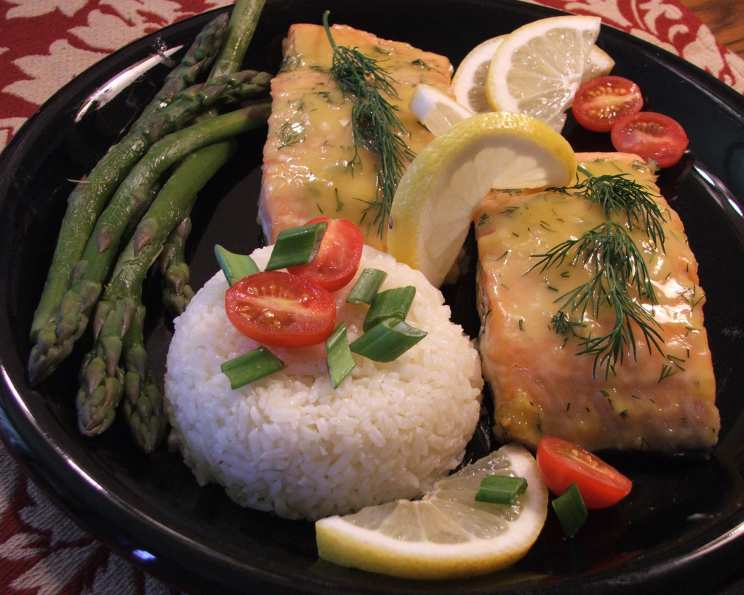
Honey-Dijon-Dill Salmon: A Symphony of Flavors
There’s something magical about the way the aroma of dill fills the kitchen, instantly transporting me back to my grandmother’s seaside cottage. She always had a pot of it growing on her windowsill, and fresh dill was a staple in nearly every dish, especially when she cooked salmon. I can still picture her meticulously arranging salmon fillets on a platter, drizzling them with a shimmering golden glaze. This Honey-Dijon-Dill Salmon marinade captures that same essence of simple elegance and comforting flavors, bringing a touch of her kitchen to my own.
Recipe Overview
- Prep Time: 2 hours 15 minutes
- Cook Time: 12-20 minutes
- Total Time: 2 hours 27-35 minutes
- Servings: 4
- Dietary Type: Pescatarian, Gluten-Free, Dairy-Free
Ingredients
- 4 (6-8 ounce) salmon fillets
- ½ cup olive oil
- ¼ cup honey
- ¼ cup Dijon mustard
- 4 garlic cloves, minced or chopped
- 2 teaspoons dill, fresh is best
Equipment Needed
- Mixing bowl
- Whisk or fork
- Baking sheet
- Aluminum foil (optional, for easy cleanup)
Instructions
-
In a mixing bowl, whisk together the olive oil, honey, Dijon mustard, and minced garlic. Ensure all ingredients are well combined to create a smooth and emulsified marinade. This is crucial for even flavor distribution.
-
Sprinkle fresh dill generously on both sides of each salmon fillet. Gently press the dill onto the fish to help it adhere. The fresh dill infuses the salmon with its bright, herbaceous notes. If using dried dill, use about 1 teaspoon, but fresh is truly superior.
-
Place the dill-sprinkled salmon fillets in a shallow dish or resealable plastic bag. Pour the Honey-Dijon-Garlic marinade over the salmon, ensuring each fillet is thoroughly coated.
-
Marinate the salmon in the refrigerator for at least 2 hours, turning the fillets occasionally to ensure even flavor penetration. The longer it marinates, the more flavorful the salmon will be, but avoid marinating for more than 4 hours, as the acid in the mustard can start to break down the fish.
-
Preheat your oven to 350°F (175°C). While the oven is preheating, remove the marinated salmon from the refrigerator and let it sit at room temperature for about 10-15 minutes. This helps the salmon cook more evenly.
-
Line a baking sheet with parchment paper or aluminum foil (for easier cleanup). Place the marinated salmon fillets on the prepared baking sheet, leaving a little space between each fillet.
-
Bake the salmon in the preheated oven for 12-20 minutes. The cooking time will vary depending on the thickness of the fillets. A thinner fillet might only need 12 minutes, while a thicker one might require closer to 20.
-
Check for doneness by inserting a fork into the thickest part of the fillet. The salmon is done when it flakes easily with a fork and is no longer translucent in the center. The internal temperature should reach 145°F (63°C). Be careful not to overcook the salmon, as it will become dry.
-
Once cooked, remove the salmon from the oven and let it rest for a few minutes before serving. This allows the juices to redistribute, resulting in a more tender and flavorful fillet.
Expert Tips & Tricks
-
Enhance the Garlic Flavor: Lightly sauté the minced garlic in a teaspoon of olive oil for a minute or two before adding it to the marinade. This mellows the garlic’s harshness and brings out its nutty sweetness.
-
Spice it Up: Add a pinch of red pepper flakes to the marinade for a subtle kick of heat.
-
Marinade Adjustment: Taste the marinade before adding the salmon. Adjust the honey or Dijon mustard to your preference. If you prefer a sweeter flavor, add more honey. If you like a tangier flavor, add more Dijon.
-
Broiling Option: For a slightly caramelized crust, broil the salmon for the last 2-3 minutes of cooking time, keeping a close eye to prevent burning.
-
Make-Ahead Tip: The marinade can be prepared up to 24 hours in advance and stored in the refrigerator. Just add the salmon to the marinade a couple of hours before you plan to cook it.
Serving & Storage Suggestions
Serve the Honey-Dijon-Dill Salmon immediately after cooking. It pairs beautifully with roasted vegetables like asparagus, broccoli, or green beans. A simple side of quinoa or brown rice is also a great complement. Garnish with a sprig of fresh dill and a lemon wedge for added freshness and visual appeal.
Leftover cooked salmon can be stored in an airtight container in the refrigerator for up to 3 days. To reheat, gently warm it in the oven at 300°F (150°C) or microwave it in short intervals to prevent it from drying out. The salmon can also be enjoyed cold in salads or sandwiches.
Nutritional Information
| Nutrient | Amount per Serving | % Daily Value |
|---|---|---|
| Calories | 531.8 kcal | N/A |
| Calories from Fat | 315 g | 59% |
| Total Fat | 35 g | 53% |
| Saturated Fat | 5.1 g | 25% |
| Cholesterol | 77.4 mg | 25% |
| Sodium | 304.8 mg | 12% |
| Total Carbohydrate | 19.3 g | 6% |
| Dietary Fiber | 0.6 g | 2% |
| Sugars | 17.6 g | 70% |
| Protein | 35.4 g | 70% |
Note: Nutritional information is an estimate and can vary based on specific ingredients and portion sizes.
Variations & Substitutions
-
Maple-Dijon: Substitute maple syrup for honey for a slightly different flavor profile.
-
Herb Variations: Experiment with other fresh herbs like tarragon, parsley, or chives instead of or in addition to dill.
-
Citrus Boost: Add a tablespoon of lemon juice or orange juice to the marinade for a brighter, more citrusy flavor.
-
Soy Sauce Addition: Add a tablespoon of soy sauce for an umami-rich twist. This will add some saltiness, so be mindful of the overall balance.
-
Salmon Alternatives: This marinade also works well with other types of fish, such as cod, halibut, or sea bass. Adjust the cooking time accordingly.
FAQs (Frequently Asked Questions)
Q: Can I use dried dill instead of fresh?
A: Yes, you can use dried dill, but fresh dill provides a more vibrant and pronounced flavor. If using dried, reduce the amount to about 1 teaspoon.
Q: How long can I marinate the salmon?
A: Marinate the salmon for at least 2 hours, but no more than 4 hours. Over-marinating can result in a mushy texture.
Q: Can I grill the salmon instead of baking it?
A: Absolutely! Preheat your grill to medium heat and grill the salmon for about 4-6 minutes per side, or until cooked through.
Q: What’s the best way to tell if the salmon is done?
A: The salmon is done when it flakes easily with a fork and is no longer translucent in the center. An internal temperature of 145°F (63°C) ensures it’s cooked through.
Q: Can I freeze marinated salmon?
A: It’s best to freeze the salmon before marinating. Marinating and then freezing can affect the texture of the fish.
Final Thoughts
This Honey-Dijon-Dill Salmon is more than just a recipe; it’s an invitation to create a memorable meal that’s both delicious and nourishing. The simplicity of the marinade allows the natural flavors of the salmon to shine through, while the combination of sweet honey, tangy Dijon, and fragrant dill creates a harmonious balance. Don’t be afraid to experiment with variations and substitutions to make it your own. I encourage you to try this recipe and share your feedback. Pair it with a crisp Sauvignon Blanc for a truly delightful culinary experience. Happy cooking!