
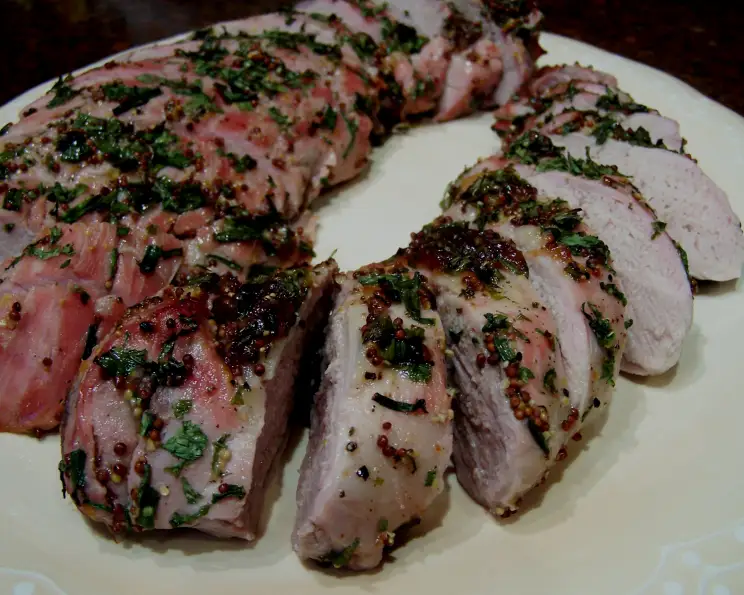
Honey Dijon Mustard Pork Loin: A Symphony of Sweet and Savory
The aroma of honey and Dijon mustard, mingled with the savory scent of roasting pork, instantly transports me back to my grandmother’s kitchen. She always had a pork loin roasting on Sundays, and the glistening, golden glaze of this dish reminds me of those comforting family gatherings filled with laughter and delicious food. This Honey Dijon Mustard Pork Loin captures the essence of that nostalgia, transforming a simple cut of meat into an elegant and flavorful centerpiece that’s surprisingly easy to create.
Recipe Overview
- Prep Time: 10 minutes
- Cook Time: 20 minutes
- Total Time: 30 minutes
- Servings: 6
- Dietary Type: Gluten-Free (naturally)
Ingredients
- 1 boneless pork loin, 3 to 4 pounds
- 1 teaspoon salt
- ½ teaspoon black pepper, freshly ground
- 2 tablespoons white wine vinegar
- ¾ cup honey dijon mustard
- 1 tablespoon fresh parsley leaves, freshly chopped
- 1 tablespoon chives, freshly chopped
- 1 tablespoon tarragon leaf, freshly chopped
- 3 tablespoons vegetable oil
Equipment Needed
- Large ovenproof saute pan
- Small bowl
- Measuring cups and spoons
- Meat thermometer
- Cutting board
- Sharp knife
Instructions
-
Preheat your oven to 350 Degrees F (175 Degrees C). Make sure your oven rack is positioned in the center for even cooking.
-
Prepare the pork by generously seasoning it with salt and freshly ground black pepper. Ensure all sides are evenly coated for maximum flavor penetration.
-
In a small bowl, whisk together the white wine vinegar, honey dijon mustard, freshly chopped parsley, chives, and tarragon. This vibrant mixture will form the flavorful crust for the pork. Set aside this mustard sauce; you’ll be using it throughout the cooking process.
-
Place a large ovenproof saute pan over medium-high heat. Add the vegetable oil and let it heat until it shimmers. The pan needs to be hot enough to achieve a nice sear on the pork.
-
Carefully place the seasoned pork loin into the hot pan. Sear the pork loin on all sides until golden brown. This searing process is crucial as it creates a flavorful crust and helps to lock in the juices. Don’t overcrowd the pan; work in batches if necessary.
-
Once the pork is seared, remove the pan from the stovetop. Now, generously brush the seared pork loin with the prepared honey dijon mustard sauce. Ensure that the entire surface is evenly coated.
-
Transfer the saute pan with the mustard-glazed pork loin to the preheated oven. Roast the pork in the oven until an internal thermometer inserted into the thickest part of the loin registers 145°F (63°C). This usually takes approximately 20 minutes, but cooking time may vary depending on the size and thickness of your pork loin. Always use a meat thermometer to ensure accurate doneness.
-
Remove the pork loin from the oven and let it rest for at least 15 minutes before slicing. This resting period allows the juices to redistribute throughout the meat, resulting in a more tender and flavorful final product. Tent the pork with foil to keep it warm during the resting period.
-
After resting, use a sharp knife to slice the pork loin thinly against the grain. This ensures tenderness and prevents stringiness. Arrange the slices on a platter and serve immediately.
Expert Tips & Tricks
-
Achieve Perfect Searing: For the best sear, ensure your pan is hot before adding the pork. Use a high-smoke-point oil like vegetable or canola oil. Pat the pork dry with paper towels before searing to help it brown evenly.
-
Herb Infusion: To intensify the herb flavor, consider adding the chopped herbs to the mustard sauce a few hours in advance. This allows the herbs to infuse their aroma and taste into the sauce.
-
Prevent Overcooking: Pork loin can become dry if overcooked. Using a meat thermometer is key. Pull the pork out of the oven when it reaches 145°F (63°C), as the temperature will continue to rise slightly during the resting period.
-
Make-Ahead Option: You can sear the pork loin and prepare the mustard sauce a day in advance. Store them separately in the refrigerator and combine them just before roasting.
-
Gravy Enhancement: For an even richer flavor, deglaze the pan with a splash of white wine or chicken broth after searing the pork. Scrape up any browned bits from the bottom of the pan and add it to the honey dijon mustard sauce.
Serving & Storage Suggestions
Serve this Honey Dijon Mustard Pork Loin hot, sliced thinly, and arranged on a platter. Garnish with fresh parsley or a sprinkle of the chopped herbs used in the sauce. It pairs beautifully with roasted vegetables like asparagus, Brussels sprouts, or sweet potatoes. Mashed potatoes or a creamy polenta also make excellent accompaniments.
Storage: Leftover pork loin should be stored in an airtight container in the refrigerator. It will last for 3-4 days.
Reheating: To reheat, you can gently warm the slices in a skillet with a little bit of broth or in the microwave at a low power setting to prevent drying. You can also add the slices to a sauce and simmer gently until heated through. Freezing is possible, but the texture may change slightly upon thawing. Wrap tightly in plastic wrap and then aluminum foil for best results.
Nutritional Information
| Nutrient | Amount per Serving | % Daily Value |
|---|---|---|
| Calories | 450 kcal | 23% |
| Total Fat | 25g | 38% |
| Saturated Fat | 6g | 30% |
| Cholesterol | 140mg | 47% |
| Sodium | 600mg | 26% |
| Total Carbohydrate | 15g | 5% |
| Dietary Fiber | 1g | 4% |
| Sugars | 12g | – |
| Protein | 40g | 80% |
Note: Nutritional information is an estimate and can vary based on specific ingredients and portion sizes.
Variations & Substitutions
-
Spice It Up: Add a pinch of red pepper flakes to the mustard sauce for a touch of heat.
-
Sweet and Savory: Incorporate a thinly sliced apple or pear into the roasting pan during the last 15 minutes of cooking for added sweetness and moisture.
-
Herb Garden Twist: Feel free to experiment with different herbs in the sauce. Rosemary, thyme, or sage would all complement the pork beautifully.
-
Mustard Variety: While honey dijon is the star, you could also use a grainy mustard or a spicy brown mustard for a different flavor profile.
-
Vinegar Swap: If you don’t have white wine vinegar, apple cider vinegar or even lemon juice can be used as a substitute.
FAQs (Frequently Asked Questions)
Q: Can I use a different cut of pork for this recipe?
A: While pork loin is ideal due to its tenderness and lean nature, you could also use a pork tenderloin. However, pork tenderloin cooks much faster, so adjust the cooking time accordingly.
Q: How do I prevent the mustard sauce from burning in the oven?
A: Keep a close eye on the pork while it’s roasting. If the sauce starts to brown too quickly, tent the pork loosely with aluminum foil to protect it.
Q: Can I make this recipe without fresh herbs?
A: Yes, you can substitute dried herbs for fresh herbs. Use about 1 teaspoon of each dried herb for every tablespoon of fresh herbs.
Q: Is it important to let the pork rest before slicing?
A: Absolutely! Resting allows the juices to redistribute throughout the meat, resulting in a more tender and flavorful final product. Skipping this step will result in a drier pork loin.
Q: What’s the safe internal temperature for cooked pork?
A: The USDA recommends cooking pork to an internal temperature of 145°F (63°C), followed by a 3-minute rest.
Final Thoughts
This Honey Dijon Mustard Pork Loin is a delightful dish that’s both elegant and approachable. The combination of sweet honey, tangy Dijon mustard, and fragrant herbs creates a flavor profile that’s sure to impress. Whether you’re hosting a dinner party or simply looking for a delicious weeknight meal, this recipe is a winner. I encourage you to try it and experience the joy of creating a truly memorable dish. Feel free to experiment with different herbs and spices to create your own unique variation. And don’t forget to share your feedback and culinary creations with others! Pair this flavorful pork loin with a crisp white wine like a Riesling or a Sauvignon Blanc for a truly unforgettable dining experience. Happy cooking!