
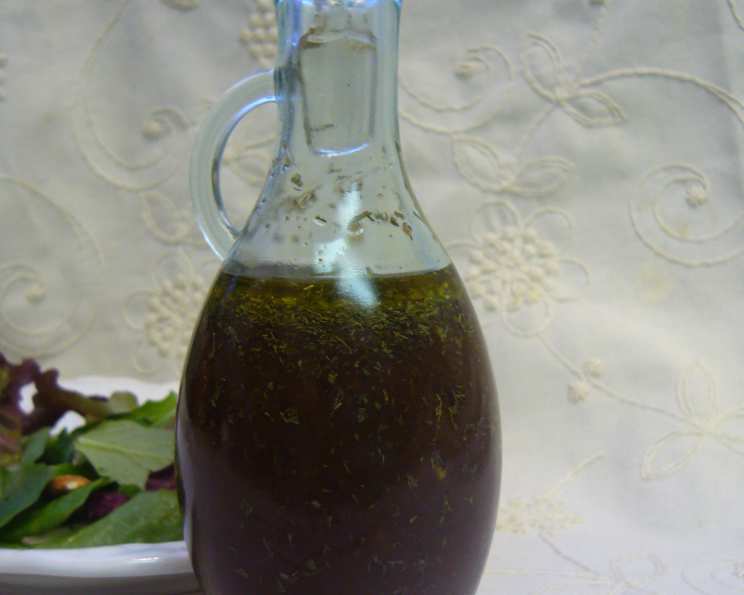
Honey-Dill Vinaigrette: A Symphony of Sweet and Savory
The first time I tasted a vinaigrette that truly surprised me, I was at a tiny bistro tucked away on a cobblestone street in San Francisco. It was drizzled over a simple salad of mixed greens, but the dressing itself was anything but simple. The bright tang of vinegar, the sweetness of honey, and the herbaceous notes of dill danced on my palate. It elevated the humble salad to something extraordinary. I knew then that I had to recreate that magic in my own kitchen. This Honey-Dill Vinaigrette is my tribute to that culinary revelation, a dressing that brings restaurant-quality flavor to your everyday meals.
Recipe Overview
- Prep Time: 5 minutes
- Cook Time: 0 minutes
- Total Time: 5 minutes
- Yield: 1 3/4 cups
- Dietary Type: Gluten-Free, Dairy-Free
Ingredients
- 1⁄2 cup balsamic vinegar
- 1⁄4 cup honey
- 4 garlic cloves, chopped
- 1 tablespoon dried dill
- 1 cup olive oil
- Salt & freshly ground black pepper, to taste
Equipment Needed
- Blender or food processor
Instructions
- In the container of a blender or food processor, combine the balsamic vinegar, honey, chopped garlic cloves, and dried dill.
- Process the ingredients until the mixture is smooth. This may take a minute or two, depending on the strength of your blender. Be sure to scrape down the sides if necessary to ensure all the garlic is fully incorporated.
- With the machine running on low speed, slowly drizzle the olive oil into the mixture in a thin, steady stream. This slow incorporation is key to emulsifying the dressing properly. Continue to add the olive oil until it is completely emulsified and the dressing appears thick and creamy.
- Season the vinaigrette to taste with salt and freshly ground black pepper. Start with a pinch of each and adjust according to your preference. Remember that the flavors will intensify slightly as the dressing sits.
Expert Tips & Tricks
- Emulsification is Key: The secret to a great vinaigrette is a stable emulsion. Adding the oil too quickly can cause the dressing to separate. Patience is your friend here.
- Garlic Intensity: For a milder garlic flavor, use roasted garlic instead of raw. You can roast a whole head of garlic in the oven, squeeze out the cloves, and use 4 roasted cloves in the recipe.
- Honey Sweetness: Different types of honey will impart slightly different flavors to the vinaigrette. Experiment with local honey varieties for a unique taste. Clover honey will give a milder flavor, while buckwheat honey will be more intense.
- Dill Power: If you prefer a stronger dill flavor, let the dressing sit for at least 30 minutes before serving to allow the dill to fully infuse. You can also use fresh dill; just use 3 tablespoons of finely chopped fresh dill instead of dried.
- Temperature Matters: Make sure your ingredients are at room temperature. This helps them emulsify more easily and prevents the dressing from separating.
- Fixing a Broken Emulsion: If your vinaigrette separates, don’t panic! Add a teaspoon of Dijon mustard to the blender and process again. The mustard acts as an emulsifier and should bring the dressing back together.
- Herb Infusion: For an even deeper herbal flavor, let the dressing sit in the refrigerator overnight. This allows the flavors to meld and intensifies the dill.
- Vinegar Variety: Feel free to play with different vinegars! While balsamic provides a deep, rich flavor, apple cider vinegar adds a bright, tangy note.
- Oil Choice: While olive oil is traditional, avocado oil or a mild vegetable oil can also be used for a different flavor profile.
- Thickness Adjustment: If your vinaigrette is too thick, add a tablespoon or two of water or vinegar to thin it out. If it’s too thin, drizzle in a bit more olive oil while blending.
Serving & Storage Suggestions
This Honey-Dill Vinaigrette is incredibly versatile. It’s delicious drizzled over a simple green salad, but it also shines with more complex salads featuring grilled chicken, salmon, or roasted vegetables. Try it with a salad of mixed greens, dried cranberries, toasted pecans, and crumbled goat cheese. You can also use it as a marinade for chicken or fish before grilling or baking. The flavors will penetrate the meat, adding moisture and a delicious sweet and savory glaze.
Store leftover vinaigrette in an airtight container in the refrigerator. It will keep for up to a week. The olive oil may solidify in the refrigerator, but it will return to its liquid state at room temperature. Simply shake or whisk the dressing well before serving to re-emulsify it. It is not recommended to freeze this vinaigrette, as freezing can affect the texture and stability of the emulsion.
Nutritional Information
(Estimated per 2-tablespoon serving)
| Nutrient | Amount per Serving | % Daily Value |
|---|---|---|
| Calories | 150 kcal | 8% |
| Total Fat | 15g | 23% |
| Saturated Fat | 2g | 10% |
| Cholesterol | 0mg | 0% |
| Sodium | 2mg | 0% |
| Total Carbohydrate | 4g | 1% |
| Dietary Fiber | 0g | 0% |
| Sugars | 3g | N/A |
| Protein | 0g | 0% |
Note: Nutritional information is an estimate and may vary based on specific ingredients and portion sizes.
Variations & Substitutions
- Lemon-Dill Vinaigrette: Substitute the balsamic vinegar with lemon juice for a brighter, more citrusy flavor. Use about 1/4 cup of lemon juice and adjust the honey to taste.
- Maple-Dill Vinaigrette: Replace the honey with pure maple syrup for a richer, more complex sweetness.
- Mustard-Dill Vinaigrette: Add 1-2 teaspoons of Dijon mustard to the blender for a tangy and emulsifying boost.
- Herb Garden Vinaigrette: Add a mix of fresh herbs, such as parsley, chives, and thyme, to the blender along with the dill.
- Spicy Dill Vinaigrette: Add a pinch of red pepper flakes or a dash of hot sauce for a touch of heat.
- Vegan Option: Ensure the honey you use is from a verified vegan source, as some vegans avoid honey. Maple syrup is also a delicious alternative.
FAQs (Frequently Asked Questions)
Q: Can I use fresh dill instead of dried?
A: Yes, you can! Use 3 tablespoons of finely chopped fresh dill for every 1 tablespoon of dried dill. Fresh dill will provide a brighter, more delicate flavor.
Q: How long will this vinaigrette last in the refrigerator?
A: Properly stored in an airtight container, this vinaigrette will last for up to a week in the refrigerator.
Q: My vinaigrette separated. How do I fix it?
A: Add a teaspoon of Dijon mustard to the blender and process again. The mustard acts as an emulsifier and should bring the dressing back together.
Q: Can I use a different type of vinegar?
A: Absolutely! Apple cider vinegar or white wine vinegar are great alternatives to balsamic vinegar. Adjust the amount of honey to taste, as these vinegars are typically more tart.
Q: Is this vinaigrette gluten-free?
A: Yes, this vinaigrette is naturally gluten-free as long as you use gluten-free ingredients, specifically balsamic vinegar that doesn’t contain any gluten-based additives.
Final Thoughts
I hope you’re inspired to try this Honey-Dill Vinaigrette. It’s a simple recipe that yields a dressing bursting with flavor, perfect for elevating your everyday salads and grilled dishes. Don’t be afraid to experiment with different herbs and vinegars to create your own signature vinaigrette. Once you master the art of emulsifying, the possibilities are endless. Let me know what you think and how you’ve made it your own! It pairs beautifully with grilled salmon and a crisp Sauvignon Blanc. Happy cooking!