
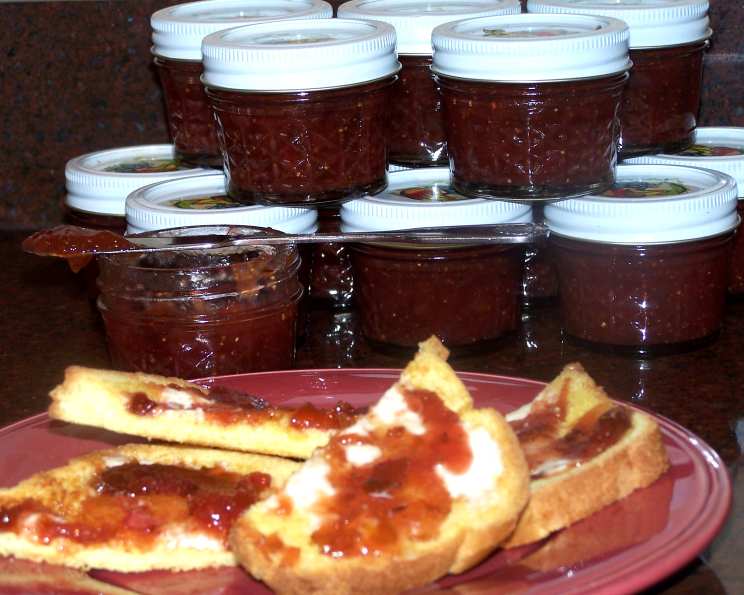
Honeyed Figs With Sweet Red Wine and Lavender Jam
The first time I tasted figs, I was wandering through a sun-drenched orchard in Tuscany. The air hummed with bees, and the scent of ripe fruit hung heavy. A farmer, with hands stained purple from the harvest, offered me a fig still warm from the tree. Its sweetness, amplified by the rustic honey he drizzled over it, was a revelation. This recipe, a fragrant jam of honeyed figs with sweet red wine and lavender, attempts to recapture that moment, that perfect marriage of flavors under the Italian sun.
Recipe Overview
- Prep Time: 20 minutes
- Cook Time: 15 minutes
- Total Time: 35 minutes
- Yields: 12 4 ounce jars
- Serves: 50
- Dietary Type: Vegetarian
Ingredients
- 1 tablespoon dried lavender
- 1 tablespoon sugar
- 4 lbs fresh figs, about 8 cups, washed
- 1 cup sugar
- 1 cup honey
- 1 cup sweet red wine (such as homemade with Marechal, Alcante, Seyval, Ravat grapes, or a tawny port)
- 2 lemons, juice and zest of, or 1/2 cup bottled lemon juice
Equipment Needed
- Coffee grinder
- Large heavy-bottomed pot
- Food processor
- Sterilized jars (12 4-ounce jars recommended)
- Hot water bath canning equipment
Instructions
-
First, prepare the lavender sugar. Place 1 tablespoon of sugar and the dried lavender into a coffee grinder. Process until the lavender is finely ground and the sugar is somewhat powdered. This step releases the lavender’s essential oils, intensifying its fragrance and flavor. Transfer the lavender sugar to a large, heavy-bottomed pot.
-
Next, prepare the figs. Wash the fresh figs thoroughly. Place the figs and the remaining 1 cup of sugar into a food processor. Pulse 5 to 6 times, just until the figs are coarsely chopped. You want a chunky texture, not a puree.
-
Combine all ingredients. Add the chopped fig mixture to the large pot containing the lavender sugar. Pour in the honey, sweet red wine, and the lemon juice and zest. The lemon’s acidity balances the sweetness and helps with preservation.
-
Bring to a boil. Place the pot over medium heat and bring the mixture to a slow boil, stirring occasionally to prevent sticking.
-
Boil rapidly. Once boiling, increase the heat to medium-high and maintain a fast, rolling boil for 15 minutes, stirring almost constantly. This rapid boiling is crucial for achieving the desired jam consistency and concentrating the flavors. Watch carefully, as the mixture can easily scorch. You’ll notice the juice turning a vibrant red color as it cooks.
-
Jar the jam. Carefully spoon the hot jam into the sterilized jars, leaving about 1/4 inch of headspace at the top. Wipe the rims of the jars clean with a damp cloth to ensure a good seal.
-
Process in a hot water bath. Process the filled jars in a hot water bath for 10 minutes. This ensures a proper seal and extends the shelf life of the jam. To do this, place the jars on a rack inside a large pot filled with boiling water, ensuring the water covers the jars by at least an inch. Bring the water back to a boil, then start timing. After 10 minutes, carefully remove the jars from the water bath and place them on a towel-lined surface to cool. As the jars cool, you should hear a “popping” sound as the lids seal.
Expert Tips & Tricks
- Sterilizing Jars: To sterilize jars, wash them in hot, soapy water, then place them on a baking sheet and heat in a 250°F (120°C) oven for 10 minutes. You can also boil the jars in water for 10 minutes.
- Fig Variety: The type of fig you use will affect the final flavor and color of the jam. Mission figs will produce a darker, richer jam, while Calimyrna figs will result in a lighter, more delicate flavor.
- Wine Choice: The sweet red wine adds depth and complexity to the jam. Experiment with different varieties to find your favorite flavor profile. A tawny port is a great alternative if you don’t have homemade wine on hand.
- Lavender Intensity: Be mindful of the amount of lavender you use. Too much can make the jam taste soapy. Start with the recommended amount and adjust to your preference.
- No-Pectin Jam: This recipe does not use pectin, so the jam will be thinner than commercially produced jams. This makes it versatile for various uses.
- Jam Consistency: The consistency of the jam will thicken slightly as it cools. If you prefer a thicker jam, you can cook it for a few minutes longer, but be careful not to burn it.
Serving & Storage Suggestions
This Honeyed Fig and Lavender Jam is incredibly versatile. Spread it on your favorite bread or toast for a delightful breakfast or snack. Its thinner consistency makes it perfect for glazing chicken, duck, or pork roasts during the last few minutes of cooking, adding a touch of sweetness and floral aroma. Serve it as a condiment with roasted or grilled meats, or spoon it over a slice of cheesecake or a scoop of vanilla ice cream for an elegant dessert.
Store unopened jars of jam in a cool, dark place for up to one year. Once opened, refrigerate the jam and use it within a few weeks.
Nutritional Information
| Nutrient | Amount per Serving | % Daily Value |
|---|---|---|
| Calories | 68 kcal | N/A |
| Total Fat | 0.1 g | 0% |
| Saturated Fat | 0 g | 0% |
| Cholesterol | 0 mg | 0% |
| Sodium | 0.9 mg | 0% |
| Total Carbohydrate | 17.1 g | 5% |
| Dietary Fiber | 1.1 g | 4% |
| Sugars | 15.8 g | N/A |
| Protein | 0.3 g | 0% |
Variations & Substitutions
- Spice it up: Add a pinch of red pepper flakes to the fig mixture for a touch of heat.
- Citrus Twist: Experiment with different citrus fruits, such as oranges or grapefruits, instead of lemons.
- Herb Infusion: Try using rosemary or thyme instead of lavender for a more savory flavor profile.
- Wine Variation: Use white wine, or even a dessert wine like Sauternes or Moscato d’Asti.
- Honey Variation: Explore using different types of honey to alter the flavor profile (e.g. buckwheat, wildflower, orange blossom).
FAQs (Frequently Asked Questions)
Q: Do I need to use special canning equipment for this recipe?
A: While you can process the jam in a large pot with a rack, using dedicated canning equipment makes the process safer and easier. A jar lifter is particularly helpful for safely removing hot jars from the water bath.
Q: Can I use frozen figs for this recipe?
A: Fresh figs are ideal for their texture and flavor, but frozen figs can be used in a pinch. Thaw them completely and drain any excess liquid before using.
Q: How do I know if the jars are properly sealed?
A: After processing and cooling, the lids should be concave and not flex when pressed. If a lid doesn’t seal, refrigerate the jar and use the jam within a few weeks.
Q: Can I reduce the amount of sugar in this recipe?
A: Sugar acts as a preservative in jam, so reducing the amount significantly can affect the shelf life. However, you can experiment with reducing it slightly, keeping in mind that the jam might be less stable.
Q: What can I do if my jam is too thin?
A: If the jam is too thin after cooking, you can simmer it for a few more minutes, stirring constantly, until it reaches the desired consistency.
Final Thoughts
This Honeyed Figs With Sweet Red Wine and Lavender Jam is more than just a preserve; it’s a celebration of flavors and a reminder of simple pleasures. Whether you’re spreading it on toast, glazing a roast, or spooning it over ice cream, I hope this recipe brings a little bit of sunshine and sweetness to your day. Don’t hesitate to experiment with variations and share your creations! And if you have a particularly good pairing, let me know! Happy cooking!