
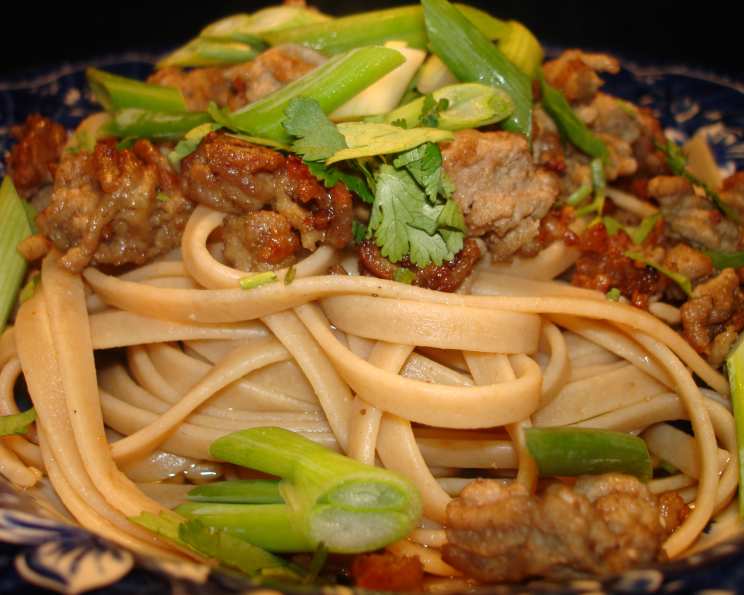
Hot and Spicy Szechuan Noodles (Dan Dan Mian): A Culinary Adventure
The first time I tasted Dan Dan Mian, I was wandering the bustling streets of Chengdu, the capital of Sichuan province. The air hung thick with the aroma of chili oil and roasted peanuts. I ducked into a tiny, nondescript noodle shop, drawn in by the boisterous chatter and the sight of steaming bowls. That first bite—the explosion of spicy, savory, and slightly sweet flavors—was an epiphany. The noodles were perfectly chewy, the pork was crisp and succulent, and the sauce was an addictive symphony of umami and heat. I knew, then and there, that I had to learn to recreate this magic at home.
Recipe Overview
- Prep Time: 15 minutes
- Cook Time: 20 minutes
- Total Time: 35 minutes
- Servings: 4
- Dietary Type: Can be easily adapted to be Gluten-Free (use gluten-free soy sauce and noodles)
Ingredients
- ½ tablespoon Szechuan peppercorns
- 1 ½ tablespoons peanut oil
- 1 teaspoon peanut oil, extra
- 8 ounces ground pork (250g)
- 2 cups chicken stock (500ml)
- ½ cup Japanese pickled radishes, diced
- 4 tablespoons soy sauce
- 1 ½ tablespoons black vinegar
- 1 tablespoon minced garlic
- 2 teaspoons sesame oil
- 1 teaspoon chili oil (or more, to taste!)
- ¼ teaspoon white pepper
- 1 lb udon noodles (500g) or 1 lb fresh wheat noodles (500g)
- 4 spring onions, finely sliced, for garnish
Ingredient Notes:
- Szechuan Peppercorns: These provide a unique, tingling sensation known as ma la. If you can’t find them, you can omit them, but they are essential for authentic flavor.
- Japanese Pickled Radishes: These add a delightful crunch and tang. You can substitute with other pickled vegetables like daikon radish, but try to find the Japanese variety for best results.
- Black Vinegar: Chinkiang vinegar is preferred for its rich, smoky flavor. If unavailable, substitute with balsamic vinegar, but use slightly less as it is more acidic.
- Chili Oil: Adjust the amount to your preference. Homemade chili oil is always best, but store-bought works too. Look for one with chili flakes for added texture.
- Noodles: Udon noodles offer a chewy texture, while fresh wheat noodles are more delicate. Use whichever you prefer, or even try it with dried egg noodles.
Equipment Needed
- Wok or large skillet
- Saucepan
- Strainer
- Soup bowls
Instructions
-
Toast the Szechuan Peppercorns: Heat a wok over low heat. Dry-fry the Szechuan peppercorns for 2-3 minutes, until fragrant. Watch carefully; they can burn easily.
-
Infuse the Oil: Add 1 ½ tablespoons of peanut oil to the wok and cook over low heat for 10 minutes to infuse it with the flavor of the peppercorns. This creates a wonderfully aromatic oil that forms the base of the sauce. Keep the heat low to prevent burning the peppercorns.
-
Strain the Oil: Cool the oil slightly, then strain it into a saucepan, discarding the peppercorns. You’ve now created a flavorful Szechuan peppercorn-infused oil.
-
Prepare the Sauce: Add the chicken stock, diced Japanese pickled radishes, soy sauce, black vinegar, minced garlic, sesame oil, chili oil, and white pepper to the peppercorn oil in the saucepan. Stir to combine.
-
Keep the Sauce Warm: Keep the sauce warm over medium heat while you prepare the noodles and pork. Taste and adjust the seasoning as needed. Add more chili oil for extra heat, or a touch of sugar to balance the flavors.
-
Cook the Noodles: Meanwhile, prepare the noodles according to package directions. If using udon noodles, soak them for a few minutes in hot water, then drain and add to the stock mixture. If using fresh wheat noodles, cook them for 2 minutes in boiling water, then drain and add to the mixture. Be careful not to overcook the noodles, as they will continue to cook slightly in the hot sauce.
-
Cook the Pork: Heat the extra 1 teaspoon of peanut oil in the wok over high heat. Stir-fry the ground pork until brown and crispy, about 3-5 minutes. Break up any large clumps of pork as it cooks. The crispier the pork, the better!
-
Assemble the Dish: Divide the noodle/broth mixture into four soup bowls. Top with the crispy pork and garnish generously with finely sliced spring onions.
-
Serve Immediately: Encourage everyone to eat, slurp, and make appreciative noises at will! The noodles are best enjoyed fresh, while the flavors are at their peak.
Expert Tips & Tricks
- Make the Chili Oil Sing: For an even more intense chili oil flavor, try adding a small piece of star anise or a cinnamon stick to the oil while infusing it.
- Crispy Pork Perfection: For extra crispy pork, spread it out in a thin layer in the wok and let it brown undisturbed before stirring.
- Adjust the Sauce to Your Liking: Don’t be afraid to experiment with the sauce. Add a touch of sugar for sweetness, or a splash of rice wine for extra depth of flavor.
- Make-Ahead Tip: The sauce can be made ahead of time and stored in the refrigerator for up to 3 days. Simply reheat before adding the noodles and pork.
- Spice Level Control: Taste and adjust the amount of chili oil to suit your spice preference. Remember, you can always add more, but you can’t take it away!
Serving & Storage Suggestions
Serve Dan Dan Mian immediately while the noodles are hot and the pork is crispy. Garnish generously with spring onions and, if desired, a sprinkle of roasted peanuts.
Leftovers can be stored in an airtight container in the refrigerator for up to 2 days. The noodles will absorb some of the sauce, so they may be a little softer when reheated. To reheat, gently warm in a saucepan or microwave, adding a splash of chicken stock if needed to loosen the sauce.
It’s not recommended to freeze Dan Dan Mian, as the noodles can become mushy upon thawing.
Nutritional Information
| Nutrient | Amount per Serving | % Daily Value |
|---|---|---|
| Calories | 550 kcal | 28% |
| Total Fat | 25g | 38% |
| Saturated Fat | 8g | 40% |
| Cholesterol | 50mg | 17% |
| Sodium | 1500mg | 63% |
| Total Carbohydrate | 60g | 20% |
| Dietary Fiber | 4g | 16% |
| Sugars | 3g | 6% |
| Protein | 25g | 50% |
Note: Nutritional information is an estimate and may vary depending on specific ingredients and portion sizes.
Variations & Substitutions
- Vegetarian Dan Dan Mian: Substitute the ground pork with crumbled firm tofu, sautéed until crispy. Use vegetable stock instead of chicken stock.
- Gluten-Free Dan Dan Mian: Use gluten-free soy sauce and gluten-free noodles, such as rice noodles or sweet potato noodles.
- Peanut-Free Dan Dan Mian: Omit the peanut oil and use another neutral oil, such as canola or vegetable oil. Be sure to check the chili oil for any peanut ingredients.
- Spicier Dan Dan Mian: Add a pinch of Szechuan peppercorn powder or a few drops of chili garlic sauce for an extra kick.
- Seasonal Variation: In the summer, try adding some blanched cucumber ribbons to the noodles for a refreshing twist.
FAQs (Frequently Asked Questions)
Q: What is ma la, and why is it important in Dan Dan Mian?
A: Ma la is the signature sensation of Szechuan cuisine, created by the combination of Sichuan peppercorns (ma, meaning “numbing”) and chili peppers (la, meaning “spicy”). It provides a unique tingling and numbing sensation on the tongue that enhances the overall flavor experience.
Q: Can I use dried noodles instead of fresh noodles?
A: Yes, you can use dried noodles. Cook them according to package directions until al dente, and be careful not to overcook them as they will continue to soften in the sauce.
Q: How can I make my own chili oil?
A: To make your own chili oil, heat a neutral oil over medium heat with chili flakes, Szechuan peppercorns, and aromatics like garlic and ginger. Let it simmer for about 30 minutes, then strain the oil and let it cool.
Q: Can I make this dish ahead of time?
A: The sauce can be made ahead of time and stored in the refrigerator for up to 3 days. It’s best to cook the noodles and pork fresh to maintain their texture.
Q: How do I adjust the spice level to my preference?
A: Start with a small amount of chili oil and taste the sauce. Add more chili oil gradually until you reach your desired level of spiciness. You can also add a pinch of sugar to balance the heat.
Final Thoughts
Dan Dan Mian is more than just a bowl of noodles; it’s a culinary journey to the heart of Sichuan cuisine. With its complex flavors and satisfying textures, this dish is sure to become a new favorite. Don’t be intimidated by the list of ingredients – the process is surprisingly simple, and the results are well worth the effort. So, gather your ingredients, fire up your wok, and prepare to experience the magic of Dan Dan Mian! I encourage you to try this recipe and share your feedback. Pair it with a refreshing glass of iced jasmine tea or a crisp lager for the perfect meal. Enjoy!