
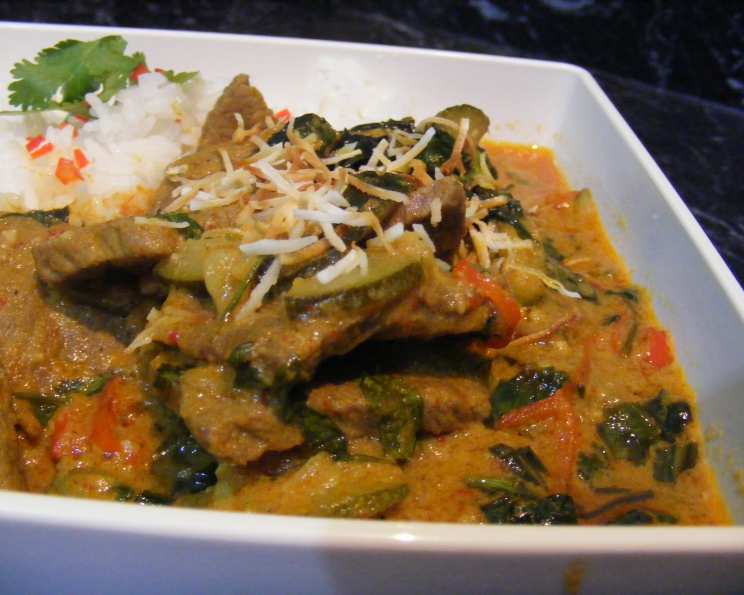
Hot Beef & Coconut Curry: A Taste of Thailand at Home
I’ll never forget the aroma that filled my tiny Bangkok apartment during my culinary internship – a symphony of fragrant spices mingling with creamy coconut milk. Every street corner seemed to whisper the secrets of Thai cuisine, and this beef and coconut curry immediately stood out. It was savory, subtly sweet, and had just the right amount of kick. It’s a dish I’ve recreated countless times since, each time bringing back those vibrant memories and the sheer joy of discovering truly authentic flavors.
Recipe Overview
- Prep Time: 15 minutes
- Cook Time: 40 minutes
- Total Time: 55 minutes
- Servings: 4
- Dietary Type: Dairy-Free
Ingredients
- 2 cups coconut milk
- 3 tablespoons Thai red curry paste
- 2 cloves garlic, crushed
- 1 lb braising steak, cut into 3/4-inch chunks
- 2 fresh kaffir lime leaves (or frozen)
- 3 tablespoons fresh lime juice
- 2 tablespoons fish sauce
- 1 large fresh red chili, seeded and sliced thinly
- 1/2 teaspoon ground turmeric
- 1/4 teaspoon sea salt
- 1/2 teaspoon black pepper
- 2 tablespoons fresh basil, chopped
- 2 tablespoons fresh cilantro, chopped
- 1/3 cup toasted shredded coconut, for garnish
- 4 cups steamed rice, for serving
Equipment Needed
- Large pan or Dutch oven
- Cutting board
- Knife
Instructions
- In a large pan or Dutch oven, bring the coconut milk to a boil over medium-high heat. Once boiling, immediately reduce the heat to low and allow to simmer gently for 10 minutes, or until the coconut milk has slightly thickened. This step helps to concentrate the flavors and create a richer base for the curry.
- Add the Thai red curry paste and crushed garlic to the simmering coconut milk. Stir well to combine, ensuring the curry paste is fully dissolved. Continue to simmer for another 5 minutes, allowing the flavors to meld together. The aroma should be incredibly fragrant at this point.
- Add the braising steak chunks to the pan. Increase the heat to medium and bring the mixture to a gentle boil, stirring frequently to ensure the beef is evenly coated in the curry sauce.
- Once boiling, reduce the heat back to low. Add the kaffir lime leaves, lime juice, fish sauce, sliced red chili, ground turmeric, and sea salt. Stir gently to combine all the ingredients.
- Cover the pan tightly with a lid and allow the curry to simmer gently for 25 minutes, or until the beef is tender. Check the sauce periodically and add a small amount of water if it appears to be drying out. The sauce should be thick enough to coat the beef, but not so thick that it sticks to the bottom of the pan.
- Remove the lid and stir in the chopped fresh basil and cilantro. Taste the curry and adjust the seasoning with additional salt and pepper as needed. Remember that fish sauce is quite salty, so add salt sparingly.
- To serve, spoon the hot beef and coconut curry over freshly steamed rice. Garnish generously with toasted shredded coconut.
Expert Tips & Tricks
- Blooming the Curry Paste: For a deeper, more complex flavor, consider “blooming” the curry paste before adding the coconut milk. Simply heat a tablespoon or two of coconut oil in the pan, then add the curry paste and cook, stirring constantly, for 1-2 minutes until fragrant. This releases the essential oils and enhances the flavor of the paste.
- Tenderizing the Beef: Braising steak can sometimes be tough. To ensure maximum tenderness, you can marinate the beef in a mixture of soy sauce, ginger, and garlic for at least 30 minutes before cooking. Alternatively, add a teaspoon of baking soda to the beef when adding it to the curry, this will also assist in tenderizing the meat.
- Controlling the Heat: The amount of chili used in this recipe can be adjusted to suit your personal preference. For a milder curry, remove the seeds from the chili before slicing it, or omit it altogether. For a spicier curry, leave the seeds in or add an extra chili.
- Kaffir Lime Leaves: If you can’t find fresh kaffir lime leaves, frozen ones work perfectly well. In a pinch, you can substitute the zest of one lime for the kaffir lime leaves, although the flavor will be slightly different. Be careful not to use the white pith when zesting, as it can be bitter.
Serving & Storage Suggestions
Serve this delicious hot beef and coconut curry immediately over a bed of steaming white rice. Garnish generously with the toasted coconut and a sprig of fresh cilantro or basil for visual appeal.
Leftovers can be stored in an airtight container in the refrigerator for up to 3 days. To reheat, gently warm the curry in a saucepan over low heat, stirring occasionally, until heated through. You may need to add a splash of water or coconut milk to loosen the sauce. The curry can also be frozen for up to 2 months. Thaw it overnight in the refrigerator before reheating. It is not recommended to leave the curry at room temperature for more than two hours.
Nutritional Information
| Nutrient | Amount per Serving | % Daily Value |
|---|---|---|
| Calories | 1039.1 kcal | N/A |
| Calories from Fat | 151 g | N/A |
| Total Fat | 16.9 g | 25% |
| Saturated Fat | 9.7 g | 48% |
| Cholesterol | 106.7 mg | 35% |
| Sodium | 986.4 mg | 41% |
| Total Carbohydrate | 164.3 g | 54% |
| Dietary Fiber | 4.1 g | 16% |
| Sugars | 1.1 g | 4% |
| Protein | 51.4 g | 102% |
Note: Nutritional information is an estimate and may vary based on specific ingredients and cooking methods.
Variations & Substitutions
- Vegetarian Option: Replace the beef with tofu or tempeh for a delicious vegetarian version. Press the tofu to remove excess water before adding it to the curry.
- Spice Level: Adjust the amount of red curry paste to control the spiciness of the dish. For a milder flavor, use less curry paste; for a spicier flavor, use more.
- Vegetable Additions: Feel free to add other vegetables to the curry, such as bell peppers, bamboo shoots, or green beans. Add them to the pan about 10 minutes before the beef is finished cooking.
- Coconut Milk Alternatives: If you are looking for a lighter option, you can substitute light coconut milk for regular coconut milk. Keep in mind that this will affect the richness and creaminess of the sauce.
- Seafood Version: Substitute the beef with shrimp or fish fillets for a quick and easy seafood curry. Reduce the cooking time accordingly, as seafood cooks much faster than beef. Add the seafood during the last 10 minutes of cooking.
FAQs (Frequently Asked Questions)
Q: Can I make this curry ahead of time?
A: Yes, this curry can be made ahead of time and stored in the refrigerator for up to 3 days. The flavors actually develop and deepen over time, making it even more delicious.
Q: Can I use a different type of beef?
A: Yes, you can use other cuts of beef, such as chuck roast or stew meat. Just be sure to adjust the cooking time accordingly to ensure the beef is tender.
Q: What is fish sauce, and can I substitute it?
A: Fish sauce is a fermented fish sauce that is commonly used in Southeast Asian cuisine. It adds a savory, umami flavor to the dish. If you don’t have fish sauce, you can substitute it with soy sauce or tamari, but the flavor will be slightly different.
Q: How do I prevent the coconut milk from curdling?
A: To prevent the coconut milk from curdling, do not boil it over high heat. Simmer it gently over low heat and stir it frequently.
Q: Can I freeze this curry?
A: Yes, this curry can be frozen for up to 2 months. Thaw it overnight in the refrigerator before reheating.
Final Thoughts
I truly hope you enjoy recreating this flavorful journey to Thailand in your own kitchen. The combination of tender beef, creamy coconut milk, and aromatic spices is simply irresistible. Don’t hesitate to experiment with different variations and substitutions to make it your own. Share your creations and feedback – I’d love to hear about your experience! This curry pairs beautifully with a refreshing Thai iced tea or a crisp, dry white wine. Happy cooking!