
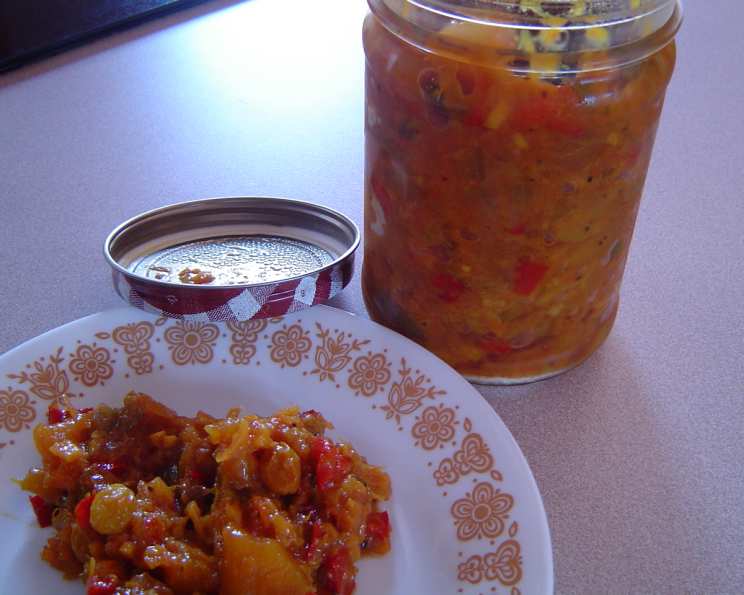
Hot Orange Chutney: A Taste of Sunshine with a Fiery Kick
The first time I tasted orange chutney was at a holiday potluck, hosted by a friend’s grandmother, a true Southern matriarch named Nana Betty. I remember the aroma first, a bright citrus scent laced with warmth and spice. Nana Betty’s orange chutney wasn’t just a condiment; it was a vibrant burst of sunshine in the middle of winter, a testament to her knack for preserving the best of the season. Spooned over roasted ham, it elevated the entire meal. The sweet-tart-spicy combination was utterly addictive, and I’ve been chasing that flavor ever since. This recipe, inspired by Nana Betty’s, brings that same warmth and vibrant zest to your table, perfect for gifting or enjoying year-round.
Recipe Overview
- Prep Time: 45 minutes
- Cook Time: 1 hour 30 minutes
- Total Time: 2 hours 15 minutes
- Yields: 6 pints
- Dietary Type: Vegan
Ingredients
- 7 large oranges (preferably navels)
- 1 lemon
- 5 large Granny Smith apples
- 3 large onions, chopped
- 4 cups malt vinegar
- 1 1/2 cups dark brown sugar
- 3/4 cup golden raisins
- 1/4 cup fresh ginger, chopped
- 1 tablespoon fresh ginger, chopped
- 6 large garlic cloves, minced
- 2 red bell peppers, seeded and chopped
- 2 green bell peppers, seeded and chopped
- 2 tablespoons ground turmeric
- 1 1/2 teaspoons black pepper
- 1 teaspoon cayenne pepper
- 1 teaspoon crushed red pepper flakes
Equipment Needed
- Large, heavy-bottomed Dutch oven
- Cheese grater or microplane
- Sharp knife and cutting board
- Measuring cups and spoons
- 6 pint-sized canning jars with lids and rings
- Jar lifter
- Large stockpot for water bath canning
- Plastic knife or spatula
- Cooling rack
Instructions
- Begin by preparing your citrus. Grate the peel of the oranges and lemon, being careful to only get the zest and avoid the bitter white pith underneath. Set the zest aside.
- Now, remove and discard all of the remaining white pith from the oranges and lemon. This step is crucial as the pith can make the chutney bitter.
- Cut the oranges and lemon into quarters, then chop them into small cubes. As you chop, make sure to reserve any juices that are released. Discard any seeds.
- Next, peel, core, and coarsely chop the Granny Smith apples.
- Transfer all of the chopped fruit and any reserved juices to a large, heavy-bottomed Dutch oven. The heavy bottom will help prevent the chutney from scorching during cooking.
- Add the chopped onions, malt vinegar, dark brown sugar, golden raisins, chopped fresh ginger, minced garlic, chopped red and green bell peppers, ground turmeric, black pepper, cayenne pepper, and crushed red pepper flakes to the Dutch oven.
- Stir all of the ingredients together well to ensure everything is evenly distributed.
- Bring the mixture to a simmer over medium-high heat. Once it’s simmering, reduce the heat to low and continue to simmer gently, uncovered, for about 1 to 1 1/2 hours, or until the chutney has thickened to your desired consistency. Be sure to stir the chutney occasionally, especially towards the end of the cooking time, to prevent sticking and burning. The chutney is ready when a spoonful placed on a chilled plate sets up slightly.
- While the chutney is simmering, prepare your canning jars. Wash the jars, lids, and rings in hot, soapy water. Rinse them thoroughly.
- Sterilize the jars by placing them in a large pot of boiling water for 10 minutes. Keep the jars hot until ready to fill. You can also sterilize the jars in a dishwasher with a sterilization cycle. Place the lids in a separate saucepan, cover with water, and scald them (do not boil). Keep them hot until ready to use.
- Once the chutney is ready, carefully ladle the hot chutney into the hot, sterilized pint jars, leaving about 1/2-inch of headspace at the top of each jar.
- Use a plastic knife or spatula to run it between the chutney and the inside of the jar to release any trapped air bubbles.
- Clean the rim and threads of each jar with a clean, damp cloth to remove any spills or residue.
- Center a new, scalded lid on each jar and screw on the ring until it is fingertip-tight (not too tight).
- Using a jar lifter, carefully transfer the filled jars to a large stockpot filled with gently simmering water (between 180°F and 190°F). The water should cover the jars by at least 1 inch. If necessary, add more boiling water.
- Process the jars in the simmering water bath for 10 minutes. Start timing once the water returns to a gentle simmer after adding the jars.
- After 10 minutes, carefully remove the jars from the water bath using the jar lifter and place them on a cooling rack, leaving space between each jar.
- Let the jars cool completely undisturbed for 12-24 hours. As the jars cool, you should hear a “pop” sound as the lids seal.
- After the jars have cooled completely, test the seal by pressing down on the center of each lid. If the lid flexes or pops, it is not properly sealed. If any jars haven’t sealed, you can reprocess them with new lids or store them in the refrigerator and use them within a few weeks.
- Store sealed jars of Hot Orange Chutney in a cool, dry, and dark place. Properly processed and sealed jars can be stored for up to 1 year.
Expert Tips & Tricks
- For a smoother chutney, use an immersion blender to partially blend the mixture after cooking, but before jarring. Be careful not to over-blend, as you still want some texture.
- Adjust the heat level to your preference. If you like a milder chutney, reduce or omit the cayenne pepper and crushed red pepper flakes. If you prefer more heat, add more of both.
- Using a variety of orange types, like blood oranges or Cara Cara oranges, can add depth of flavor and color to your chutney.
- To prevent the fruit from sticking to the bottom of the pot, use a heavy-bottomed Dutch oven and stir the chutney frequently, especially during the last 30 minutes of cooking.
- If the chutney becomes too thick during cooking, add a little bit of water or orange juice to loosen it up.
Serving & Storage Suggestions
Hot Orange Chutney is incredibly versatile and can be served in a variety of ways. It’s delicious as a condiment with grilled meats, poultry, or fish. Try it with roasted pork loin or chicken breast for a sweet and spicy flavor contrast. It’s also excellent with cheeses, especially sharp cheddar or creamy brie. Serve it as part of a cheese board with crackers and grapes. You can also use it as a glaze for ham or as a spread for sandwiches and wraps.
Once opened, store the chutney in the refrigerator. It should last for several weeks. Unopened jars of properly processed chutney can be stored in a cool, dry, and dark place for up to one year.
Nutritional Information
Please note that the following nutritional information is an estimate and may vary based on specific ingredients and portion sizes.
| Nutrient | Amount per Serving (approx. 2 tbsp) | % Daily Value* |
|---|---|---|
| Calories | 120 kcal | 6% |
| Total Fat | 0.5g | 1% |
| Saturated Fat | 0g | 0% |
| Cholesterol | 0mg | 0% |
| Sodium | 10mg | 0% |
| Total Carbohydrate | 30g | 10% |
| Dietary Fiber | 2g | 8% |
| Sugars | 25g | |
| Protein | 0.5g | 1% |
* Percent Daily Values are based on a 2,000 calorie diet.
Variations & Substitutions
- Spicier Chutney: Add a finely chopped habanero pepper (with seeds removed for less heat) for an extra kick.
- Sweeter Chutney: Substitute half of the malt vinegar with apple cider vinegar for a slightly sweeter and milder flavor.
- Dried Fruit Variations: Experiment with different dried fruits, such as cranberries or dried apricots, in place of the golden raisins.
- Nutty Chutney: Add 1/2 cup of toasted chopped walnuts or pecans to the chutney during the last 15 minutes of cooking.
- Vegetarian Option: This recipe is already vegetarian and vegan!
FAQs (Frequently Asked Questions)
Q: Can I use different types of oranges?
A: Absolutely! Navel oranges are a great base, but blood oranges or mandarin oranges can add unique flavors and colors. Just be sure to remove all the pith.
Q: How do I know if my jars are properly sealed?
A: After cooling completely, the lid should be slightly concave and not flex when you press on it. If it pops or flexes, it’s not sealed.
Q: Can I make this chutney without canning it?
A: Yes, you can. Just skip the water bath processing and store the chutney in an airtight container in the refrigerator. It will last for about 2-3 weeks.
Q: Can I freeze orange chutney?
A: While possible, freezing can affect the texture. The chutney may become slightly softer after thawing. If freezing, use freezer-safe containers and leave headspace for expansion.
Q: What if my chutney is too runny?
A: Continue simmering the chutney for a longer period, stirring frequently, until it reaches your desired thickness.
Final Thoughts
This Hot Orange Chutney is more than just a recipe; it’s a journey of flavors, a vibrant combination of sweet, tangy, and spicy notes that dance on your palate. I hope you’ll give this recipe a try and experience the warmth and sunshine it brings to your table. Feel free to adjust the ingredients and spices to your liking, and don’t hesitate to share your creations and feedback. Pair it with a grilled cheese sandwich or use it as a glaze for a holiday ham – the possibilities are endless. Happy cooking!