
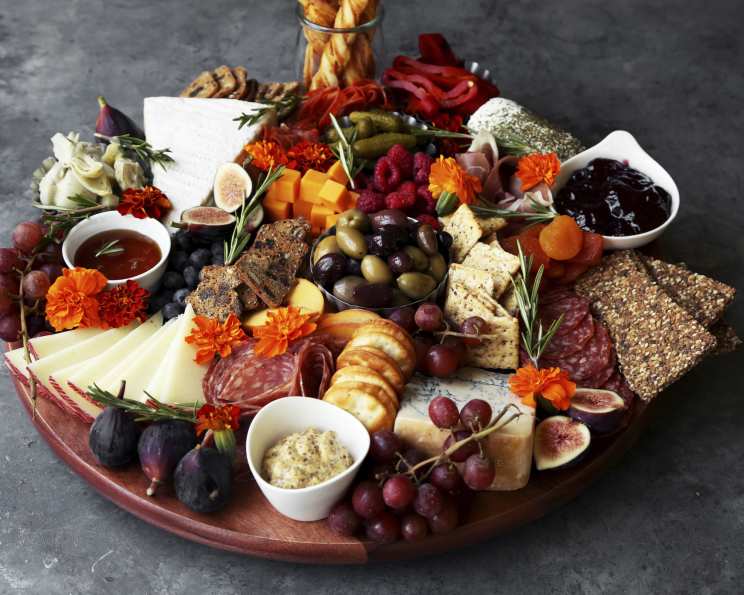
The Art of the Charcuterie Board: A Step-by-Step Guide
The first time I made a charcuterie board, it was a disaster. Picture this: a lopsided cutting board, a sad pile of cheddar cheese cubes, and some slightly bruised grapes clinging desperately to their vine. It looked less like a culinary masterpiece and more like something a toddler had assembled. But the laughter and conversation it sparked? Priceless. That’s when I realized a charcuterie board isn’t just about the food; it’s about creating a shared experience, a canvas for connection. Now, years later, I’m thrilled to share my tips for crafting a board that’s both beautiful and delicious.
Recipe Overview
- Prep Time: 30 minutes
- Ready In: 30 minutes
- Servings: 20-25
- Yields: 1 large board
Ingredients
- 1/2 lb sliced prosciutto
- 1/2 lb sopressata
- 1/2 lb salami
- 8 ounces brie cheese, cut into a wedge
- 8 ounces manchego cheese, cut into thin wedges and placed in a circle
- 8 ounces goat cheese, left whole for guests to cut
- 8 ounces sharp cheddar cheese, cut into squares and fanned
- 2 ounces whole grain mustard, spooned into a ramekin
- 2 ounces fruit preserves, spooned into a ramekin
- 2 ounces cornichons, placed in a ramekin
- 1 bunch grapes, left on the vine
- 1 cup raspberries, left whole and placed throughout
- 1/2 of a fresh peach, cut into wedges
- 3-4 fresh figs, cut in half
- 1/2 cup salted pecans
- 10 seeded crackers, fanned around the board
- 1 cup pita chips, stacked in the corner
- 15 breadsticks, placed in a jar for height
- 4 rosemary sprigs (to garnish)
Equipment Needed
- Large serving board (wood, slate, or marble)
- Small ramekins or jars
- Cheese knife
- Small knife for fruit
Instructions
-
Cheese Preparation: Begin by addressing the cheese, the stars of our show. Cut the brie cheese into a large, generous wedge. This encourages guests to dig in and enjoy the creamy texture. Next, take the manchego cheese and cut it into thin wedges. Arrange these wedges in a circle, with their points facing one another. This creates an elegant, visually appealing presentation. Cut the sharp cheddar cheese into neat cubes, and create a fun, slightly haphazard stack. The varying heights add interest. Finally, leave the goat cheese whole, placing a cheese knife nearby, allowing guests to cut their own desired portion. This adds a touch of rustic charm and allows for customization.
-
Meat Mastery: Now, onto the meats! The prosciutto is thinly sliced, which lends itself beautifully to being bunched up. Create small, artful piles of prosciutto, allowing its delicate, salty flavor to shine. Because the soppressata is typically cut thicker than the other meats, we want to showcase it in a different way. Fan the slices of soppressata along the board, creating a semi-circle or wavy line. This allows each slice to be easily accessible. With the salami, we’re going to get a little creative. Fold each salami slice in half, and then in half once more, so that it sits upright. Intertwine these salami folds to create a “rose bouquet,” a truly eye-catching element.
-
Condiment Corner: You can’t have a charcuterie board without condiments! Invest in a few ramekins for your delicious spreads to complement your meats and cheese. (Tip: you can also use old jam jars or mason jars you have handy). Place three ramekins in different spots around the board, and fill each with your whole grain mustard, fruit preserves, and cornichons. Spacing the ramekins strategically will help to balance the overall aesthetic.
-
Fruit Forward: Fresh fruit is your friend! Find a spot for your grapes. (Tip: keeping them on the vine brings some height without them falling off the board). Cutting peaches in wedges gives a cleaner look, while cutting seasonal fruits like figs in half will show off its colorful, textured inside. Raspberries should be stacked in places that need to be filled.
-
Crackers and Crunch: The remaining space you have on your board is now dedicated to different types of nuts and crackers/crisps. Place your salted pecans either in one spot, or scatter them in different areas. Fan your seeded crackers, and stack your pita chips. Place a ramekin or jar down, if room permits, and use that for the long breadsticks! (tip: This allows them to stick up and add dimension).
-
Garnish Glamour: Lastly, jazz it up! Garnish does wonders while bringing color and texture to your board. There are several different herbs and edible flowers you can use. We chose sprigs of rosemary. Place them around, and break them in half if needed. This will bring your board over the top.
-
Board Alternatives: Pro tip: No board? No problem! Feel free to use everyday kitchen tools like a pizza paddle, cast iron skillet or a sheet pan of any size to display the fruits of your labor (pun intended)!
Expert Tips & Tricks
- Cheese Temperature: Let your cheeses sit at room temperature for about 30 minutes before assembling the board. This allows them to soften slightly and develop their full flavor.
- Flavor Pairing: Think about complementary flavors when arranging your board. For example, place the prosciutto near the melon for a classic sweet and savory pairing.
- Start Big: Begin by placing your largest items (cheese wedges, ramekins of condiments) first, then fill in the gaps with smaller items.
- Color and Texture: Aim for a variety of colors and textures to create a visually appealing board. The bright red of raspberries, the deep green of rosemary, and the smooth texture of brie all contribute to the overall aesthetic.
- Prep Ahead: You can prep many of the components ahead of time. Slice the cheese, arrange the meats, and prepare the condiments. Store them separately in the refrigerator until ready to assemble the board.
Serving & Storage Suggestions
Serve your charcuterie board immediately after assembly to ensure optimal freshness and prevent the cheese from drying out. If serving outdoors, keep the board in a cool, shaded area.
Leftovers should be stored in airtight containers in the refrigerator. Meats and cheeses will generally keep for 3-5 days. Crackers and nuts should be stored separately to prevent them from becoming stale. The fruit is best enjoyed fresh, but any remaining berries can be added to smoothies or yogurt.
Nutritional Information
| Nutrient | Amount per Serving | % Daily Value |
|---|---|---|
| Calories | 547.5 kcal | N/A |
| Calories from Fat | 217 g | 40% |
| Total Fat | 24.2 g | 37% |
| Saturated Fat | 9.5 g | 47% |
| Cholesterol | 40.3 mg | 13% |
| Sodium | 959.3 mg | 39% |
| Total Carbohydrate | 63.1 g | 21% |
| Dietary Fiber | 3.6 g | 14% |
| Sugars | 6.4 g | 25% |
| Protein | 19.2 g | 38% |
Variations & Substitutions
- Vegetarian Board: Swap the meats for grilled vegetables (such as zucchini, bell peppers, and eggplant), marinated artichoke hearts, and various olives.
- Vegan Board: Use plant-based cheeses, vegan charcuterie alternatives, and an assortment of pickled vegetables, nuts, and fruits.
- Seasonal Board: Adapt the fruits and vegetables to the current season. In the fall, include apples, pears, and cranberries. In the summer, use berries, peaches, and plums.
- Mediterranean Board: Incorporate hummus, baba ghanoush, feta cheese, olives, and pita bread.
- Sweet & Savory Board: Add chocolate-covered pretzels, dried fruits, and candied nuts for a touch of sweetness.
- Cheese Alternatives: Use different types of cheeses such as Gorgonzola, Gruyere, or Havarti.
FAQs (Frequently Asked Questions)
Q: How far in advance can I assemble a charcuterie board?
A: It’s best to assemble the board no more than a few hours in advance. Wrap it tightly in plastic wrap and store it in the refrigerator until ready to serve. However, add the crackers just before serving to prevent them from becoming soggy.
Q: What’s the best way to cut hard cheeses like cheddar?
A: For hard cheeses, cut them into cubes or wedges. Using a cheese knife with a pointed tip can help break off clean pieces.
Q: How much cheese and meat should I buy per person?
A: As a general guideline, plan for about 2-3 ounces of cheese and 2-3 ounces of meat per person.
Q: Can I use a different type of board if I don’t have a wooden one?
A: Absolutely! A slate board, marble slab, large platter, or even a clean cutting board will work just fine.
Q: What drinks pair well with a charcuterie board?
A: Wine (red, white, or rosé), beer, sparkling cider, or even iced tea all complement a charcuterie board nicely.
Final Thoughts
Creating a charcuterie board is an art form, but it’s also an incredibly fun and accessible one. Don’t be afraid to experiment with different flavors, textures, and presentations. Whether you’re hosting a casual gathering or a formal event, a well-crafted charcuterie board is sure to impress your guests and spark conversation. So go ahead, gather your ingredients, unleash your creativity, and enjoy the process of building a culinary masterpiece. And please, share your creations with me—I’d love to see what you come up with!