
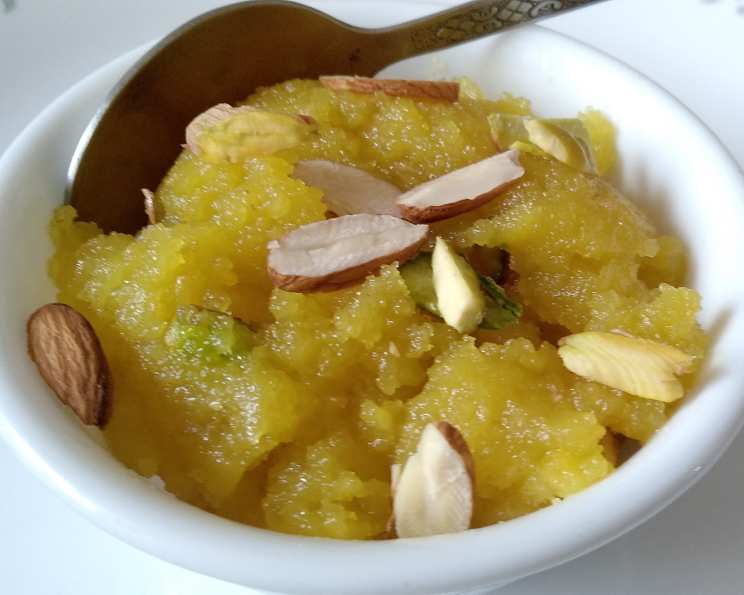
The Golden Embrace: Mastering Moong Daal Halwa
The aroma of ghee simmering with roasted lentils… it instantly transports me back to my grandmother’s kitchen. During Diwali, a symphony of spices and sweets would fill the air, but the star was always her Moong Daal Halwa. The rich, golden hue of the halwa, glistening under the soft kitchen lights, was more than just a dessert; it was a symbol of warmth, family, and the joyous celebrations that defined my childhood. That first bite, the melt-in-your-mouth texture, the nutty sweetness, and the lingering fragrance of cardamom – it’s a memory I cherish, and a flavor I strive to recreate with every batch I make.
Recipe Overview
- Prep Time: 3 hours 15 minutes (includes soaking time)
- Cook Time: 25 minutes
- Total Time: 3 hours 40 minutes
- Servings: 8
- Yield: Approximately 6-8 cups
- Dietary Type: Vegetarian
Ingredients
- 1 cup split yellow moong daal, washed thoroughly
- 1 cup sugar
- 1 cup water
- 7 cups ghee (clarified butter)
- 2 teaspoons ghee (for nuts)
- 1 bowl mixed nuts (Almonds, Cashews, Pistachios), chopped
Equipment Needed
- Large, heavy-bottomed pan or kadhai
- Grinder or blender
- Spatula
- Plate or steel strainer
- Small pan for sugar syrup
- Serving bowl
Instructions
-
Soaking the Daal: Begin by thoroughly washing the moong daal under cold water until the water runs clear. This removes excess starch and impurities. Then, soak the washed daal in enough water to cover it completely for 2-3 hours. This step is crucial as it softens the daal and makes it easier to grind.
-
Grinding the Daal: After soaking, drain all the water from the moong daal. Using a grinder or blender, grind the daal into a smooth, but slightly coarse paste. Avoid adding any water during grinding, as this can affect the final texture of the halwa. The consistency should be similar to a thick, grainy batter.
-
Roasting the Daal in Ghee: Take a large, heavy-bottomed pan or kadhai. The heavy bottom prevents the halwa from sticking and burning. Add 7 cups of ghee to the pan and heat it over medium heat. Once the ghee is warm, gently add the ground moong daal paste.
-
Continuous Roasting: This is the most crucial and time-consuming part of the recipe. Continuously fry the moong daal paste in the ghee, stirring constantly to prevent it from sticking to the bottom of the pan. This process takes approximately 20 minutes or more, depending on the heat and the size of your pan. The daal will initially absorb the ghee and become a thick mass. As you continue to roast, the ghee will start to separate, and the daal will turn a beautiful golden-brown color.
-
Checking for Doneness: Taste the roasting daal periodically. It should have a nutty aroma and a slightly granular texture. If it still tastes raw, continue to fry it for a while longer, stirring constantly. The key is to roast the daal until it is cooked through and has a rich, aromatic flavor. Patience is key here. Do not rush this step, or the halwa will not taste its best.
-
Removing Excess Ghee: Once the moong daal is properly roasted, carefully remove it from the pan and place it on a plate or in a steel strainer. This will allow the excess ghee to drain out. If using a plate, it will take approximately 2-3 hours for the ghee to drain completely. If using a steel strainer, the ghee will drain out in about 15-20 minutes. You can gently press the mixture to expedite the process. However, traditionally, allowing it to drain slowly yields a better, less greasy halwa.
-
Making the Sugar Syrup: While the moong daal is draining, prepare the sugar syrup. In a separate pan, combine 1 cup of water and 1 cup of sugar. Heat the mixture over medium heat, stirring until the sugar is completely dissolved. Allow the syrup to simmer for about 5 minutes until it thickens slightly. You don’t need to make a string consistency syrup; just ensure the sugar is fully dissolved and the syrup is slightly viscous.
-
Combining Daal and Syrup: Once the excess ghee has drained from the moong daal, return it to the heavy-bottomed pan. Slowly pour the sugar syrup over the roasted daal, stirring constantly to ensure that it is evenly distributed. Be careful, as the mixture may splatter when the syrup comes into contact with the hot daal.
-
Cooking in Syrup: Cover the pan and let the moong daal cook in the sugar syrup over low heat. This allows the daal to absorb the syrup and soften further. Stir the mixture occasionally to prevent it from sticking to the bottom of the pan.
-
Preparing the Nuts: While the halwa is cooking, prepare the nuts. Chop the almonds, cashews, and pistachios into small pieces. In a separate small pan, heat 2 teaspoons of ghee. Add the chopped nuts and sauté them until they are lightly golden and fragrant. This enhances their flavor and adds a nice crunch to the halwa.
-
Adding Nuts to Halwa: Stir the moong daal halwa once again to ensure even cooking. Add the sautéed nuts to the halwa and stir again to incorporate them evenly.
-
Serving: Transfer the prepared moong daal halwa to a serving bowl. Garnish it with additional chopped nuts for an elegant presentation.
Expert Tips & Tricks
- Ghee is Key: Don’t skimp on the ghee! It’s essential for the rich flavor and texture of the halwa.
- Roasting is Everything: Properly roasting the daal is crucial. Under-roasted daal will taste raw, while over-roasted daal will be bitter.
- Heavy-Bottomed Pan: Use a heavy-bottomed pan to prevent sticking and burning.
- Patience is a Virtue: This recipe requires patience. Don’t rush any of the steps, especially the roasting process.
- Flavor Infusion: For a more intense flavor, add a pinch of cardamom powder or a few strands of saffron to the sugar syrup.
Serving & Storage Suggestions
Serve the Moong Daal Halwa warm or at room temperature. It can be served as a dessert after a meal or as a sweet treat during festive occasions. Leftover halwa can be stored in an airtight container in the refrigerator for up to 3-4 days. To reheat, simply microwave it for a few seconds or warm it in a pan over low heat, adding a splash of milk or ghee if needed to restore its moisture. Freezing is not recommended, as it can alter the texture.
Nutritional Information
| Nutrient | Amount per Serving | % Daily Value |
|---|---|---|
| Calories | 876 kcal | 44% |
| Total Fat | 91.5g | 141% |
| Saturated Fat | 57g | 285% |
| Cholesterol | 235mg | 78% |
| Sodium | 0.7mg | 0% |
| Total Carbohydrate | 16.3g | 5% |
| Dietary Fiber | 1.9g | 8% |
| Sugars | 12.6g | 25% |
| Protein | 1.9g | 4% |
Nutritional information is an estimate and may vary based on specific ingredients and cooking methods.
Variations & Substitutions
- Vegan Halwa: While traditionally made with ghee, you can experiment with vegan ghee alternatives like coconut oil or a blend of plant-based oils. However, the flavor profile will be slightly different.
- Sugar Alternatives: You can substitute sugar with other sweeteners like jaggery or brown sugar for a different flavor dimension. Adjust the quantity based on your preferred sweetness level.
- Nut Variations: Feel free to experiment with different types of nuts, such as walnuts, pecans, or macadamia nuts. You can also add dried fruits like raisins or chopped dates.
- Spice Variations: Add a pinch of nutmeg or cinnamon powder along with cardamom for a warmer, more complex flavor profile.
FAQs (Frequently Asked Questions)
Q: Why is it important to soak the moong daal?
A: Soaking the daal softens it, making it easier to grind into a smooth paste. This results in a smoother halwa with a better texture.
Q: Can I use a regular pan instead of a heavy-bottomed pan?
A: While you can, a heavy-bottomed pan is highly recommended. It distributes heat more evenly, preventing the halwa from sticking and burning.
Q: How do I know when the moong daal is properly roasted?
A: The daal should turn a golden-brown color and have a nutty aroma. It should also taste cooked and not raw. The ghee will also start to separate from the mixture.
Q: Can I make this recipe ahead of time?
A: Yes, you can prepare the moong daal halwa a day or two in advance and store it in the refrigerator. Simply reheat it before serving.
Q: My halwa is too dry. How can I fix it?
A: Add a splash of milk or ghee and gently heat the halwa until it reaches your desired consistency.
Final Thoughts
Now it’s your turn to create your own golden memories with this timeless recipe. The process might seem a little daunting at first, but trust me, the effort is well worth it. So gather your ingredients, channel your inner chef, and prepare to be transported by the rich flavors and textures of homemade Moong Daal Halwa. Don’t be afraid to experiment with variations and make it your own. And most importantly, share it with your loved ones and create moments of joy and connection around this delicious dessert.