
Is Your Oven Telling the Truth? How to Test Oven Temperature Without a Thermometer
I remember my grandmother’s ancient gas oven – a hulking beast that roared like a dragon and had only “low,” “medium,” and “high” settings. Baking a cake in that thing was a constant adventure. You never quite knew if it would emerge perfectly golden or a burnt offering. It taught me the importance of truly knowing your oven, no matter how technologically advanced (or not) it might be. These simple, reliable tricks will allow you to find out how your oven performs – even without a thermometer.
Recipe Overview
- Prep Time: 5 minutes
- Cook Time: 15 minutes
- Total Time: 20 minutes
- Servings: Variable (Test)
- Yield: N/A
- Dietary Type: N/A
Ingredients
- Granulated sugar
- Aluminum foil (optional)
Equipment Needed
- Oven-proof dish or cookie sheet
Instructions
-
First, preheat your oven to 375°F (186°C). It’s crucial to allow the oven to fully preheat before conducting this test.
-
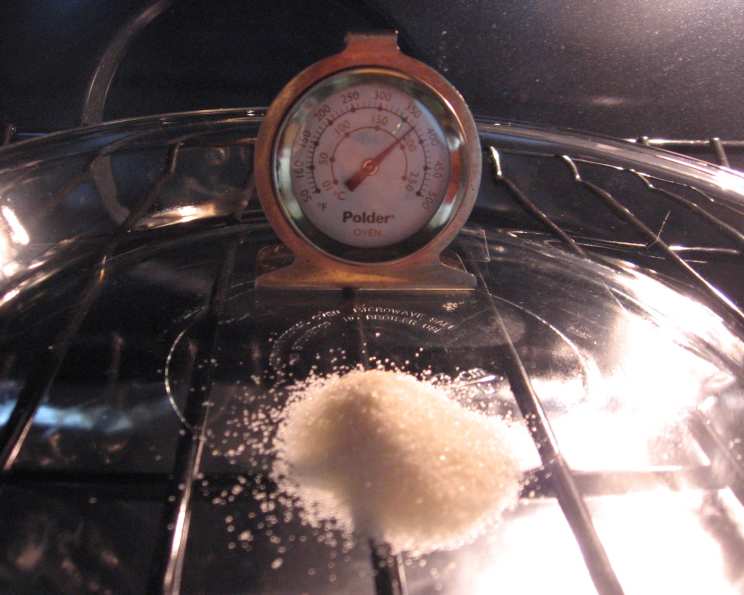
Place a small amount of granulated sugar in an oven-proof dish, such as a ramekin, or on a cookie sheet lined with aluminum foil. The foil is simply for easier cleanup. Avoid using parchment paper, as it can insulate the sugar and affect the results.
-
Carefully place the dish or cookie sheet with the sugar into the preheated oven.
-
Bake for 15 minutes. Avoid opening the oven door during this time, as this can cause temperature fluctuations.
-
After 15 minutes, carefully remove the dish from the oven. Observe the sugar.
-
If your oven is calibrated correctly, the sugar will melt completely. It should be clear and liquid, like melted glass.
-
If your oven is running cold, the sugar will not melt. It may soften slightly around the edges, but it will mostly remain in its crystalline form.
-
-
Now, preheat your oven to 350°F (177°C). Again, ensure the oven is fully preheated.
-
Follow the same procedure as above: place a small amount of granulated sugar in an oven-proof dish or on aluminum foil, and place it in the oven.
-
Bake for 15 minutes.
-
After 15 minutes, carefully remove the dish and observe the sugar.
-
If your oven is calibrated correctly, the sugar will not melt. It may brown very slightly, indicating a response to the heat, but it should still largely retain its crystalline structure. If the sugar has completely caramelized, it indicates a much hotter oven.
-
If your oven is running hot, the sugar will melt.
-
Important Notes:
- Ovens don’t maintain a perfectly constant temperature. Instead, they cycle above and below the set temperature to maintain the average. It is possible that the sugar may melt at 350°F (177°C) if your oven is correctly calibrated but has an extreme temperature cycle (e.g., swinging 15°F or 8°C above and below the set point). This is less common with modern ovens but can occur, especially with older models. Repeat the tests multiple times for more confidence.
- The amount of sugar used doesn’t matter much, as long as you have a visible layer. Approximately 1-2 tablespoons is enough.
- Use white, granulated sugar for the best results. Other types of sugar might have different melting points or react differently to heat.
- Make sure your oven is clean. Built-up grease and food debris can affect its temperature regulation.
Expert Tips & Tricks
- Multiple Tests, More Confidence: Don’t rely on just one test at each temperature. Run the test two or three times to get a more accurate picture of your oven’s performance.
- Oven Location Matters: The temperature inside your oven isn’t always uniform. If you suspect hot or cold spots, place the sugar in different areas of the oven (center, back, front, sides) to check for variations.
- Understanding Your Oven’s Cycle: Pay attention to how the sugar melts. Does it melt quickly and evenly, or does it melt slowly and only in certain spots? This can give you clues about your oven’s heating cycle.
- Adjust Baking Times: Once you have a sense of your oven’s true temperature, adjust baking times accordingly. If your oven runs hot, start checking your baked goods a few minutes earlier than the recipe suggests. If it runs cold, you may need to extend the baking time.
Serving & Storage Suggestions
This test doesn’t produce something to be served or stored. The melted sugar can be discarded safely. If you lined the cookie sheet with aluminum foil, simply fold the foil and dispose of it.
Nutritional Information
| Nutrient | Amount per Serving | % Daily Value |
|---|---|---|
| Calories | 15 kcal | 1% |
| Total Fat | 0g | 0% |
| Saturated Fat | 0g | 0% |
| Cholesterol | 0mg | 0% |
| Sodium | 0mg | 0% |
| Total Carbohydrate | 4g | 1% |
| Dietary Fiber | 0g | 0% |
| Sugars | 4g | 0% |
| Protein | 0g | 0% |
Variations & Substitutions
This test is specific to granulated sugar, so substitutions are not recommended. It’s about using the properties of granulated sugar to gauge temperature accuracy.
FAQs (Frequently Asked Questions)
Q: Why use sugar instead of another method to test the oven temperature?
A: Granulated sugar has a known melting point. The visual change from crystalline solid to liquid is easy to observe and interpret, making it a simple and reliable indicator.
Q: What if the sugar melts at both 375°F and 350°F?
A: This suggests that your oven is consistently running hot. You may need to reduce the oven temperature in your recipes by 25°F or more.
Q: Can I use this method in a convection oven?
A: Yes, but convection ovens tend to heat more evenly. You might want to focus on checking for hot or cold spots, rather than just overall temperature accuracy. Reduce cooking time accordingly to avoid burning.
Q: My sugar browned instead of melting. What does this mean?
A: Browning indicates that the sugar is caramelizing. Caramelization typically occurs at temperatures higher than its melting point, so it likely means your oven is running hot, but it also could just mean it needed a few more minutes to melt.
Q: How often should I test my oven temperature?
A: It’s a good idea to test your oven temperature every few months, or whenever you notice inconsistencies in your baking results. Drastic changes in ambient temperature can impact your results.
Final Thoughts
Knowing your oven is key to becoming a confident baker and cook. Don’t let a faulty thermostat stand between you and perfectly golden cookies or a beautifully browned roast. This simple sugar test will empower you to take control of your oven and consistently achieve delicious results. So go ahead, give it a try, and unlock the full potential of your kitchen!