
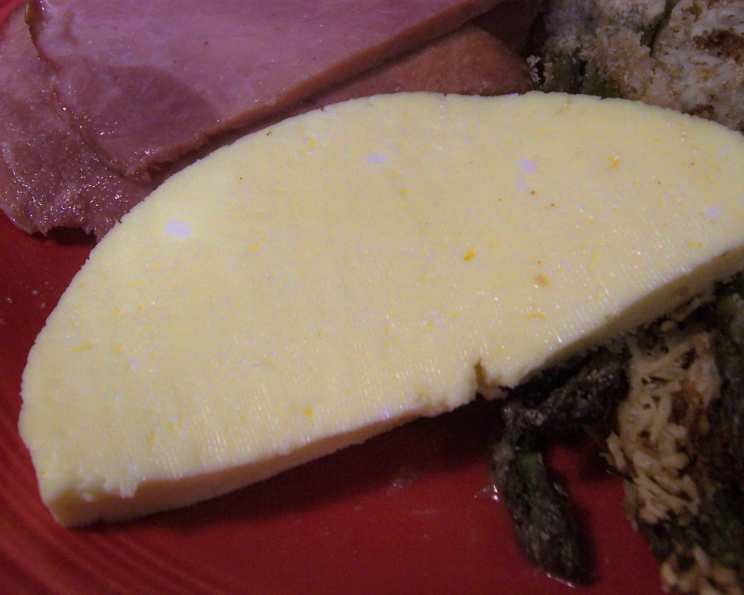
Hrutka: A Czech Easter Tradition
My grandmother’s hands, gnarled and strong from years of tending her garden, always held the most incredible Easter spread. Among the dyed eggs, braided bread, and smoked ham, there was always a mysterious, pale yellow dome sliced and served. I remember being a child, cautiously taking a bite, and being surprised by the delicate, creamy texture and subtly sweet flavor. It was unlike anything I’d ever tasted, and it became synonymous with Easter in my memories – Hrutka, or as we called it, “Egg Cheese.”
Recipe Overview
- Prep Time: 15 minutes
- Cook Time: 2-3 hours
- Total Time: 10-12 hours (including draining and chilling)
- Servings: 8
- Yield: 1 round cheese
- Dietary Type: Vegetarian
Ingredients
- 1 dozen eggs
- 1 quart whole milk, no substitutions
- 1-2 tablespoons honey
- 1 dash salt
- ¼ teaspoon vanilla (optional)
Equipment Needed
- Large saucepan
- Whisk
- Round colander or strainer
- Cheesecloth
- String or twine (for hanging)
Instructions
-
In a large bowl, thoroughly beat together the eggs, whole milk, honey, salt, and vanilla (if using). Ensure the ingredients are well combined. A whisk works best for this to create a uniform mixture.
-
Pour the mixture into a large saucepan. Place the saucepan on the stovetop over low heat. This is crucial for achieving the right texture; rushing the process will result in a rubbery final product.
-
Cook the mixture, stirring frequently, for 2-3 hours. The mixture will slowly begin to coagulate and look similar to cottage cheese. Continue cooking until the liquid starts to separate from the solids, forming curds. This separation is essential for the draining process. Patience is key here; the lower the heat, the better the texture. Be sure to scrape the bottom of the pan to prevent sticking and burning.
-
Line a round colander or strainer with several layers of cheesecloth. Make sure the cheesecloth extends beyond the edges of the colander to fully encase the mixture later.
-
Pour the cooked mixture into the cheesecloth-lined colander or strainer. Gently gather the edges of the cheesecloth and form it into a ball, squeezing out any excess liquid. Tie the top of the cheesecloth tightly with string or twine, ensuring the ball is securely closed.
-
Hang the cheesecloth ball over a sink or bowl to allow the remaining liquid to drain. Let it drain for approximately 3 hours. This step removes excess whey, resulting in a firmer texture.
-
After draining, chill the Hrutka in the refrigerator for at least 8-10 hours, or preferably overnight. This allows it to fully set and develop its characteristic flavor and texture.
-
To serve, carefully unwrap the Hrutka from the cheesecloth and slice it into rounds.
Expert Tips & Tricks
- Milk Matters: Using whole milk is essential for the richness and proper curdling of the Hrutka. Skim or low-fat milk will not yield the same results.
- Low and Slow: Cooking the mixture over very low heat is paramount. This prevents the eggs from scrambling and ensures a smooth, custard-like texture. A double boiler can be used for even more gentle cooking.
- Curd Check: Don’t rush the cooking process. You’re looking for distinct curd formation and separation of the whey.
- Draining Time: The draining time can be adjusted slightly depending on your desired consistency. For a firmer Hrutka, drain for a longer period.
- Flavor Infusion: Experiment with adding other flavorings to the mixture. Lemon zest, orange zest, or a pinch of nutmeg can add a delightful twist.
Serving & Storage Suggestions
Hrutka is traditionally served cold or at room temperature. It’s a wonderful accompaniment to smoked ham, sausages, and other Easter delicacies. Slice it into rounds and arrange it attractively on a platter. You can also enjoy it on sandwiches with leftover ham, as my mother-in-law does.
Store leftover Hrutka in an airtight container in the refrigerator. It will keep for up to 5 days. While freezing is not recommended as it can alter the texture, you can refrigerate it. It is best served cold, or let sit at room temperature for a short time if you prefer it a little softer.
Nutritional Information
| Nutrient | Amount per Serving | % Daily Value |
|---|---|---|
| Calories | 198 kcal | 10% |
| Total Fat | 12g | 18% |
| Saturated Fat | 5g | 25% |
| Cholesterol | 325mg | 108% |
| Sodium | 180mg | 8% |
| Total Carbohydrate | 9g | 3% |
| Dietary Fiber | 0g | 0% |
| Sugars | 10g | |
| Protein | 14g | 28% |
Nutritional information is an estimate and can vary based on specific ingredients and portion sizes.
Variations & Substitutions
- Savory Hrutka: Omit the honey and vanilla and add chopped fresh herbs like chives, parsley, or dill for a savory version.
- Spice It Up: Add a pinch of red pepper flakes for a subtle kick.
- Sweetener Alternatives: Maple syrup or agave nectar can be used in place of honey. Adjust the amount to your desired sweetness.
- Vegan Variation (experimental): While traditional Hrutka relies on eggs, experimenting with a base of blended silken tofu, plant-based milk, and a thickening agent like agar-agar might yield a vegan alternative. This would drastically alter the flavor and texture, but it could be an interesting culinary exploration.
FAQs (Frequently Asked Questions)
Q: Why is it important to use whole milk?
A: Whole milk provides the necessary fat content for proper curdling and a rich, creamy texture. Lower-fat milk will not yield the same results.
Q: Can I speed up the cooking process by using higher heat?
A: No, cooking over higher heat will likely result in scrambled eggs and a grainy texture. Low and slow is essential for a smooth, custard-like Hrutka.
Q: How do I know when the mixture is ready to be drained?
A: The mixture is ready when it resembles cottage cheese, with distinct curds forming and liquid separating from the solids.
Q: Can I use a different type of cheesecloth?
A: Yes, any fine-weave cheesecloth will work. Just make sure to use enough layers to prevent the curds from escaping.
Q: What if my Hrutka is too soft after chilling?
A: If the Hrutka is too soft, you may need to drain it for a longer period next time. You can also try gently pressing it in the cheesecloth to remove more liquid.
Final Thoughts
Hrutka is more than just a recipe; it’s a taste of tradition, a link to generations past, and a reminder of shared moments around the Easter table. It’s a simple dish, yet it carries within it the essence of springtime celebrations. I encourage you to try this recipe, make it your own, and share it with loved ones. I hope you enjoy the process of creating this unique delicacy and, most importantly, savor the memories it creates. Let me know what you think!