
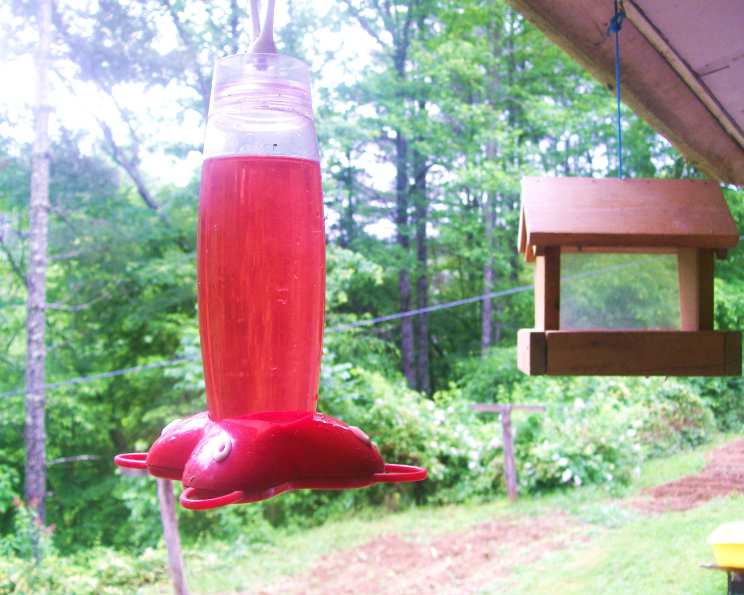
The Sweetest Sip: Crafting Homemade Hummingbird Syrup
My grandmother, a woman whose hands seemed perpetually dusted with flour or stained with berry juice, always had a hummingbird feeder hanging outside her kitchen window. I remember being mesmerized as a child, watching those tiny, iridescent jewels flit and hover, their wings a blur as they drank from the bright red nectar. She’d tell me stories about each one – the brave little scout, the territorial bully, the shy newcomer. It wasn’t just feeding the birds; it was a connection to the natural world, a simple act of kindness that brought so much joy. Years later, I carry on that tradition, and this simple syrup is the key to keeping my own hummingbird visitors happy and healthy.
Recipe Overview
- Prep Time: 2 minutes
- Cook Time: 4 minutes
- Total Time: 6 minutes
- Servings: Varies based on feeder size
- Yield: About 5 cups
- Dietary Type: Vegan
Ingredients
- 1 cup granulated sugar
- 4 cups water
- Optional: a few drops of red food coloring
Equipment Needed
- Saucepan
- Measuring cups
- Spoon or whisk
- Hummingbird feeder
- Funnel (optional, for easy filling)
Instructions
-
In a saucepan, combine 1 cup of granulated sugar and 4 cups of water.
-
Place the saucepan over medium-high heat on your stovetop.
-
Stir the mixture continuously until the sugar is completely dissolved and the solution is clear. This usually takes about 3-4 minutes. You shouldn’t see any sugar granules at the bottom of the pan.
-
Remove the saucepan from the heat and let the syrup cool completely. It’s important that the syrup is cool before filling your hummingbird feeder.
-
(Optional) Once cooled, add a few drops of red food coloring to the syrup. This helps attract the hummingbirds to your feeder. However, many experts advise against using food coloring, as it’s not necessary to attract hummingbirds and may even be harmful in large quantities. Your feeder will attract them just fine if it is cleaned often.
-
Carefully pour the cooled hummingbird syrup into your clean hummingbird feeder. A funnel can be helpful to prevent spills.
-
Hang your feeder and enjoy watching the hummingbirds!
Expert Tips & Tricks
- Don’t over-sweeten! The 1:4 ratio of sugar to water is crucial. Too much sugar can be harmful to the hummingbirds.
- Skip the honey, brown sugar, or artificial sweeteners. Only use white granulated sugar for the health of the birds. Other sweeteners can promote bacterial growth.
- Boiling vs. Heating: While heating until the sugar dissolves is sufficient, some people prefer to bring the mixture to a boil for a minute or two. This can help further sterilize the syrup.
- Avoid honey: Honey is not digestible by hummingbirds and can lead to a fungal infection that can be fatal.
- Don’t add preservatives: The sugar acts as a natural preservative. Keeping the feeder clean and changing the syrup regularly is the best way to prevent spoilage.
- Clean feeders regularly: Wash your hummingbird feeder with hot, soapy water at least once a week, or more frequently in hot weather. Use a bottle brush to scrub away any mold or mildew. Rinse thoroughly before refilling. A diluted bleach solution (1 part bleach to 9 parts water) can be used to sanitize the feeder, but make sure to rinse it extremely well afterwards.
- Choosing a feeder: Opt for a feeder that is easy to clean and disassemble.
- Location matters: Place your feeder in a shady spot to slow down fermentation of the syrup.
- Ant control: If ants are a problem, consider using an ant moat – a small container filled with water that hangs above the feeder to prevent ants from reaching the nectar. You can also use petroleum jelly on the hanging wire.
Serving & Storage Suggestions
Once the syrup has cooled completely, it’s ready to be served (to the hummingbirds, of course!). Pour the syrup into your clean hummingbird feeder, ensuring it is properly assembled and hung in a visible location.
- Storage: Store any leftover syrup in an airtight container in the refrigerator for up to two weeks. Discard any syrup that shows signs of mold or cloudiness.
- Do not leave syrup in the feeder for too long, especially in hot weather. Replace the syrup every 1-2 days in hot weather, even if it hasn’t been completely consumed. This prevents the growth of bacteria and mold.
- Freezing: While not generally recommended, hummingbird syrup can be frozen for longer storage. However, it’s best to use fresh syrup whenever possible.
Nutritional Information
The primary nutritional benefit of this syrup is its provision of carbohydrates, which supply the hummingbirds with the energy they need to fly and forage.
| Nutrient | Amount per Serving (1 fl oz) | % Daily Value (Hummingbird) |
|---|---|---|
| Calories | ~25 kcal | N/A |
| Total Fat | 0g | N/A |
| Saturated Fat | 0g | N/A |
| Cholesterol | 0mg | N/A |
| Sodium | 0mg | N/A |
| Total Carbohydrate | ~6g | N/A |
| Dietary Fiber | 0g | N/A |
| Sugars | ~6g | N/A |
| Protein | 0g | N/A |
Variations & Substitutions
While this recipe is simple and effective, there aren’t many variations needed. The health and safety of the hummingbirds should always be the priority.
- No Food Coloring: As mentioned earlier, many ornithologists recommend omitting the red food coloring altogether. The red color of the feeder itself is usually enough to attract the birds. If you’re concerned about attracting them, try hanging red ribbons near the feeder.
- Organic Sugar: Using organic sugar is a good option if you prefer to avoid refined sugars. However, it’s not essential, as regular granulated sugar is perfectly safe for hummingbirds.
- Larger Batches: Feel free to scale up the recipe to make a larger batch of syrup, but remember to maintain the 1:4 ratio of sugar to water. Store any extra syrup in the refrigerator.
FAQs (Frequently Asked Questions)
Q: Is it really necessary to use red food coloring?
A: No, it’s not necessary. The red color of the feeder itself is usually enough to attract hummingbirds, and many experts advise against using food coloring due to potential health concerns.
Q: How often should I clean my hummingbird feeder?
A: You should clean your feeder at least once a week with hot, soapy water, or more frequently (every 1-2 days) in hot weather. This prevents the growth of mold and bacteria that can harm the birds.
Q: Can I use honey instead of sugar?
A: No, you should never use honey in hummingbird syrup. Honey can promote fungal growth that is harmful, even fatal, to hummingbirds.
Q: How long does hummingbird syrup last in the refrigerator?
A: Hummingbird syrup can be stored in the refrigerator for up to two weeks. However, always check for signs of mold or cloudiness before using, and discard if necessary.
Q: What if ants are attracted to my hummingbird feeder?
A: You can use an ant moat (a small container filled with water that hangs above the feeder) or apply petroleum jelly to the hanging wire to prevent ants from reaching the nectar. Avoid using pesticides near the feeder, as they can be harmful to the birds.
Final Thoughts
Making your own hummingbird syrup is a simple, rewarding way to connect with nature and support these amazing little creatures. By following this easy recipe and the tips provided, you can create a healthy and safe food source that will keep your hummingbird visitors happy and thriving. So, get out your saucepan, mix up a batch of syrup, and enjoy the spectacle of these aerial acrobats gracing your garden with their presence. And don’t forget to share your experiences – I’d love to hear how this recipe works for you and any special hummingbird stories you might have!