
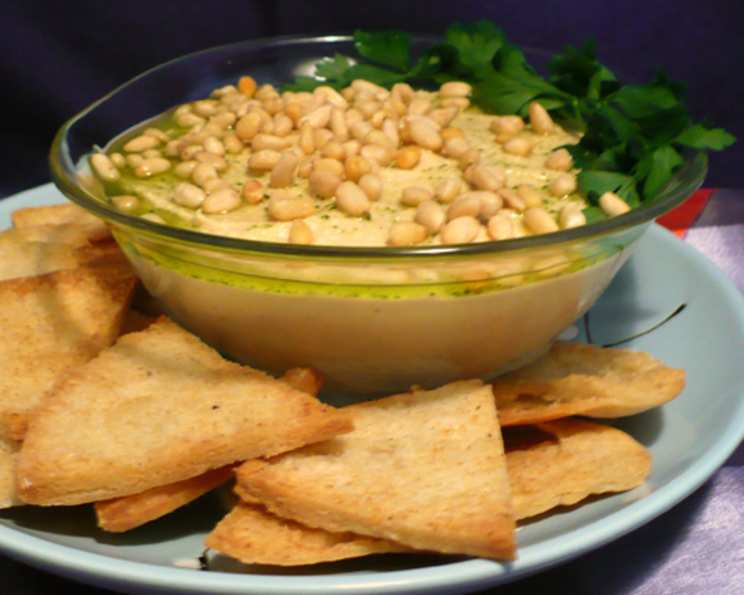
Hummus With Toasted Pine Nuts, Cumin Seeds and Parsley Oil
I remember my first taste of truly exceptional hummus. It wasn’t in a trendy Middle Eastern restaurant, but at a small community gathering where a friend, fresh off a trip to Lebanon, had prepared it. What struck me wasn’t just the creamy texture or the vibrant flavors, but the stunning emerald-green parsley oil drizzled across the top. The visual appeal elevated the simple dish, promising something extraordinary. The combination of flavors – earthy chickpeas, nutty tahini, bright lemon, and the herbaceous parsley – created an experience that has forever changed my perception of hummus. This recipe aims to recreate that magic, bringing a touch of elegance and unexpected flavor to a beloved classic.
Recipe Overview
- Prep Time: 20 minutes
- Cook Time: 8 minutes
- Total Time: 28 minutes
- Servings: Varies, approximately 4 cups
- Yield: Approximately 4 cups
- Dietary Type: Vegan, Gluten-Free
Ingredients
- ¼ cup packed fresh flat-leaf parsley, plus 2-3 sprigs for garnish
- ¾ cup extra virgin olive oil
- 3 tablespoons pine nuts
- 1 teaspoon cumin seed
- 2 (19 ounce) cans chickpeas, drained and rinsed
- 4 garlic cloves
- ⅔ cup well-stirred tahini
- ⅔ cup water
- 5 tablespoons fresh lemon juice (to taste)
- 1 teaspoon salt
Equipment Needed
- Food processor or blender
- Fine-mesh sieve
- Small pan
- Shallow serving dishes
Instructions
-
Preheat your oven to 350ºF (175ºC). Position the rack in the middle of the oven.
-
Prepare the parsley oil: In a food processor or blender, combine the ¼ cup packed fresh flat-leaf parsley with ¼ cup extra virgin olive oil. Process until smooth, creating a vibrant green puree.
-
Strain the parsley oil: Place a fine-mesh sieve over a small bowl. Pour the parsley puree into the sieve and press hard on the solids to extract as much oil as possible. Discard the solids. Set the strained parsley oil aside.
-
Toast the pine nuts and cumin seeds: In a small pan, combine the 3 tablespoons pine nuts and 1 teaspoon cumin seeds. Place the pan in the preheated oven and toast until the pine nuts are golden brown (approximately 8 minutes). Stir occasionally to ensure even toasting and prevent burning.
-
Cool the toasted nuts and seeds: Remove the pan from the oven and let the toasted pine nuts and cumin seeds cool completely.
-
Prepare the garlic and chickpeas: In a food processor, combine ½ cup of the drained and rinsed chickpeas with the 4 garlic cloves. Process until the garlic is finely minced. This step helps to evenly distribute the garlic flavor throughout the hummus.
-
Make the hummus: Add the ⅔ cup well-stirred tahini, ⅔ cup water, 5 tablespoons fresh lemon juice, 1 teaspoon salt, the remaining chickpeas, and the remaining ½ cup extra virgin olive oil to the food processor. Process until the hummus is smooth and creamy. Taste and adjust the lemon juice and salt as needed to achieve your desired flavor.
-
Prepare the parsley garnish: Strip the leaves from the remaining 2-3 sprigs of parsley.
-
Assemble the hummus: Divide the hummus between two shallow dishes and smooth the tops with a spoon or spatula.
-
Garnish the hummus: Drizzle generously with the prepared parsley oil. Scatter the toasted pine nuts and cumin seeds evenly over the tops of the hummus. Garnish with the parsley leaves.
-
Serve: Season with additional salt to taste, if desired. Serve immediately with pita toast, fresh vegetables, or your favorite dippers.
Expert Tips & Tricks
-
Tahini Quality Matters: The quality of your tahini significantly impacts the final flavor. Look for tahini that is smooth, creamy, and made from high-quality sesame seeds. Avoid tahini that is bitter or overly thick.
-
Warm Chickpeas for Creamier Hummus: Gently warming the chickpeas before blending can result in a smoother, creamier hummus.
-
Ice Water for Extra Fluffiness: Instead of regular water, try using ice water to thin out the hummus. The cold temperature can help to create a lighter, fluffier texture.
-
Adjusting Lemon Juice: Start with the recommended amount of lemon juice and then add more to taste. The acidity of lemons can vary, so you may need to adjust the amount to achieve the perfect balance.
-
Preventing a Bitter Taste: Ensure the garlic is finely minced and evenly distributed to avoid overpowering the hummus and causing a bitter taste. You can also roast the garlic cloves before adding them for a milder flavor.
Serving & Storage Suggestions
This hummus, adorned with vibrant parsley oil, is best served at room temperature with warm pita bread, an assortment of fresh vegetables (such as carrots, cucumbers, and bell peppers), or alongside falafel.
Storage: The hummus and parsley oil can be made up to 3 days in advance and refrigerated separately. Store the hummus in an airtight container and the parsley oil in a sealed jar. Be sure to bring the parsley oil to room temperature before using, as refrigeration can cause it to solidify slightly.
Nutritional Information
| Nutrient | Amount per Serving | % Daily Value |
|---|---|---|
| Calories | 961.6 kcal | N/A |
| Calories from Fat | 605 g | 63% |
| Total Fat | 67.3 g | 103% |
| Saturated Fat | 8.9 g | 44% |
| Cholesterol | 0 mg | 0% |
| Sodium | 1421.7 mg | 59% |
| Total Carbohydrate | 75.3 g | 25% |
| Dietary Fiber | 16.1 g | 64% |
| Sugars | 0.7 g | 2% |
| Protein | 21.8 g | 43% |
Please note that these values are estimates and may vary based on specific ingredients and portion sizes.
Variations & Substitutions
-
Spicy Hummus: Add a pinch of cayenne pepper or a drizzle of hot sauce to the hummus for a spicy kick.
-
Roasted Red Pepper Hummus: Roast 1-2 red bell peppers until the skin is blackened. Peel, seed, and add the roasted red pepper flesh to the food processor along with the other ingredients.
-
Sun-Dried Tomato Hummus: Add ¼ cup of oil-packed sun-dried tomatoes (drained) to the food processor for a tangy and flavorful twist.
-
Herb Variations: Experiment with different herbs in the parsley oil. Try using cilantro, mint, or basil for a unique flavor profile.
-
Nut-Free Topping: If you have a nut allergy, substitute the pine nuts with sunflower seeds or pumpkin seeds.
FAQs (Frequently Asked Questions)
Q: Can I use dried chickpeas instead of canned?
A: Yes, you can absolutely use dried chickpeas. Soak them overnight and then cook them until tender before using them in the recipe. This will add a depth of flavor to your hummus.
Q: How do I make the hummus smoother?
A: Remove the outer skins of the chickpeas after cooking or draining them. This extra step makes a noticeable difference in the final smoothness of the hummus.
Q: Can I freeze hummus?
A: Yes, hummus freezes well. Store it in an airtight container for up to 3 months. Thaw it in the refrigerator overnight before serving. The texture might change slightly, but it will still taste delicious.
Q: What can I use if I don’t have tahini?
A: While tahini is a key ingredient in hummus, you can try substituting it with sunflower seed butter or almond butter in a pinch. Be aware that this will alter the flavor of the hummus.
Q: Why is my hummus bitter?
A: Bitterness in hummus is often caused by low-quality tahini or too much garlic. Ensure you are using good-quality tahini and that the garlic is finely minced.
Final Thoughts
This hummus recipe is more than just a simple dip; it’s an invitation to experience a symphony of flavors and textures. The bright, herbaceous parsley oil elevates the classic hummus to something truly special, making it a show-stopping appetizer or a satisfying snack. Don’t be afraid to experiment with the variations and find your own perfect combination of flavors. So, gather your ingredients, fire up your food processor, and prepare to be amazed by the transformative power of this humble dish. Enjoy!