
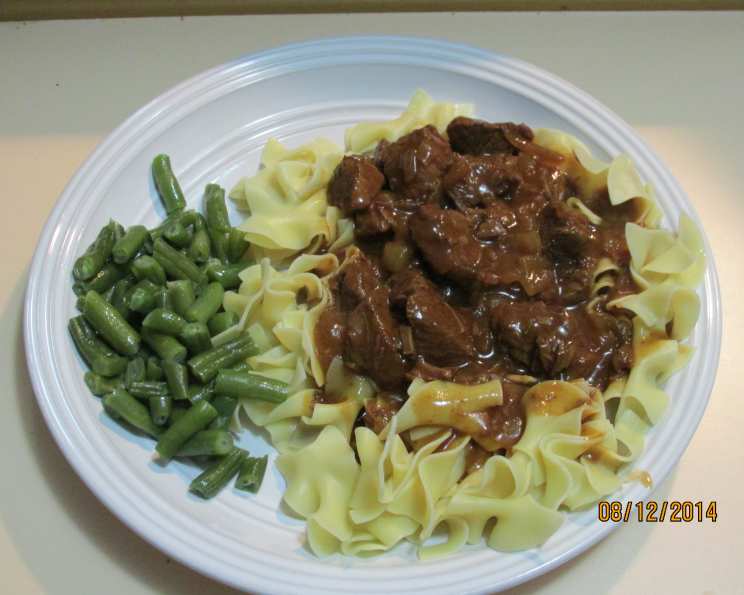
A Taste of Home: My Grandmother’s Hungarian Goulash
The scent alone transports me back to my grandmother’s small, cozy kitchen. I remember the steam rising from the pot on the stove, carrying the rich, savory aroma of slowly simmered beef, sweet paprika, and onions. We’d gather around her worn wooden table, the warmth of the goulash chasing away the chill of a Midwestern autumn. Each bite was a comforting hug, a taste of her love and heritage.
Recipe Overview
- Prep Time: 20 minutes
- Cook Time: 2 hours
- Total Time: 2 hours 20 minutes
- Servings: 8
- Dietary Type: Hearty Comfort Food
Ingredients
- 1 lb beef, cut into cubes
- 2 medium onions, minced
- ¼ teaspoon dry mustard
- 1 ¼ teaspoons paprika
- 2 tablespoons brown sugar
- 1 ¼ teaspoons salt
- 3 tablespoons Worcestershire sauce
- ¾ teaspoon cider vinegar
- 6 tablespoons ketchup
- 1 ½ cups water
- 3 tablespoons flour (or cornstarch for thickening)
- 1 (6 ounce) package noodles
Equipment Needed
- Heavy fry pan or Dutch oven
- Large pot
- Measuring cups and spoons
Instructions
- Begin by browning the beef cubes on all sides in a heavy fry pan or Dutch oven. It’s important to achieve a good sear to develop a rich, deep flavor. Work in batches if necessary to avoid overcrowding the pan, which can steam the meat instead of browning it.
- Add the minced onions to the browned beef in the pan. Sauté the onions until they are softened and translucent, about 5-7 minutes. This step releases their natural sweetness and adds another layer of flavor to the goulash.
- In a separate small bowl, combine the dry mustard, paprika, brown sugar, and salt. Mix well to ensure all the spices are evenly distributed.
- In another small bowl, combine the Worcestershire sauce, cider vinegar, and ketchup. Add this mixture to the dry spice blend and stir to combine.
- Pour the combined sauce mixture over the beef and onions in the Dutch oven or fry pan.
- Add 1 cup of the water to the pot and stir to combine all the ingredients. Make sure the beef is somewhat submerged in the liquid.
- Cover the pot tightly and cook over low heat for 2 hours, or until the beef is very tender. The low and slow cooking process allows the flavors to meld together beautifully and ensures the beef becomes melt-in-your-mouth tender. Check occasionally to ensure there’s enough liquid and add more water if needed.
- In a small bowl, blend the flour (or cornstarch) with the remaining ½ cup of water. Stir until the mixture is smooth and free of lumps. This mixture is called a slurry.
- Pour the flour slurry into the goulash and stir well to combine. Simmer for another 5-10 minutes, or until the sauce has thickened to your desired consistency.
- While the goulash is thickening, boil the noodles in a large pot of salted water according to the package directions until tender.
- Drain the cooked noodles thoroughly.
- To serve, spoon the meat mixture generously over the cooked noodles. Enjoy!
Expert Tips & Tricks
- Browning the Beef: Don’t skip the browning step! It adds a depth of flavor that you just can’t get otherwise. Use high heat and don’t overcrowd the pan.
- Spice it Up: For a little extra kick, add a pinch of cayenne pepper or a dash of hot sauce to the sauce mixture.
- Thickening: If you prefer a thicker sauce, use cornstarch instead of flour. It’s also gluten-free! You can also let the goulash simmer uncovered for the last 15-20 minutes to reduce the sauce.
- Pressure Cooker Adaptation: To significantly reduce cooking time, you can adapt this recipe for a pressure cooker. Brown the beef and onions as directed, then add all the remaining ingredients. Cook on high pressure for 30-40 minutes, followed by a natural pressure release. Thicken the sauce with the flour slurry after pressure cooking, using the saute function.
- Make Ahead: This goulash is even better the next day! The flavors meld together beautifully overnight. Prepare it a day in advance and reheat before serving.
Serving & Storage Suggestions
Serve this hearty goulash hot, spooned generously over cooked noodles. A dollop of sour cream or a sprinkle of fresh parsley can add a nice finishing touch. Leftovers can be stored in an airtight container in the refrigerator for up to 3-4 days. For longer storage, freeze the goulash in freezer-safe containers for up to 2-3 months. To reheat, thaw in the refrigerator overnight and then warm on the stovetop over medium heat, stirring occasionally, or in the microwave.
Nutritional Information
| Nutrient | Amount per Serving | % Daily Value |
|---|---|---|
| Calories | 460 kcal | 23% |
| Total Fat | 25g | 38% |
| Saturated Fat | 12g | 60% |
| Cholesterol | 50mg | 17% |
| Sodium | 575mg | 24% |
| Carbohydrate | 40g | 13% |
| Fiber | 2g | 8% |
| Sugar | 8g | – |
| Protein | 20g | 40% |
Note: Nutritional information is an estimate and may vary depending on specific ingredients and portion sizes.
Variations & Substitutions
- Vegetarian Goulash: Substitute the beef with hearty mushrooms (like cremini or portobello) for a vegetarian version. Add a can of drained and rinsed lentils for extra protein and texture.
- Spicy Goulash: Add a pinch of red pepper flakes or a finely chopped jalapeño pepper to the sauce for a spicy kick.
- Tomato-Based Goulash: Increase the amount of ketchup to 8 tablespoons for a more pronounced tomato flavor. You can also add a can of diced tomatoes (drained) for extra body.
- Gluten-Free Goulash: Use gluten-free noodles and substitute the flour with cornstarch or tapioca starch for thickening.
- Beef Broth: Substitute water for beef broth to get even a richer flavor.
FAQs (Frequently Asked Questions)
Q: Can I use a different cut of beef?
A: Yes, you can use other cuts of beef suitable for braising, such as chuck roast or stew meat. Just be sure to cut them into cubes of similar size.
Q: Can I use dried herbs instead of fresh?
A: While fresh herbs are preferred for their vibrant flavor, you can substitute dried herbs. Use about 1 teaspoon of dried herbs for every tablespoon of fresh herbs called for in the recipe.
Q: How do I prevent the noodles from sticking together?
A: Be sure to cook the noodles in plenty of salted water and drain them immediately after cooking. You can also toss them with a little olive oil to prevent sticking.
Q: Can I add vegetables to this goulash?
A: Absolutely! Add diced carrots, potatoes, or bell peppers along with the onions for a more substantial and nutritious meal. Add them about halfway through the cooking time to prevent them from becoming too mushy.
Q: Can I make this recipe in a slow cooker?
A: Yes, you can adapt this recipe for a slow cooker. Brown the beef and onions as directed, then transfer them to the slow cooker along with the remaining ingredients. Cook on low for 6-8 hours, or on high for 3-4 hours, or until the beef is very tender. Thicken the sauce with the flour slurry during the last 30 minutes of cooking.
Final Thoughts
This Hungarian Goulash recipe is more than just a meal; it’s a connection to my past, a warm embrace on a cold day, and a testament to the power of simple, honest cooking. I encourage you to try this recipe and create your own memories around the table. Feel free to adjust the seasonings to your liking and make it your own. Let me know what you think, and happy cooking!