
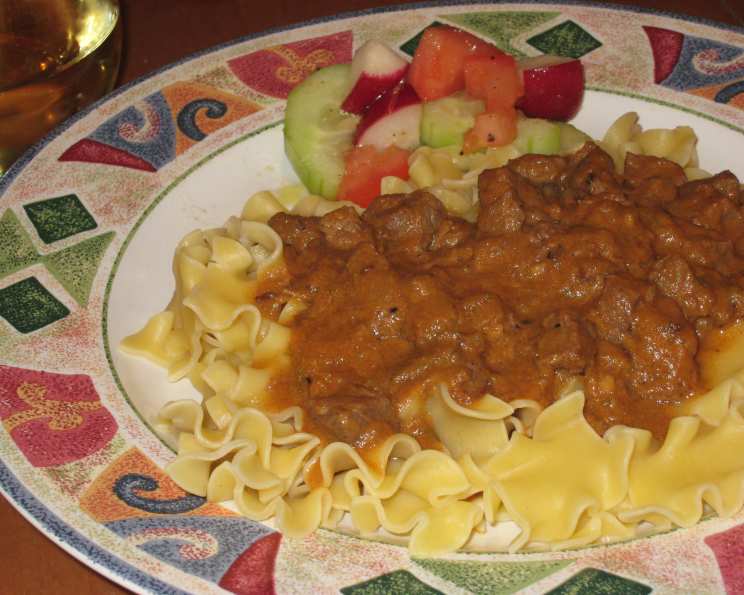
Szekely Goulash: A Taste of Hungarian Heritage
The scent of paprika and slow-cooked meat always takes me back to my grandmother’s kitchen. She wasn’t Hungarian, but she had a well-worn copy of a Hungarian cookbook, and Szekely Goulash was one of her signature dishes. The tangy sauerkraut mingling with tender pork and smoked sausage—it was pure comfort food, especially on a chilly autumn evening. I remember the warmth of the kitchen, the bubbling pot on the stove, and the anticipation of a hearty meal that always seemed to taste even better the next day. This recipe is my attempt to recreate that magic.
Recipe Overview
- Prep Time: 20 minutes
- Cook Time: 2 hours
- Total Time: 2 hours 20 minutes
- Servings: 4
- Dietary Type: Not specified
Ingredients
- 2 lbs fresh sauerkraut, rinsed and drained
- 1 tablespoon cooking oil
- 1 1/2 lbs boneless pork blade steaks or 1 1/2 lbs sirloin steaks, trimmed and cut into chunks
- 1 lb fresh kielbasa or 1 lb fresh Italian sausage, cut into chunks
- 2 large onions, cut into slivers
- 1 green bell pepper, chopped
- 3-4 garlic cloves, minced
- 1 1/2 teaspoons caraway seeds
- Salt and pepper to taste
- 16 ounces beef broth
- 1/4 cup Hungarian paprika
- 3/4 cup sour cream
Equipment Needed
- Large, deep pan or Dutch oven
Instructions
-
Heat the cooking oil in a large, deep pan or Dutch oven over medium-high heat. This initial searing is crucial for developing a rich, flavorful base for the goulash.
-
Add the pork chunks to the hot pan and sear on all sides until browned. Remove the pork from the pan and set aside.
-
Add the kielbasa or Italian sausage to the pan and sear until browned. Remove the sausage from the pan and set aside with the pork.
-
Reduce the heat to medium. Add the onions and green bell pepper to the pan and cook until softened, about 5-7 minutes. Stir frequently to prevent burning. The onions should be translucent and slightly caramelized.
-
Add the minced garlic and caraway seeds to the pan and cook for another minute, until fragrant. Be careful not to burn the garlic, as it can become bitter.
-
Season the vegetables with salt and pepper to taste. Remember that the sauerkraut and sausage will also contribute salt to the dish, so season cautiously.
-
Return the pork and sausage to the pan with the vegetables.
-
Stir in the rinsed and drained sauerkraut. Ensure the sauerkraut is evenly distributed throughout the mixture. Rinsing the sauerkraut helps to reduce its acidity, creating a more balanced flavor profile.
-
Pour in the beef broth. The broth should almost cover the ingredients; add a little water if necessary to achieve this.
-
Bring the mixture to a simmer, then reduce the heat to low, cover the pan, and simmer for 2 hours, stirring occasionally. Check the goulash periodically to ensure it is not sticking to the bottom of the pan and add water if needed to maintain a slightly soupy consistency. The pork should be very tender and easily shredded with a fork.
-
After 2 hours, in a small bowl, whisk together the sour cream and paprika until smooth.
-
Remove the pan from the heat briefly to cool down before adding the sour cream mixture. If you add the sour cream while the goulash is boiling, it might curdle. Stir the sour cream and paprika mixture into the goulash. Do not allow the goulash to boil at this point. Gently heat through, stirring constantly, until well combined.
-
Taste and adjust the seasoning with salt and pepper as needed. Remember that flavors deepen as the goulash sits.
Expert Tips & Tricks
- Browning is Key: Don’t skip the searing step! It builds layers of flavor and adds depth to the finished dish.
- Spice It Up (or Down): Adjust the amount of paprika to your taste. For a milder flavor, use sweet paprika. For a spicier kick, use hot paprika.
- Make Ahead: This goulash is even better the next day, so feel free to make it a day ahead of time. The flavors meld together beautifully overnight.
- Sour Cream Tempering: Always temper sour cream before adding it to a hot liquid to prevent curdling. Whisking it with a little of the hot broth before adding it to the whole pot works well.
- Meat Quality: Using high-quality pork and sausage will significantly impact the flavor of the goulash. Look for cuts that are well-marbled for extra tenderness and flavor.
- Adjusting Acidity: If the goulash is too acidic from the sauerkraut, consider adding a pinch of sugar to balance the flavors.
Serving & Storage Suggestions
Szekely Goulash is traditionally served hot, often with a dollop of extra sour cream on top. It pairs well with buttered noodles, dumplings, or spaetzle. For a lighter meal, serve it with a side of crusty bread to soak up the flavorful sauce.
Leftovers can be stored in an airtight container in the refrigerator for up to 3-4 days. For longer storage, freeze in freezer-safe containers for up to 2-3 months. To reheat, thaw in the refrigerator overnight and gently reheat on the stovetop over low heat, stirring occasionally. You may need to add a splash of beef broth or water if the goulash has thickened too much. Do not leave at room temperature for more than 2 hours.
Nutritional Information
| Nutrient | Amount per Serving | % Daily Value |
|---|---|---|
| Calories | 666.4 kcal | Not Specified |
| Calories from Fat | 376 g | 57% |
| Total Fat | 41.9 g | 64% |
| Saturated Fat | 15.9 g | 79% |
| Cholesterol | 184.2 mg | 61% |
| Sodium | 2084.6 mg | 86% |
| Total Carbohydrate | 24.2 g | 8% |
| Dietary Fiber | 11.1 g | 44% |
| Sugars | 10.2 g | 40% |
| Protein | 50.1 g | 100% |
Variations & Substitutions
- Vegetarian Option: Substitute the pork and sausage with hearty vegetables like mushrooms, potatoes, and carrots. Use vegetable broth instead of beef broth. Add smoked paprika for a smoky flavor.
- Spicy Version: Add a pinch of red pepper flakes or a chopped jalapeno pepper to the goulash for an extra kick of heat.
- Different Meats: Try using a combination of pork and beef for a richer flavor. You can also add smoked bacon for extra smokiness.
- Sweetener: Some recipes add a touch of brown sugar or honey to counter the sauerkraut’s tang. Experiment to find what suits your preference.
FAQs (Frequently Asked Questions)
Q: Can I use canned sauerkraut instead of fresh?
A: While fresh sauerkraut is recommended for the best flavor and texture, canned sauerkraut can be used in a pinch. Be sure to rinse it well to remove excess salt and acidity.
Q: What’s the best way to drain the sauerkraut?
A: Place the sauerkraut in a colander and press down firmly to remove as much liquid as possible. You can also squeeze it with your hands.
Q: Can I make this in a slow cooker?
A: Yes! Sear the meats and vegetables as directed, then transfer everything to a slow cooker. Cook on low for 6-8 hours or on high for 3-4 hours. Stir in the sour cream and paprika during the last 30 minutes of cooking.
Q: How do I prevent the sour cream from curdling?
A: As noted above, temper the sour cream by whisking it with a little of the hot broth before adding it to the whole pot. Also, do not allow the goulash to boil after adding the sour cream.
Q: Can I freeze Szekely Goulash?
A: Yes, Szekely Goulash freezes very well. Allow it to cool completely before transferring it to freezer-safe containers. Thaw overnight in the refrigerator before reheating.
Final Thoughts
Szekely Goulash is more than just a recipe; it’s a journey into the heart of Hungarian cuisine, a taste of history, and a celebration of simple, wholesome ingredients. I hope this recipe inspires you to create your own culinary memories, filled with warmth, flavor, and the joy of sharing good food with loved ones. Don’t hesitate to experiment with variations, add your own personal touch, and most importantly, enjoy the process. Let me know how yours turns out!