
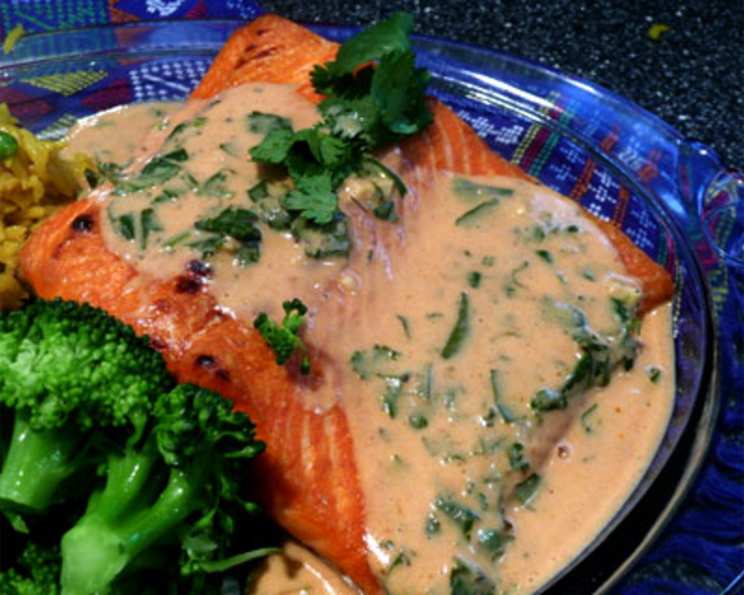
In a Heartbeat Atlantic Salmon With Red Curry Coconut Sauce
The aroma of coconut milk simmering with red curry always transports me back to my tiny apartment in Seattle. I was just starting out, eager to explore the world through its flavors. This salmon dish, inspired by a lucky find in a magazine, was one of my first successful attempts at fusing Asian and Western cuisines. The tender, flaky salmon, glazed with that vibrant, fragrant sauce, was a revelation. It was quick, easy, and felt like a real accomplishment after a long day – a small victory I could savor with every bite.
Recipe Overview
- Prep Time: 5 minutes
- Cook Time: 15 minutes
- Total Time: 20 minutes
- Servings: 4
- Yield: 4 salmon fillets
- Dietary Type: Dairy-Free
Ingredients
- 1 (13 1/2 ounce) can coconut milk
- 1 cup tomato and basil pasta sauce
- 1 teaspoon fresh ginger, grated
- ¾ shrimp bouillon cube
- ¼ – 1 teaspoon red curry paste (adjust to your spice preference)
- ½ bunch fresh cilantro, chopped
- Salt, to taste
- Pepper, to taste
- 4-6 ounces salmon fillets (about 4 fillets)
- Vegetable oil
Equipment Needed
- Medium saucepan
- Grill (indoor or outdoor)
- Tongs
- Grater
- Cutting board
- Knife
Instructions
- In a medium saucepan, combine the coconut milk, tomato sauce, grated fresh ginger, shrimp bouillon cube, and red curry paste.
- Bring the sauce to a boil over medium-high heat, stirring constantly. This prevents the coconut milk from scorching on the bottom of the pan.
- Immediately lower the temperature to medium-low and simmer for 7 minutes, stirring occasionally. This allows the flavors to meld together beautifully, creating a richer, more complex sauce.
- Stir in the chopped fresh cilantro and remove from the heat. Season with salt and pepper to taste. Be sure to taste as you go, adjusting the seasoning as needed.
- While the sauce is simmering, prepare the salmon. Brush the salmon fillets with vegetable oil and season to taste with salt and pepper on both sides. The oil prevents the salmon from sticking to the grill and helps it develop a nice crust.
- Grill the salmon for 3-5 minutes on each side, or until cooked to taste. The exact cooking time will depend on the thickness of the fillets and the heat of your grill. Salmon is cooked through when it flakes easily with a fork. Be careful not to overcook it, as it will become dry. A meat thermometer inserted into the thickest part should read 145°F (63°C).
- Pour the sauce over the grilled salmon and serve immediately. This dish is delicious served with rice, quinoa, or steamed vegetables.
Expert Tips & Tricks
- Spice it up: For an extra kick, add a pinch of red pepper flakes to the sauce or use a spicier red curry paste.
- Make it ahead: The sauce can be made up to 2 days in advance and stored in the refrigerator. Gently reheat before serving. This is a great way to save time on busy weeknights.
- Fresh ginger is key: Using freshly grated ginger makes a huge difference in the flavor of the sauce. Avoid using powdered ginger if possible.
- Don’t overcook the salmon: Salmon is best when it’s slightly pink in the center. Overcooked salmon will be dry and tough. Use a timer and check for doneness frequently.
- Bouillon cube alternative: If you don’t have a shrimp bouillon cube, you can substitute ½ teaspoon of fish sauce for a similar savory depth.
Serving & Storage Suggestions
Serve the Atlantic salmon with red curry coconut sauce immediately after grilling for the best flavor and texture. A bed of fluffy rice is the perfect accompaniment to soak up the delicious sauce. Steamed broccoli, asparagus, or green beans also make excellent side dishes. Garnish with extra chopped cilantro and a wedge of lime for a pop of freshness.
Leftovers can be stored in an airtight container in the refrigerator for up to 2 days. To reheat, gently warm the salmon in a skillet over low heat or in the microwave. Be careful not to overcook it. The sauce can be reheated separately in a saucepan.
This dish is best enjoyed fresh, but can also be frozen for longer storage. Place the cooked salmon and sauce in a freezer-safe container and freeze for up to 1 month. Thaw overnight in the refrigerator before reheating. Note that the texture of the salmon may change slightly after freezing.
Nutritional Information
| Nutrient | Amount per Serving | % Daily Value |
|---|---|---|
| Calories | 393.5 kcal | N/A |
| Calories from Fat | 157 g | 40% |
| Total Fat | 17.6 g | 27% |
| Saturated Fat | 15.7 g | 78% |
| Cholesterol | 12.9 mg | 4% |
| Sodium | 58.8 mg | 2% |
| Total Carbohydrate | 53.4 g | 17% |
| Dietary Fiber | 0.3 g | 1% |
| Sugars | 51.5 g | 205% |
| Protein | 7 g | 14% |
Note: Nutritional information is an estimate and may vary based on specific ingredients and portion sizes.
Variations & Substitutions
- Spicy Tuna: Substitute the salmon with tuna steaks for a different flavor profile. Adjust cooking time accordingly.
- Chicken or Tofu: If you’re not a fan of seafood, use chicken breasts or firm tofu instead. Pan-fry or bake until cooked through.
- Vegetarian Option: Omit the shrimp bouillon cube and use a vegetable bouillon cube instead for a vegetarian version.
- Coconut Cream: For an even richer sauce, substitute half of the coconut milk with coconut cream.
- Vegetable Medley: Add some chopped bell peppers, onions, or mushrooms to the sauce for extra vegetables.
FAQs (Frequently Asked Questions)
Q: Can I use dried ginger instead of fresh?
A: While fresh ginger is preferred for its brighter flavor, you can substitute ½ teaspoon of dried ginger if necessary.
Q: How do I know when the salmon is cooked through?
A: The salmon is cooked through when it flakes easily with a fork and the internal temperature reaches 145°F (63°C).
Q: Can I use a different type of pasta sauce?
A: Yes, you can experiment with different flavors of pasta sauce, such as marinara or arrabbiata, but the tomato and basil sauce complements the other flavors nicely.
Q: What if I don’t have a grill?
A: You can pan-fry the salmon in a skillet or bake it in the oven at 400°F (200°C) for 12-15 minutes.
Q: Is this dish gluten-free?
A: Yes, this dish is naturally gluten-free as long as you use gluten-free pasta sauce. Always check the labels to be sure.
Final Thoughts
I hope this recipe brings as much joy to your kitchen as it has to mine. The combination of flavors is both comforting and exciting, making it a perfect dish for a weeknight dinner or a special occasion. Don’t be afraid to experiment with the spice level and make it your own. And if you try it out, please let me know what you think! Bon appétit! Consider serving this with a crisp Sauvignon Blanc to enhance the flavors of the coconut and cilantro.