
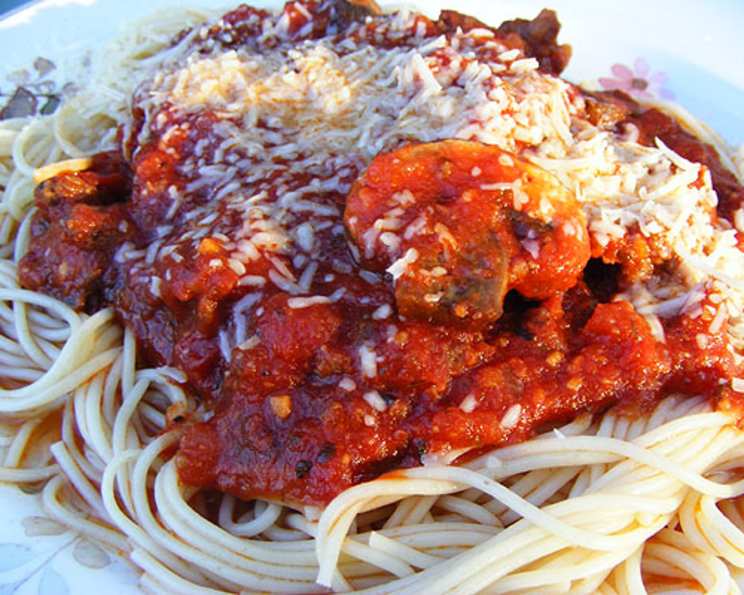
In Search of the Ultimate Spaghetti/Pizza/Pasta Sauce
My earliest memory of truly appreciating food revolves around a tiny, family-run Italian restaurant nestled in my old neighborhood. The aroma alone, a heady mix of garlic, basil, and simmering tomatoes, was enough to transport me to another world. But it was their simple spaghetti, draped in a rich, deeply flavorful sauce, that truly captured my heart. Years later, that taste became the benchmark, an elusive flavor I’ve been chasing in my own kitchen ever since, inspiring countless experiments and variations – and this recipe is getting awfully close to it!
Recipe Overview
- Prep Time: 20 minutes
- Cook Time: 3 hours
- Total Time: 3 hours 20 minutes
- Servings: 8-10
- Yield: Approximately 10 cups
- Dietary Type: Can be easily adapted to gluten-free and dairy-free.
Ingredients
- 1 (28 ounce) can crushed tomatoes
- 1 (28 ounce) can diced tomatoes (do not drain)
- 1 (28 ounce) can tomato puree
- 1 cup red wine, divided
- ½ cup water
- 1 ½ teaspoons salt, to taste
- 1 teaspoon McCormick’s Montreal Brand steak seasoning
- 1 tablespoon sugar
- 1 teaspoon oregano
- 1 teaspoon basil
- ⅔ cup grated parmesan cheese or romano cheese
- 1 cup sweet onion, diced
- 3 garlic cloves, diced
- ¼ cup olive oil
- 1 ½ lbs sweet Italian sausage (removed from casing, or use meatballs)
Equipment Needed
- Large pot or Dutch oven
- Frying pan or skillet
- Wooden spoon or spatula
Instructions
- In a large pot or Dutch oven, combine the crushed tomatoes, diced tomatoes (undrained), and tomato puree. These form the foundation of your sauce, each adding a unique texture and depth of flavor.
- Add ½ cup of the red wine and the ½ cup of water to the pot. The wine will contribute richness and complexity, while the water helps to adjust the consistency.
- Bring the mixture to a boil over medium-high heat, then immediately reduce the heat to low. The goal here is a gentle simmer, not a vigorous boil, which can scorch the sauce.
- Stir in the salt, Montreal steak seasoning, sugar, oregano, basil, and grated cheese. The Montreal steak seasoning might sound unusual, but it adds a subtle savory note that elevates the overall flavor. Don’t be afraid to experiment!
- In a frying pan or skillet, heat the olive oil over medium heat. Brown the Italian sausage (removed from its casing) or your favorite meatballs. If using sausage, break it up with a spoon as it cooks. Be sure to cook the meat through.
- Remove the cooked meat from the pan, reserving the drippings in the pan. Add the meat to the simmering sauce. Those savory drippings are liquid gold!
- In the same frying pan, sauté the diced onions and diced garlic in the reserved drippings (adding more olive oil if necessary) until they are translucent and fragrant. This usually takes about 5-7 minutes. Sautéing the aromatics before adding them to the sauce mellows their flavor and prevents them from becoming too sharp.
- Add the sautéed onions and garlic to the simmering sauce.
- Deglaze the frying pan with the remaining ½ cup of red wine. Scrape up any browned bits from the bottom of the pan – these are packed with flavor!
- Add the deglazed wine to the simmering sauce.
- Stirring occasionally to prevent sticking, simmer the sauce for three hours, or until it reaches your desired consistency. The longer it simmers, the richer and more complex the flavor will become.
- If you want to thicken the sauce, partially cover the pot, leaving the lid slightly ajar, to allow excess moisture to evaporate. If the sauce becomes too thick, add a little more red wine or water to thin it out.
- Serve the sauce over your favorite pasta, such as spaghetti or ravioli, or use it as a base for homemade pizza.
Expert Tips & Tricks
- For a smoother sauce: If you prefer a smoother consistency, you can substitute tomato sauce for the diced tomatoes or use an immersion blender to partially blend the sauce at the end of the cooking time. Be careful not to over-blend, as this can make the sauce gummy.
- Adding mushrooms: Fresh mushrooms (sliced and sautéed with the onions and garlic) are a delicious addition to this sauce.
- Spice it up: For a spicier sauce, add a pinch of red pepper flakes to the sauce along with the other seasonings.
- Make it ahead: This sauce can be made up to 3 days in advance and stored in the refrigerator. In fact, the flavor often improves after a day or two in the fridge.
- Slow Cooker Adaptation: This recipe is fantastic in a slow cooker! Simply combine all ingredients in the slow cooker, stir well, and cook on low for 6-8 hours or on high for 3-4 hours. Brown the sausage before adding it to the slow cooker.
Serving & Storage Suggestions
Serve this rich and flavorful sauce over your favorite pasta – spaghetti, linguine, penne, or even stuffed ravioli all work beautifully. A sprinkle of fresh parmesan cheese and a chiffonade of fresh basil add a touch of elegance. For a complete meal, pair it with a simple green salad and some crusty bread.
Leftover sauce can be stored in an airtight container in the refrigerator for up to 3-4 days. For longer storage, freeze the sauce in freezer-safe bags or containers for up to 3 months. Thaw the sauce in the refrigerator overnight before reheating.
To reheat, gently warm the sauce in a saucepan over low heat, stirring occasionally, until heated through. You can also reheat it in the microwave in 30-second intervals, stirring in between, until heated through.
Nutritional Information
Note: Nutritional information is an estimate and may vary based on specific ingredients and portion sizes.
| Nutrient | Amount per Serving | % Daily Value |
|---|---|---|
| Calories | 420 kcal | 21% |
| Total Fat | 25g | 38% |
| Saturated Fat | 9g | 45% |
| Cholesterol | 50mg | 17% |
| Sodium | 1300mg | 54% |
| Total Carbohydrate | 30g | 10% |
| Dietary Fiber | 6g | 24% |
| Sugars | 12g | N/A |
| Protein | 25g | 50% |
Variations & Substitutions
- Vegetarian/Vegan: Omit the sausage or meatballs for a vegetarian sauce. For a vegan version, omit the cheese and use a plant-based alternative.
- Gluten-Free: Serve the sauce over gluten-free pasta or use it as a topping for a gluten-free pizza crust.
- Roasted Red Pepper Sauce: Add diced roasted red peppers to the sauce for a touch of sweetness and smokiness.
- Spicy Arrabbiata: Add a generous pinch of red pepper flakes and a splash of hot sauce for a fiery arrabbiata sauce.
- Creamy Tomato Sauce: Stir in a splash of heavy cream or half-and-half at the end of the cooking time for a richer, creamier sauce. (Not dairy-free).
FAQs (Frequently Asked Questions)
Q: Can I use dried herbs instead of fresh?
A: Yes, you can. Use about 1 teaspoon of dried herbs for every tablespoon of fresh herbs.
Q: Can I freeze this sauce?
A: Absolutely! This sauce freezes very well. Allow it to cool completely before transferring it to freezer-safe containers or bags.
Q: How can I reduce the acidity of the tomato sauce?
A: The sugar in the recipe helps balance the acidity. You can also add a pinch of baking soda while the sauce is simmering. Be careful not to add too much, as it can affect the flavor.
Q: Can I use different types of meat in this sauce?
A: Yes, feel free to experiment with different types of meat, such as ground beef, ground turkey, or even shredded chicken.
Q: How long will this sauce last in the refrigerator?
A: Properly stored in an airtight container, this sauce will last for 3-4 days in the refrigerator.
Final Thoughts
This pasta sauce is a testament to the power of simple ingredients and slow simmering. I truly hope you will give it a try. Don’t hesitate to personalize it with your favorite additions and adjustments. Whether you serve it over pasta for a cozy family dinner or use it as a base for a delicious homemade pizza, I’m confident that this recipe will become a staple in your kitchen. And please, share your feedback – I’m always looking for ways to refine and improve this recipe!