
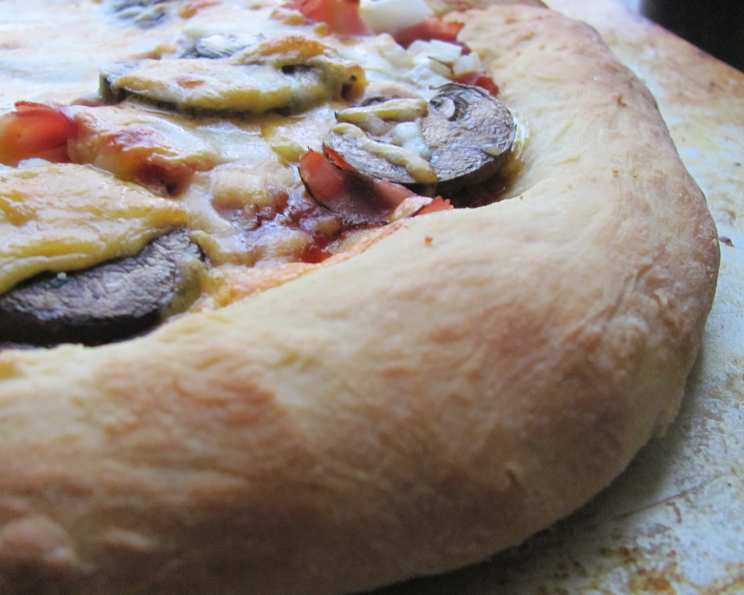
Incredible Sourdough Pizza Crust
I’ll never forget the first time I bit into a truly exceptional sourdough pizza. It was at a tiny, unassuming pizzeria tucked away on a cobblestone street in Rome. The tangy, chewy crust, blistered to perfection, was the star of the show. It was a revelation, a testament to the magic that happens when simple ingredients meet time and patience. Since then, I’ve been on a quest to recreate that experience at home, and this recipe is the culmination of years of experimentation and tweaking. Prepare yourself for pizza night perfection!
Recipe Overview
- Prep Time: 2 hours 45 minutes
- Cook Time: 25-30 minutes
- Total Time: 3 hours 10-15 minutes
- Yield: 2 crusts
- Servings: 8-10 per crust
- Dietary Type: Vegetarian
Ingredients
- 1 1/4 cups warm water
- 2 teaspoons active dry yeast
- 1 teaspoon sugar
- 2 tablespoons olive oil
- 1 cup sourdough starter, room temperature
- 3 – 3 1/2 cups all-purpose flour
- 1 teaspoon salt
- 2 cups mozzarella cheese, shredded
- 1/2 cup parmesan cheese, grated
- 3 tablespoons cornmeal
Equipment Needed
- Large Mixing Bowl
- Measuring Cups and Spoons
- Clean Kitchen Towel
- Pizza Pan or Baking Stone
- Oven
Instructions
-
Begin by activating the yeast. In a large mixing bowl, combine the warm water, active dry yeast, and sugar. Stir gently to dissolve the yeast and sugar, then let the mixture stand for about 5-10 minutes, or until it becomes foamy. This indicates that the yeast is active and ready to leaven the dough.
-
Add the wet ingredients. Once the yeast mixture is foamy, add the olive oil and the room temperature sourdough starter. Mix well to combine.
-
Incorporate the dry ingredients. Add the salt and half of the all-purpose flour (about 1 1/2 cups) to the wet ingredients. Stir until a shaggy dough begins to form.
-
Gradually add the remaining flour. Slowly add the remaining flour, about 1/4 cup at a time, mixing well after each addition. The amount of flour needed may vary slightly depending on the humidity and the hydration level of your sourdough starter. The goal is to create a dough that is slightly sticky but still manageable.
-
Knead the dough. Turn the dough out onto a lightly floured surface. Knead for 8-10 minutes, or until the dough is smooth and elastic. If the dough is too sticky, add a little more flour, one tablespoon at a time, until it becomes easier to handle.
-
First rise. Lightly oil a large bowl. Place the kneaded dough in the oiled bowl, turning to coat all sides. This will prevent the dough from drying out. Cover the bowl with a clean kitchen towel and let it rise in a warm place for about an hour, or until doubled in size. This rising time allows the sourdough starter to work its magic, developing the characteristic tangy flavor and airy texture.
-
Shape the crusts. Once the dough has doubled, punch it down gently to release the air. Divide the dough in half and shape each half into a pizza crust. You can either roll the dough out with a rolling pin or stretch it by hand to your desired thickness and shape.
-
Preheat the oven. Preheat your oven to 400 degrees Fahrenheit (200 degrees Celsius). If you are using a pizza stone, place it in the oven while it preheats to ensure it gets nice and hot.
-
Prepare the pan. Sprinkle a pizza pan or baking stone with cornmeal. This will help prevent the crust from sticking and will add a nice crispy texture to the bottom.
-
Pre-bake the crust. Place the pizza crust on the prepared pizza pan or baking stone. Pre-bake the crust for 10 minutes. This step helps to set the crust and prevent it from becoming soggy once the toppings are added.
-
Add toppings. Remove the pre-baked crust from the oven. Brush the crusts lightly with olive oil and spread with your favorite tomato sauce. Then, add your desired toppings.
-
Add cheese. Sprinkle the pizza with grated mozzarella cheese and grated parmesan cheese, if desired.
-
Bake the pizza. Return the pizza to the oven and bake for 25-30 minutes at 425 degrees Fahrenheit (220 degrees Celsius), or until the crust is golden brown and the cheese is melted and bubbly. The baking time may vary depending on the thickness of your toppings and your oven.
-
Cool and serve. Remove the pizza from the oven and let it cool for a few minutes before slicing and serving. Enjoy your homemade sourdough pizza!
Expert Tips & Tricks
- For a crispier crust, try placing the pizza stone on the lowest rack of your oven.
- If your sourdough starter is particularly active, the dough may rise faster. Keep an eye on it and adjust the rising time accordingly.
- Don’t overcrowd your pizza with toppings. Too many toppings can make the crust soggy.
- Experiment with different types of cheese and toppings to create your own signature sourdough pizza.
- If you don’t have a pizza stone, you can use a baking sheet lined with parchment paper.
Serving & Storage Suggestions
Serve your sourdough pizza hot out of the oven, garnished with fresh basil or oregano, if desired. Leftover pizza can be stored in an airtight container in the refrigerator for up to 3 days. To reheat, preheat your oven to 350 degrees Fahrenheit (175 degrees Celsius) and bake the pizza for 10-15 minutes, or until heated through. You can also reheat it in a skillet over medium heat for a crispy crust. Freezing is also an option. Wrap the pizza slices individually in plastic wrap, then place them in a freezer bag. Frozen pizza will last for up to 2 months. Reheat directly from frozen in the oven.
Nutritional Information
| Nutrient | Amount per Serving | % Daily Value |
|---|---|---|
| Calories | 327 kcal | N/A |
| Calories from Fat | 108 g | 33% |
| Total Fat | 12.1 g | 18% |
| Saturated Fat | 5.3 g | 26% |
| Cholesterol | 27.6 mg | 9% |
| Sodium | 565.4 mg | 23% |
| Total Carbohydrate | 39.8 g | 13% |
| Dietary Fiber | 1.7 g | 6% |
| Sugars | 1 g | 4% |
| Protein | 14.1 g | 28% |
Note: Nutritional information is an estimate and may vary depending on specific ingredients and portion sizes.
Variations & Substitutions
- Gluten-Free Crust: Substitute all-purpose flour with a gluten-free pizza flour blend. Be sure to follow the specific instructions on the gluten-free flour package, as the hydration levels may differ.
- Whole Wheat Crust: Replace half of the all-purpose flour with whole wheat flour for a nuttier flavor and added fiber.
- Vegan Pizza: Omit the mozzarella and parmesan cheese and use a vegan cheese alternative. There are many delicious vegan cheeses available on the market today.
- Herb Crust: Add 1-2 tablespoons of dried herbs, such as oregano, basil, or rosemary, to the dough for extra flavor.
- Spicy Crust: Add 1/2 teaspoon of red pepper flakes to the dough for a hint of spice.
FAQs (Frequently Asked Questions)
Q: Can I use a different type of flour?
A: Yes, you can experiment with different types of flour, such as bread flour or whole wheat flour. However, the texture and flavor of the crust may vary slightly.
Q: My dough is too sticky. What should I do?
A: If your dough is too sticky, add a little more flour, one tablespoon at a time, until it becomes easier to handle. Be careful not to add too much flour, as this can make the crust tough.
Q: Can I make the dough ahead of time?
A: Yes, you can make the dough ahead of time and store it in the refrigerator for up to 24 hours. Just be sure to wrap it tightly in plastic wrap to prevent it from drying out. Let the dough come to room temperature before shaping it into a pizza crust.
Q: My crust is not crispy enough. What can I do?
A: For a crispier crust, try preheating your pizza stone for a longer period of time. You can also try baking the pizza on the lowest rack of your oven.
Q: Can I freeze the pizza after it’s been baked?
A: Yes, you can freeze the pizza after it’s been baked. Let it cool completely, then wrap it tightly in plastic wrap and freeze for up to 2 months. Reheat directly from frozen in the oven.
Final Thoughts
So, there you have it – a recipe for sourdough pizza crust that’s sure to impress. Don’t be intimidated by the sourdough starter; it’s a rewarding ingredient to work with, and the resulting flavor is unparalleled. Gather your ingredients, preheat your oven, and get ready to create a pizza masterpiece! Feel free to experiment with different toppings and flavor combinations to create your own signature sourdough pizza. And, most importantly, enjoy the process and share your delicious creation with friends and family. Bon appétit! Perhaps pair it with a crisp Italian Pinot Grigio for a truly authentic experience.