
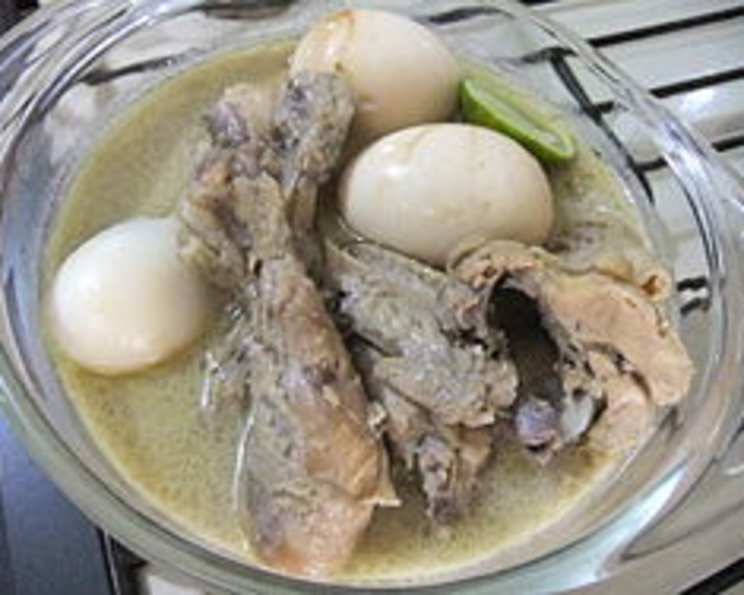
Opor Ayam: Indonesian Chicken in Coconut Gravy
The scent of lemongrass and ginger always transports me back to my travels through Southeast Asia. I remember wandering through a bustling market in Yogyakarta, Indonesia, the air thick with the aroma of spices. A kind woman, seeing my wide-eyed curiosity, offered me a taste of her Opor Ayam. The creamy coconut gravy, infused with turmeric and the tender chicken, was an explosion of flavor that I’ve been chasing ever since. Recreating that experience in my own kitchen brings back those vivid memories, each bite a little journey back to that vibrant market.
Recipe Overview
- Prep Time: 25 minutes
- Cook Time: 35 minutes
- Total Time: 60 minutes
- Servings: 4-6
- Yield: About 6 cups
- Dietary Type: Dairy-Free (can be adapted to be Gluten-Free)
Ingredients
- 2 large chicken breasts (about 4 individual breasts)
- 1 lime
- 400-600 ml coconut milk, depending on desired thickness
- 7 eggs
- 5 pieces firm tofu, cut each diagonally (10 pieces total)
Seasoning to blend together:
- 10 shallots
- 10 cloves garlic
- 7 candlenuts
- 1 teaspoon turmeric powder
- 2 teaspoons coriander powder
- 1 teaspoon salt
- 1 teaspoon white pepper
- 2 stalks lemongrass
- 5-7 fresh lime leaves
- 2 cm gingerroot or 2 cm galangal, bruised and soaked in a bit of lemon juice for a few minutes
- 3 fresh bay leaves
Equipment Needed
- Cutting board
- Knife
- Large bowl
- Pot for boiling eggs
- Frying pan or wok
- Food processor or blender
- Large pot or Dutch oven
Instructions
-
Cut the chicken into smaller, bite-sized pieces. If using boneless, skinless chicken breasts, aim for approximately 1-inch cubes.
-
Squeeze the juice of one lime over the cut chicken and let it sit for about 15-20 minutes. The lime juice helps tenderize the chicken and adds a bright, citrusy note.
-
While the chicken is marinating, boil the eggs until hard-boiled. Cool them under cold water, then peel and set aside. A quick tip: adding a teaspoon of vinegar to the boiling water can help prevent the shells from cracking.
-
Next, sauté the tofu in a frying pan or wok with a little oil (about 1-2 tablespoons) until lightly browned on all sides. This adds a pleasant texture and flavor to the tofu. Set aside with the eggs.
-
Prepare the spice paste, or bumbu. Combine the shallots, garlic, candlenuts, turmeric powder, coriander powder, salt, and white pepper in a food processor or blender. Blend until it forms a smooth paste. You may need to add a tablespoon or two of water to help it blend properly.
-
Heat about 1-2 tablespoons of oil in a large pot or Dutch oven over medium heat. Sauté the spice paste (the bumbu) for a few minutes, stirring constantly, until fragrant and the raw smell of the spices has dissipated. This step is crucial for developing the complex flavors of the dish. Be careful not to burn the paste.
-
Once the bumbu is sautéed, add the marinated chicken to the pot. Stir to coat the chicken evenly with the spice paste.
-
Pour in 400-600 ml of coconut milk, depending on how thick you prefer the gravy to be. If you prefer a thinner consistency, use the full 600 ml. Reserve some coconut milk if you wish to adjust the thickness later.
-
Stir occasionally until the mixture comes to a boil.
-
Add the bruised lemongrass stalks, lime leaves, bruised gingerroot (or galangal), and bay leaves to the pot. Bruising the lemongrass and gingerroot helps release their aromatic oils.
-
Bring the mixture to a gentle boil, then reduce the heat to low, cover, and simmer for about 20-25 minutes, or until the chicken is cooked through and tender.
-
Gently add the sautéed tofu and boiled eggs to the pot. Simmer for another 5-10 minutes to allow the flavors to meld together. Be careful not to overcook the eggs, as they can become rubbery.
-
Taste and adjust the seasoning as needed. You may want to add a pinch more salt or pepper to balance the flavors. If the gravy is too thick, add a little more coconut milk.
-
For extra flavor and visual appeal, you can sauté sliced shallots in oil until golden brown and crispy. Sprinkle these crispy shallots over the dish before serving.
Expert Tips & Tricks
- Candlenuts: Candlenuts add a creamy richness to the sauce. If you can’t find them, you can substitute macadamia nuts or cashews (use about half the amount).
- Galangal vs. Ginger: While galangal and ginger are related, galangal has a more citrusy, earthy flavor. If you can find it, it will add a more authentic flavor to the dish.
- Spice Level: This recipe is intentionally mild, making it kid-friendly. If you prefer a spicier dish, you can add a small chopped chili pepper or a pinch of cayenne pepper to the spice paste.
- Make-Ahead: Opor Ayam can be made a day ahead. The flavors actually develop and deepen overnight. Store it in an airtight container in the refrigerator.
- Thickening the Gravy: If your gravy is too thin, you can mix a tablespoon of cornstarch with two tablespoons of cold water and stir it into the simmering sauce. Cook until thickened.
Serving & Storage Suggestions
Opor Ayam is best served hot with steamed rice. Garnish with crispy fried shallots and a sprinkle of fresh cilantro for a pop of color. It’s also delicious with krupuk (Indonesian crackers) for added texture.
Leftovers can be stored in an airtight container in the refrigerator for up to 3 days. Reheat gently on the stovetop or in the microwave until heated through. You may need to add a splash of coconut milk to loosen the gravy if it has thickened during storage. Opor Ayam is not recommended for freezing as the coconut milk may separate and become grainy.
Nutritional Information
| Nutrient | Amount per Serving (estimated) | % Daily Value* |
|---|---|---|
| Calories | 450 kcal | 23% |
| Total Fat | 30g | 46% |
| Saturated Fat | 20g | 100% |
| Cholesterol | 200mg | 67% |
| Sodium | 500mg | 21% |
| Total Carbohydrate | 20g | 7% |
| Dietary Fiber | 2g | 8% |
| Sugars | 5g | – |
| Protein | 30g | 60% |
*Percent Daily Values are based on a 2,000 calorie diet. Your daily values may be higher or lower depending on your calorie needs.
Variations & Substitutions
- Gluten-Free: Ensure that all your ingredients are gluten-free, especially the coriander powder as some brands may contain gluten.
- Vegan: To make a vegan version, substitute the chicken with more tofu or tempeh. Omit the eggs.
- Vegetables: Add other vegetables such as green beans, potatoes, or carrots to the dish.
- Spicier Version: Add chopped chili peppers or chili paste to the spice blend for a spicier kick.
- Chicken Thighs: You can use chicken thighs instead of chicken breast for a richer, more flavorful dish.
FAQs (Frequently Asked Questions)
Q: Can I use pre-made spice paste (bumbu) to save time?
A: While pre-made bumbu can be convenient, the flavor will be much better if you make your own spice paste from scratch. Freshly ground spices have a more vibrant aroma and taste.
Q: How can I prevent the coconut milk from curdling?
A: To prevent curdling, avoid boiling the coconut milk over high heat. Simmer gently and stir frequently. You can also add a tablespoon of lime juice or vinegar to help stabilize the coconut milk.
Q: Can I freeze Opor Ayam?
A: Freezing is not recommended, as the coconut milk may separate and become grainy when thawed. It’s best to enjoy it fresh or store leftovers in the refrigerator.
Q: What should I do if the gravy is too watery?
A: If the gravy is too watery, simmer it uncovered for a longer period of time to allow the excess liquid to evaporate. You can also thicken it with a cornstarch slurry.
Q: Where can I find candlenuts?
A: Candlenuts can be found at Asian grocery stores. If you can’t find them, you can substitute macadamia nuts or cashews.
Final Thoughts
Opor Ayam is more than just a recipe; it’s a culinary journey to Indonesia, a comforting bowl of memories, and a testament to the power of simple ingredients transformed into something extraordinary. I encourage you to try this recipe, embrace the aromas, and savor the flavors. Don’t be afraid to experiment with the spices and make it your own. And please, share your creations and experiences – I’d love to hear about your Opor Ayam adventure! Perhaps serve it with a side of fresh cucumber salad and a refreshing glass of iced tea. Selamat makan! (Bon appétit!)