
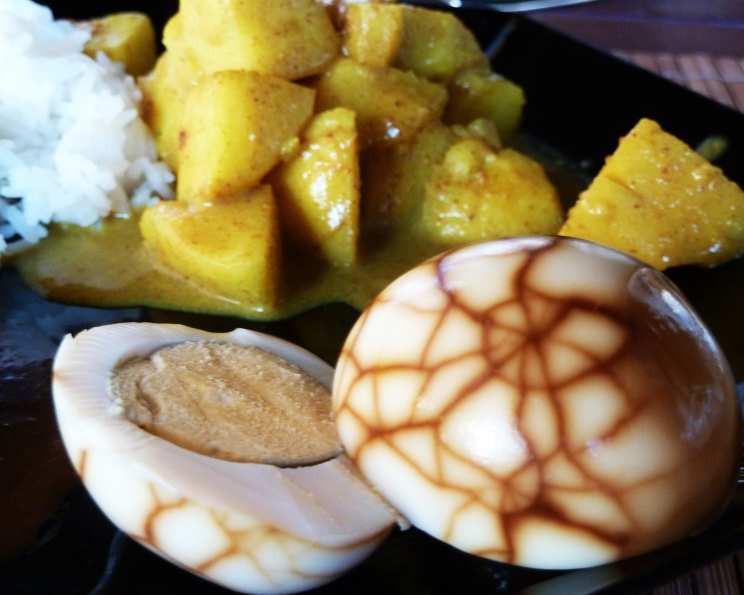
Indonesian Marbled Hard Boiled Eggs (Telur Pindang)
The scent of spices simmering gently on the stove always takes me back to my travels in Southeast Asia. I remember wandering through bustling morning markets in Yogyakarta, the air thick with humidity and the enticing aroma of countless street food delicacies. It was there, amidst the vibrant chaos, that I first encountered Telur Pindang – those beautifully marbled, intensely flavorful hard-boiled eggs. The vendor proudly displayed them, their dark, patterned shells hinting at the secrets within, and I knew I had to try one. That first bite was an explosion of savory, slightly sweet, and utterly addictive flavors. It’s a taste I’ve been chasing ever since.
Recipe Overview
- Prep Time: 15 minutes
- Cook Time: 2-3 hours
- Total Time: 2 hours 15 minutes to 3 hours 15 minutes
- Servings: 4
- Dietary Type: Gluten-Free, Dairy-Free
Ingredients
- 4 eggs
- 3 teaspoons salt
- 4 bay leaves
- 4 guava leaves (if available, adds a unique flavor and color)
- 2 tablespoons ginger, grated (or 2 tablespoons lemongrass, chopped as a substitute)
- 2 red onions, only red peel of (optional, for a more reddish color)
- 1/2 teaspoon cumin, ground
- 1/2 teaspoon coriander, ground
- 1 teaspoon turmeric, ground (optional, for added color and health benefits)
- 3 black tea bags
Equipment Needed
- Saucepan
- Spoon
Instructions
-
Begin by gently washing the eggs to remove any dirt or debris.
-
In a saucepan, combine all the ingredients except the black tea bags. This includes the salt, bay leaves, guava leaves (if using), grated ginger (or chopped lemongrass), red onion peels (if using), ground cumin, ground coriander, and ground turmeric (if using).
-
Add water to the saucepan, ensuring that the eggs are completely submerged.
-
Carefully bring the mixture to a slow boil over medium heat. Be patient, a gentle simmer is key to even cooking and preventing the eggs from cracking prematurely.
-
Once boiling, cook for 10 minutes. This initial cooking period hard-boils the eggs and infuses them with the initial layer of spices.
-
After 10 minutes, carefully remove the eggs from the hot water and plunge them into a bowl of cold water. This stops the cooking process and makes them easier to handle.
-
Once the eggs are cool enough to handle, gently crack the shells using the back of a spoon. Aim for a network of fine cracks all over the shell, but avoid peeling the eggs entirely. The cracks are crucial for creating the beautiful marbled effect as the spices seep into the egg white.
-
Return the cracked eggs to the saucepan with the spiced water.
-
Now, add the black tea bags to the pot. The tea contributes to the rich, dark color and adds a subtle tannic note that complements the other spices.
-
Continue to simmer the eggs over low heat until almost all the water has evaporated and the eggs have turned a dark brown color. This can take approximately 2-3 hours. This slow simmering process allows the spiced water to penetrate the cracks in the shells, creating the signature marbled pattern and infusing the eggs with intense flavor.
-
Remember to stir the eggs occasionally during the cooking time to ensure even coloring and prevent them from sticking to the bottom of the pan.
-
Once the eggs have reached the desired color and the liquid has mostly evaporated, remove them from the heat and allow them to cool slightly.
-
Finally, peel the eggs carefully, revealing the beautiful marbled pattern beneath the shell.
-
Serve and enjoy!
Expert Tips & Tricks
-
For a deeper, richer color, use dark brown sugar in addition to (or instead of) some of the water. Start with a tablespoon and adjust to taste and desired color intensity.
-
Don’t be afraid to experiment with different spice combinations. Star anise, cloves, or even a pinch of chili flakes can add interesting flavor dimensions.
-
If you don’t have guava leaves, you can substitute with additional bay leaves or simply omit them. The guava leaves provide a subtle fruity note, but the recipe will still be delicious without them.
-
The key to achieving a beautiful marble effect is to create a network of fine cracks all over the shell. Avoid large cracks, as this can cause the egg white to become rubbery.
-
If you are short on time, you can reduce the simmering time slightly, but be aware that the color and flavor will be less intense. Aim for at least 1.5 hours of simmering for the best results.
Serving & Storage Suggestions
Telur Pindang are a versatile dish that can be enjoyed in a variety of ways. They are delicious on their own as a snack or appetizer. They also make a fantastic addition to Indonesian rice dishes like Nasi Goreng or Nasi Lemak. Serve alongside sambal for an extra kick!
Leftover Telur Pindang can be stored in an airtight container in the refrigerator for up to 3 days. Due to the salt and spices they keep well. They don’t freeze well, as the egg white can become rubbery.
To reheat, simply bring to room temperature. They can also be sliced and added to stir-fries or noodle dishes.
Nutritional Information
| Nutrient | Amount per Serving | % Daily Value |
|---|---|---|
| Calories | 120 kcal | 6% |
| Total Fat | 8g | 10% |
| Saturated Fat | 2.5g | 13% |
| Cholesterol | 213mg | 71% |
| Sodium | 450mg | 19% |
| Total Carbohydrate | 2g | 1% |
| Dietary Fiber | 0.5g | 2% |
| Sugars | 1g | – |
| Protein | 8g | 16% |
Note: Nutritional information is an estimate and can vary based on specific ingredients and preparation methods.
Variations & Substitutions
-
Vegan Option: While traditionally made with eggs, a vegan version could be attempted with firm tofu marinated in the same spice mixture and gently simmered. The marbling effect won’t be the same, but the flavor will be similar.
-
Spicy Kick: Add a few dried chili peppers or a teaspoon of chili powder to the spice mixture for a spicier version.
-
Sweet and Savory: Incorporate a touch of kecap manis (Indonesian sweet soy sauce) into the simmering liquid for a sweeter, more complex flavor profile.
-
Herbal Infusion: Experiment with different herbs like kaffir lime leaves or pandan leaves for a unique aromatic twist.
FAQs (Frequently Asked Questions)
Q: Can I use white onions instead of red onion peels?
A: While you can, the red onion peels contribute to a more reddish hue. If using white onions, consider adding a pinch of red food coloring for a similar effect (though I haven’t personally tried this).
Q: How can I tell if the eggs are cooked enough?
A: The eggs are cooked when they are dark brown and the liquid has mostly evaporated. You can also test by removing one egg and peeling it to check the color and marbling.
Q: Can I make this recipe in a slow cooker?
A: Yes, you can adapt this recipe for a slow cooker. Combine all the ingredients in the slow cooker and cook on low for 6-8 hours, or on high for 3-4 hours.
Q: What if my eggs crack too much during cooking?
A: Ensure the eggs are at room temperature before cooking, and start with a low simmer. Avoid rapid temperature changes. If cracks are excessive, the eggs may become rubbery, but they will still be flavorful.
Q: Can I skip the black tea bags?
A: The black tea bags contribute to the dark color and add a subtle tannic flavor. While you can skip them, the eggs will be lighter in color and may lack some of the characteristic depth of flavor.
Final Thoughts
Now that you’re armed with this recipe, I encourage you to embark on your own culinary journey to Indonesia, one egg at a time! Telur Pindang are more than just hard-boiled eggs; they are a testament to the power of spices and slow cooking. Don’t be afraid to experiment with different flavors and personalize the recipe to your liking. Once you’ve mastered this classic, I promise you’ll be hooked. So, gather your ingredients, put on some Indonesian music, and let the aroma of simmering spices transport you to the vibrant streets of Yogyakarta. Selamat makan! (Enjoy your meal!)