
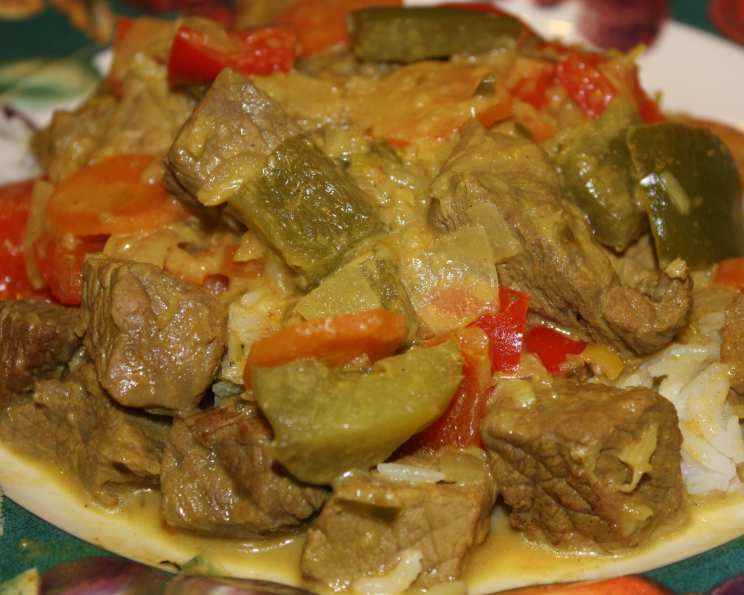
Indonesian Rendang Beef Curry: A Taste of Southeast Asia
The first time I encountered Rendang was at a tiny, bustling night market in Kuala Lumpur. The air, thick with humidity, vibrated with the sizzle of street food and the chatter of locals. I was drawn to a fragrant stall where a woman, her face etched with generations of culinary wisdom, stirred a dark, bubbling pot. The rich aroma of coconut milk, spices, and slow-cooked beef captivated me instantly. One bite, and I was hooked – the tender beef, infused with a complex tapestry of flavors, was an explosion of warmth and comfort. It wasn’t just a dish; it was a story, a journey, an invitation to savor the heart of Indonesian cuisine.
Recipe Overview
- Prep Time: 20 minutes
- Cook Time: 1 hour
- Total Time: 1 hour 20 minutes
- Servings: 4-6
- Yield: About 6 cups
- Dietary Type: Not Gluten-Free (can be adapted), Dairy-Free
Ingredients
- 2 stalks lemongrass, crushed and chopped
- 1 jalapeno pepper, deseeded and finely minced
- 3 garlic cloves, finely minced
- 2 tablespoons gingerroot, finely shredded
- 1 teaspoon coriander powder
- 1 teaspoon turmeric powder
- 1/2 teaspoon cumin powder
- 1/4 teaspoon cinnamon
- 2 tablespoons sesame oil
- 2 lbs lean beef, cut into 1-inch cubes
- 1 small onion, coarsely chopped
- 1 green bell pepper, coarsely chopped
- 1 red bell pepper, coarsely chopped
- 1 carrot, thinly sliced
- 6 ounces coconut milk
- 2 tablespoons lime juice
- 1 tablespoon sugar
Equipment Needed
- Small blender or food processor
- Large wok or frying pan
- Knife
- Cutting board
- Measuring spoons and cups
Instructions
-
Prepare the Spice Paste: In a small blender or food processor, combine the lemongrass, jalapeno pepper, garlic, ginger, coriander powder, turmeric powder, cumin powder, and cinnamon. Puree until thoroughly blended into a smooth spice paste. You may need to add a tablespoon or two of water to help the mixture blend. The consistency should be thick but spreadable.
-
Brown the Beef: Heat the sesame oil in a large wok or frying pan over medium-high heat. Once the oil is shimmering, add the beef cubes in batches (do not overcrowd the pan!) and stir-fry until browned on all sides. Browning the beef adds depth of flavor to the final dish. Set the browned beef aside.
-
Sauté the Aromatics: Add the prepared spice mixture to the wok and stir-fry for 2-3 minutes, until lightly browned and fragrant. Be careful not to burn the spices, as this will result in a bitter flavor. Keep the spices moving constantly.
-
Incorporate Vegetables: Add the onion, green bell pepper, and carrot to the wok and continue stir-frying for another 5-7 minutes, or until the vegetables are just tender. The onions should be translucent and the peppers slightly softened.
-
Combine and Simmer: Return the browned beef to the wok. Add the coconut milk, lime juice, and sugar. Stir well to blend all ingredients.
-
Simmer to Perfection: Bring the mixture to a boil, then immediately reduce the heat to low. Simmer gently for approximately 30 minutes, stirring occasionally, until the meat is tender and the sauce has thickened. The sauce should coat the back of a spoon. If the sauce is too thick, add a splash of water or coconut milk.
-
Serve: Serve hot over steamed rice. Garnish with fresh cilantro or chopped peanuts (optional).
Expert Tips & Tricks
- Spice Level Adjustment: Adjust the amount of jalapeno pepper to your preference. For a milder dish, remove the seeds and membranes completely or use a milder chili. For a spicier kick, add more jalapeno or a hotter pepper.
- Beef Selection: Using a cut of beef that benefits from slow cooking, such as chuck roast, is ideal. The long simmering time will break down the connective tissue, resulting in a more tender and flavorful dish.
- Coconut Milk Quality: Use full-fat coconut milk for the best flavor and creamy texture. Avoid using “lite” coconut milk, as it may result in a thinner sauce.
- Make-Ahead Tip: The Rendang can be made a day or two in advance. The flavors will actually deepen and meld together as it sits in the refrigerator. Simply reheat gently before serving.
- Spice Paste Preparation: If you don’t have a blender, you can finely mince all the spices and ingredients for the paste by hand. It will require more time and effort, but the result will still be delicious.
- Vegetable Variations: Feel free to experiment with other vegetables such as potatoes, eggplant, or green beans. Just adjust the cooking time accordingly.
- Browning Beef in Batches: It’s crucial to brown the beef in batches to avoid overcrowding the pan. Overcrowding lowers the temperature of the pan, resulting in steamed beef rather than browned beef.
- Tenderizing Tougher Cuts: For tougher cuts of beef, consider marinating them in a mixture of pineapple juice and soy sauce for a few hours before cooking. This will help to break down the fibers and tenderize the meat.
Serving & Storage Suggestions
Serve the Indonesian Rendang Beef Curry hot over freshly steamed rice. Garnish with fresh cilantro, chopped peanuts, or a squeeze of lime juice for added flavor and visual appeal. A side of pickled vegetables or a simple cucumber salad would also complement the richness of the curry.
Leftovers can be stored in an airtight container in the refrigerator for up to 3-4 days. For longer storage, freeze in individual portions for up to 2-3 months.
To reheat, gently warm the Rendang in a saucepan over low heat, stirring occasionally, until heated through. You can also reheat it in the microwave, but be careful not to overheat it, as this can make the beef tough. Add a splash of water or coconut milk if the sauce has become too thick during storage.
Nutritional Information
| Nutrient | Amount per Serving | % Daily Value |
|---|---|---|
| Calories | 650 kcal | 33% |
| Total Fat | 40g | 62% |
| Saturated Fat | 25g | 125% |
| Cholesterol | 150mg | 50% |
| Sodium | 250mg | 10% |
| Total Carbohydrate | 20g | 7% |
| Dietary Fiber | 5g | 20% |
| Sugars | 10g | |
| Protein | 50g | 100% |
Note: Nutritional information is an estimate and may vary based on specific ingredients and portion sizes.
Variations & Substitutions
- Gluten-Free: To make this recipe gluten-free, ensure that all ingredients are gluten-free. Soy sauce, which is often served with rice, usually contains gluten. Use tamari, a gluten-free soy sauce alternative, or coconut aminos.
- Vegetarian/Vegan Rendang: Substitute the beef with firm tofu or tempeh. Press the tofu to remove excess water before browning. You can also use jackfruit, which has a meaty texture when cooked.
- Coconut Milk Substitute: If you don’t have coconut milk, you can use heavy cream as a substitute, although the flavor will be different. For a lighter option, use unsweetened almond milk, but be aware that the sauce will be thinner.
- Spicier Version: Add more jalapenos or a hotter pepper like a bird’s eye chili to the spice paste. You can also add a pinch of cayenne pepper to the dish while simmering.
- Sweeter Version: Add a bit more sugar or honey to the dish while simmering.
FAQs (Frequently Asked Questions)
Q: Can I use pre-made curry paste?
A: While using pre-made curry paste is an option for convenience, the flavor will not be as complex or authentic as using freshly made spice paste. Freshly made paste unlocks richer, brighter flavors.
Q: How do I prevent the coconut milk from curdling?
A: To prevent curdling, avoid boiling the coconut milk at high heat. Simmer the dish gently over low heat, stirring occasionally. Adding a bit of lime juice or vinegar can also help stabilize the coconut milk.
Q: Can I use a slow cooker for this recipe?
A: Yes, you can adapt this recipe for a slow cooker. Brown the beef and sauté the spices and vegetables as directed, then transfer everything to the slow cooker. Cook on low for 6-8 hours or on high for 3-4 hours, until the beef is tender.
Q: What kind of rice is best to serve with Rendang?
A: Jasmine rice is a popular choice for serving with Rendang, as its fragrant aroma complements the rich flavors of the curry. Basmati rice is another good option.
Q: How long does Rendang last in the freezer?
A: Rendang can be stored in the freezer for up to 2-3 months. Ensure it’s stored in an airtight container to prevent freezer burn. Thaw overnight in the refrigerator before reheating.
Final Thoughts
Indonesian Rendang Beef Curry is more than just a meal; it’s an experience. The rich, complex flavors, the tender beef, and the aromatic spices transport you to the heart of Southeast Asia. Don’t be intimidated by the list of ingredients – the process is surprisingly straightforward, and the results are well worth the effort. So gather your ingredients, embrace the journey, and prepare to be captivated by the magic of Rendang. I encourage you to try this recipe and share your culinary creations with friends and family. Perhaps pair it with a crisp, dry white wine to balance the richness of the curry. Selamat makan! (Enjoy your meal!)