
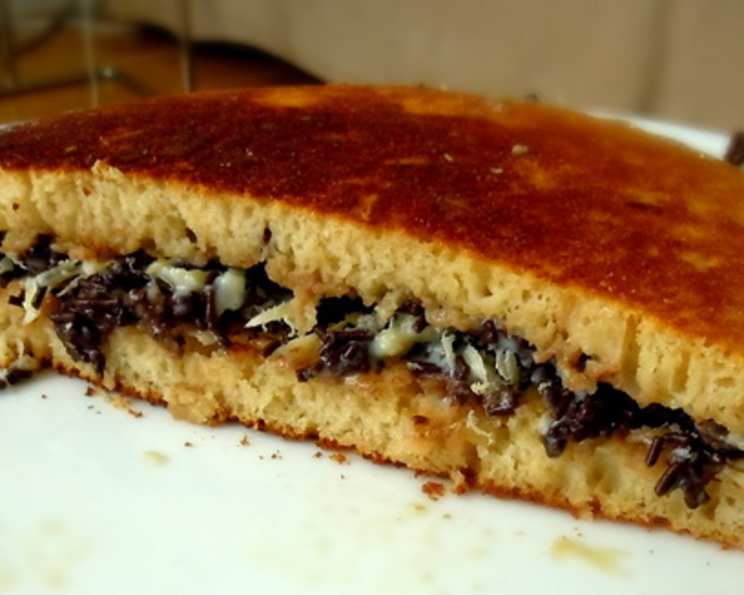
Sweet Memories: Mastering Indonesian Martabak Manis (Terang Bulan)
The sizzle of margarine on a hot griddle, the intoxicating aroma of yeast and sugar, the excited chatter of families gathered around street vendors – these are the sensory memories that flood back every time I even think about Martabak Manis, also known as Terang Bulan. When I lived in Jakarta as a student, nothing was more satisfying than grabbing a warm, gooey slice of this iconic Indonesian sweet pancake after a long day of lectures. The combination of textures and flavors, from the fluffy, slightly tangy base to the rich, sweet fillings, is simply irresistible. I’m excited to share my take on this beloved treat, so you can recreate this magic in your own kitchen.
Recipe Overview
- Prep Time: 30 minutes
- Cook Time: 20-30 minutes
- Total Time: 50-60 minutes
- Servings: 6-8
- Yield: 1 large martabak
- Dietary Type: Vegetarian
Ingredients
- 300 g plain flour
- ½ teaspoon baking powder
- 12 g dry yeast
- 50 g sugar
- 4 eggs (room temperature)
- 500 ml evaporated milk
- 3 tablespoons full cream milk powder
- 2 tablespoons margarine, melted
- Condensed milk (chocolate or vanilla) for topping
- Chocolate sprinkles for topping
- Shredded cheddar cheese for topping
- White sugar (optional) for topping
Equipment Needed
- Large mixing bowls
- Whisk
- Sieve
- Frying pan or griddle
- Aluminum foil (optional)
- Spatula
Instructions
- Begin by warming the evaporated milk in a saucepan over low heat. Be careful not to let it boil; you want it just warm to the touch. This helps activate the yeast later on.
- While the evaporated milk is warming, in a large mixing bowl, combine the plain flour, baking powder, dry yeast, and sugar. Ensure you use a bowl that’s generously sized as the mixture will expand considerably later.
- Pour the warm evaporated milk into the dry ingredients. Begin whisking thoroughly until all the ingredients are well combined. Don’t worry if there’s a slight residue of flour at the bottom of the bowl, we will strain it out later.
- Next, melt the margarine in a separate small pan. Set aside to cool slightly.
- Take another large mixing bowl. Place a sieve over the bowl. Pour the flour and milk mixture through the sieve to separate the fine mixture from any remaining residue. This step is essential for a smooth and airy martabak. Again, ensure this bowl is large as the batter will rise substantially.
- Pour the melted (and slightly cooled) margarine into the sieved mixture. Stir gently until the margarine is fully incorporated.
- Cover the bowl and let the mixture rest for 30 minutes. It’s crucial not to disturb or touch the mixture during this resting period as it allows the yeast to work its magic and develop the airy texture.
- After 30 minutes, heat a frying pan or griddle over low heat. Generously grease the pan with margarine. The pan needs to be well-greased to prevent sticking and achieve a golden-brown crust.
- Pour a desired amount of the batter onto the hot, greased pan. The amount will depend on the size of your pan and your preferred thickness for the martabak.
- You can cover the frying pan with aluminum foil to help the martabak cook evenly and trap the steam. This step is optional but highly recommended for a fluffier texture.
- Cook the martabak until the top is set and the bottom is golden brown. This typically takes about 15-20 minutes on low heat. Use a spatula to gently check the bottom for doneness. It should be firm and lightly browned.
- Once cooked, carefully transfer the martabak to a serving plate.
- Now for the fun part – the toppings! Generously sprinkle chocolate sprinkles over the surface, followed by the shredded cheddar cheese. The combination of chocolate and cheese might sound unusual, but trust me, it’s a classic and incredibly delicious.
- Drizzle condensed milk (chocolate or vanilla, depending on your preference) generously over the chocolate and cheese.
- If desired, sprinkle a little white sugar over the top for extra sweetness and a slightly caramelized texture.
- Cut the Martabak in half and fold it over. This creates the signature half-moon shape.
- Optionally, spread a thin layer of margarine over the top surface to add moisture and a glossy sheen.
- Cut the folded Martabak into slices and serve immediately. Enjoy!
Expert Tips & Tricks
- Room Temperature Eggs: Always use room temperature eggs. Cold eggs will hinder the yeast activity and result in a less fluffy martabak. If you forgot to take them out of the fridge, submerge them in warm water for a few minutes.
- Yeast Proofing: If you’re unsure about the activity of your dry yeast, you can proof it before adding it to the other ingredients. Simply mix it with a little warm water and sugar. If it foams up after 5-10 minutes, it’s good to go.
- Low and Slow Cooking: Cooking the martabak over low heat is crucial to prevent burning and ensure even cooking. Patience is key!
- Bubbles are Good: As the martabak cooks, you’ll see bubbles forming on the surface. This is a good sign that the yeast is working and the martabak is rising properly.
- Don’t Overmix: Overmixing the batter can develop the gluten in the flour, resulting in a tough martabak. Mix just until the ingredients are combined.
- Pan Preparation: Make sure the pan is evenly greased. You can use margarine or even a neutral oil with a high smoke point.
Serving & Storage Suggestions
Martabak Manis is best served warm and fresh, straight from the pan. The warm, gooey fillings and soft, fluffy base are at their peak flavor and texture when enjoyed immediately.
If you have leftovers, store them in an airtight container at room temperature for up to 2 days. You can also refrigerate it for up to 4 days, but the texture will change slightly – it will become a bit chewier.
To reheat, warm individual slices in a microwave for a few seconds or in a dry skillet over low heat. Be careful not to overheat, as the fillings can become overly melted and messy.
Nutritional Information
(Note: Nutritional information is an estimate and may vary based on specific ingredients and portion sizes.)
| Nutrient | Amount per Serving | % Daily Value |
|---|---|---|
| Calories | 450 kcal | 23% |
| Total Fat | 18g | 28% |
| Saturated Fat | 8g | 40% |
| Cholesterol | 100mg | 33% |
| Sodium | 250mg | 11% |
| Total Carbohydrate | 65g | 22% |
| Dietary Fiber | 2g | 8% |
| Sugars | 30g | 60% |
| Protein | 10g | 20% |
Variations & Substitutions
- Gluten-Free Martabak: Substitute the plain flour with a gluten-free flour blend. You may need to adjust the amount of liquid slightly to achieve the right batter consistency.
- Dairy-Free Martabak: Replace the evaporated milk and full cream milk powder with plant-based alternatives like almond milk, soy milk, or coconut milk powder. Use a vegan margarine.
- Savory Martabak: While this recipe focuses on the sweet version, you can easily adapt it for a savory martabak by omitting the sugar from the batter and filling it with ingredients like minced meat, vegetables, and eggs.
- Different Toppings: Get creative with your toppings! Try using Nutella, crushed peanuts, Oreo cookies, banana slices, or any other sweet treat that you enjoy.
- Regional Variations: Explore different regional variations of Martabak Manis. Some versions use black sticky rice flour for a darker color and unique flavor.
FAQs (Frequently Asked Questions)
Q: Why is my Martabak Manis not fluffy?
A: Several factors can contribute to a dense martabak. Make sure your yeast is active, don’t overmix the batter, and allow the batter to rest for the full 30 minutes. Also, ensure you’re cooking it over low heat.
Q: Can I make the batter ahead of time?
A: While it’s best to cook the martabak shortly after the batter has rested, you can store the batter in the refrigerator for up to 24 hours. However, the yeast activity might slow down, so you may need to let it sit at room temperature for a short time before cooking.
Q: How do I prevent the Martabak from sticking to the pan?
A: Make sure your pan is well-greased with margarine before pouring in the batter. Also, use a non-stick pan if possible.
Q: Can I use a different type of cheese?
A: While cheddar cheese is the traditional choice, you can experiment with other types of cheese like mozzarella or cream cheese.
Q: Can I bake this in the oven instead of cooking it on the stovetop?
A: While traditionally cooked on a stovetop, you can try baking it in a preheated oven at 350°F (175°C) for about 20-25 minutes, or until golden brown. However, the texture might be slightly different.
Final Thoughts
Now that you’ve got the recipe and all the insider tips, it’s time to embark on your Martabak Manis journey! Don’t be intimidated; even if your first attempt isn’t perfect, the process of creating this iconic Indonesian treat is incredibly rewarding. Gather your ingredients, follow the steps carefully, and most importantly, have fun experimenting with different toppings and variations. I encourage you to share your Martabak Manis creations with friends and family – and don’t forget to let me know how it turns out! Perhaps you’d enjoy it with a strong cup of Indonesian coffee, or “Kopi Tubruk”, for the full experience. Selamat mencoba! (Good luck trying!)