
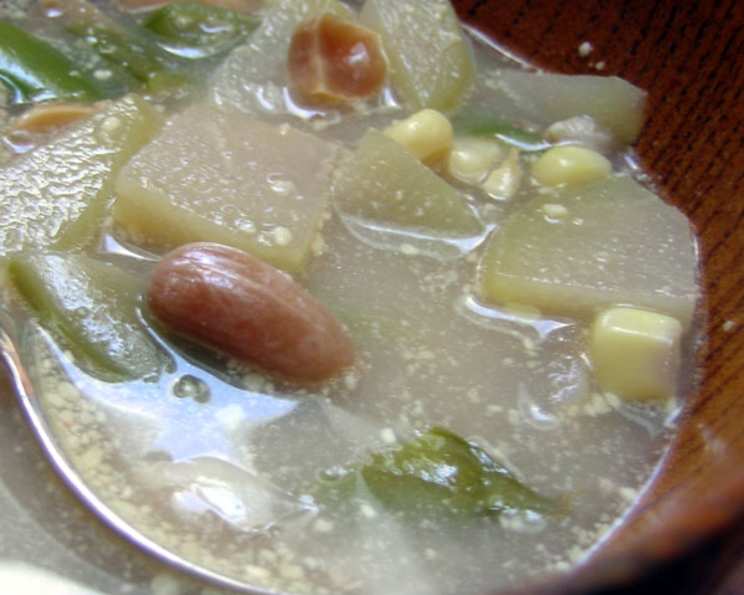
Indonesian Vegetable Sour Soup (Sayur Asam)
The aroma alone transports me back to my grandmother’s kitchen in Jakarta. I remember standing on a small stool, mesmerized as she expertly ground spices with her stone mortar and pestle, the scent of tamarind filling the air. The clatter of her cooking, the vibrant colors of the vegetables, and the comforting sourness of the soup were always a warm welcome after a long day of school. This dish, Sayur Asam, is more than just a soup; it’s a cherished memory simmering in a bowl.
Recipe Overview
- Prep Time: 25 minutes
- Cook Time: 20 minutes
- Total Time: 45 minutes
- Servings: 4
- Yield: About 6 cups
- Dietary Type: Vegan (can be easily adapted)
Ingredients
- 1 teaspoon tamarind pod
- 200 ml warm water
- 1 shallot, sliced
- 3 garlic cloves, minced
- 1 inch fresh ginger, peeled and sliced
- 1 red chili pepper, seeded and sliced
- 3 tablespoons raw peanuts
- 1 teaspoon shrimp paste (belacan – optional for vegan)
- ½ teaspoon salt
- 5 cups low-fat chicken broth (or vegetable broth)
- ½ cup salted peanuts, coarsely chopped
- 2 tablespoons brown sugar
- 1 chayote, peeled, seeded, and sliced thin
- ½ cup frozen green beans, ends trimmed
- ⅓ cup frozen corn kernels
Equipment Needed
- Small bowl
- Large mortar and pestle (or food processor/blender)
- Medium saucepan
- Strainer
Instructions
-
Begin by preparing the tamarind. Place the tamarind pod in a small bowl and cover with warm water. Allow it to soak for at least 15 minutes to soften. This will allow you to extract the flavorful tamarind juice.
-
While the tamarind is soaking, prepare the spice paste. In a large mortar, combine the sliced shallot, minced garlic cloves, sliced ginger, seeded and sliced red chili pepper, raw peanuts, shrimp paste (if using), and salt.
-
Using the pestle, grind the ingredients together until a smooth paste forms. This process releases the aromatic oils and flavors. If you don’t have a mortar and pestle, a food processor or blender works just as well. Just pulse until a smooth paste is achieved.
-
Transfer the spice paste to a medium saucepan. Add the chicken or vegetable broth, salted peanuts, and brown sugar. Stir well to combine all the ingredients.
-
Place the saucepan over medium heat and bring the mixture to a simmer. Cook for 15 minutes, allowing the flavors to meld together beautifully. This step is crucial for developing the signature Sayur Asam taste.
-
While the soup base is simmering, prepare the tamarind juice. Use a strainer to separate the tamarind seeds from the juice. Press down on the tamarind pulp to extract as much juice as possible. Discard the seeds. The tamarind juice provides the essential sourness of the soup.
-
Add the sliced chayote, green beans, and corn kernels to the simmering soup. Increase the heat to high and cook for approximately 5 minutes, or until the vegetables are tender-crisp.
-
Just before serving, stir in the prepared tamarind juice. Taste and adjust the seasoning if needed. Some prefer a more sour taste, so add a little lime or lemon juice.
-
Garnish with sliced green chili pepper if desired, for an extra kick. Serve hot with steamed rice.
Expert Tips & Tricks
- Spice Level Adjustment: Adjust the amount of red chili pepper to control the spiciness of the soup. Remove the seeds for a milder flavor.
- Tamarind Paste Substitute: If you can’t find tamarind pods, you can use tamarind paste. Start with 1 tablespoon and adjust to taste.
- Vegetable Variations: Feel free to add other vegetables like long beans, melinjo (gnetum gnemon) leaves, or even pumpkin.
- Vegan Option: To make this soup completely vegan, omit the shrimp paste (belacan) or substitute it with a vegan shrimp paste alternative, and ensure you are using vegetable broth.
- Aromatic Boost: For an extra layer of flavor, lightly toast the raw peanuts before grinding them into the spice paste.
Serving & Storage Suggestions
Sayur Asam is best served hot with a side of steamed white rice. It is a complete meal on its own, but it also pairs well with fried dishes like fried chicken, tofu, or tempeh, and a dollop of spicy sambal.
Leftovers can be stored in an airtight container in the refrigerator for up to 3 days. To reheat, gently warm the soup over medium heat on the stovetop until heated through. You can also microwave it in short bursts, stirring in between, to prevent uneven heating. Freezing is not recommended, as the vegetables may become mushy upon thawing.
Nutritional Information
Note: Nutritional information is an estimate and may vary based on specific ingredients and portion sizes.
| Nutrient | Amount per Serving | % Daily Value |
|---|---|---|
| Calories | 320 kcal | 16% |
| Total Fat | 18g | 28% |
| Saturated Fat | 3g | 15% |
| Cholesterol | 0mg | 0% |
| Sodium | 600mg | 25% |
| Total Carbohydrate | 28g | 9% |
| Dietary Fiber | 6g | 24% |
| Sugars | 12g | – |
| Protein | 12g | 24% |
Variations & Substitutions
- Spicier Version: Add bird’s eye chilies (cabe rawit) to the spice paste for intense heat.
- Sweeter Version: Increase the amount of brown sugar or add a touch of palm sugar for a sweeter flavor profile.
- Regional Variations: Different regions of Indonesia have their own variations of Sayur Asam. Explore versions from Jakarta, West Java, or East Java for unique flavor combinations.
- Protein Boost: Add tofu, tempeh, or even chicken pieces for a more substantial meal.
FAQs (Frequently Asked Questions)
Q: Can I make this soup ahead of time?
A: Yes, you can prepare the spice paste and the soup base ahead of time. Store them separately in the refrigerator and combine them when you’re ready to cook.
Q: What is shrimp paste (belacan) and where can I find it?
A: Shrimp paste is a fermented shrimp product that adds a unique umami flavor. It can be found in Asian grocery stores, usually in the refrigerated section. If you’re vegan, simply omit it.
Q: Can I use canned corn instead of frozen?
A: Yes, canned corn can be used. Drain and rinse it before adding it to the soup.
Q: How do I adjust the sourness of the soup?
A: Add more tamarind juice or a squeeze of lime or lemon juice for a more sour flavor. If it’s too sour, add a little more brown sugar.
Q: What if I can’t find chayote?
A: If you can’t find chayote, you can substitute it with another mild-flavored vegetable like zucchini or green papaya.
Final Thoughts
Now it’s your turn to embark on this flavorful journey! Don’t be intimidated by the list of ingredients – Sayur Asam is a forgiving and adaptable dish. Gather your ingredients, follow the simple steps, and let the enticing aromas fill your kitchen. I encourage you to experiment with variations, adjust the spice levels to your liking, and make this recipe your own. This is more than just a recipe; it’s an invitation to experience a taste of Indonesia. I’d love to hear your feedback and see your culinary creations! Enjoy your delicious bowl of Sayur Asam!