
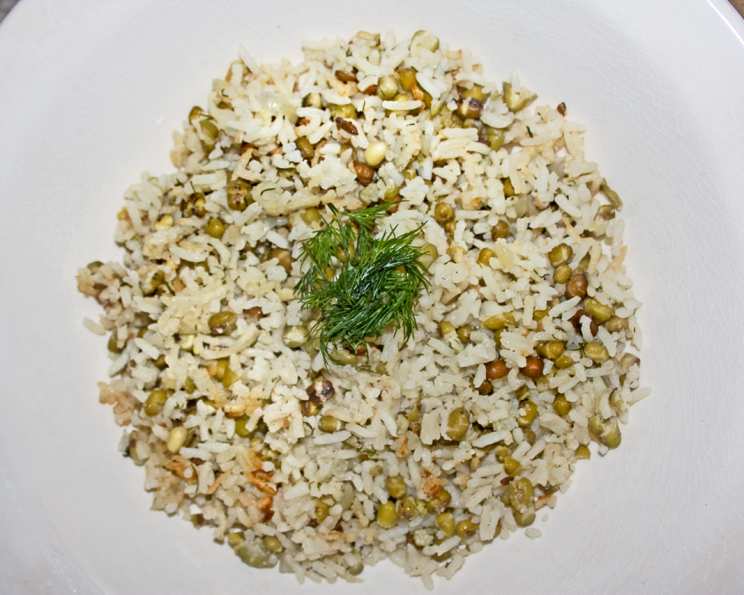
Mash M’tubuq: Iraqi Mung Beans and Rice
The aroma of dill and simmering rice instantly transports me back to my grandmother’s kitchen. She wasn’t Iraqi, but a well-traveled soul who loved exploring global flavors. One day, she proudly presented this humble dish, Mash M’tubuq. At first, I was skeptical; mung beans weren’t exactly a staple in our household. But one bite of the fluffy rice mingled with the earthy beans, fragrant dill, and sweet date molasses, and I was hooked. It was a surprisingly comforting and satisfying meal, a testament to the magic that can happen when different cultures and ingredients meet.
Recipe Overview
- Prep Time: 12 hours 15 minutes (includes soaking)
- Cook Time: 30 minutes
- Total Time: 12 hours 45 minutes
- Servings: 4
- Yield: 4 servings
- Dietary Type: Vegetarian, Gluten-Free (naturally), can be made Vegan (omit yogurt)
Ingredients
- ½ – ¾ cup dry mung beans, soaked overnight
- 1 cup rice
- 1 – 1 ½ tablespoons fresh dill, chopped
- 1 medium onion, chopped
- 2 – 3 tablespoons oil (vegetable, olive, or canola)
- 1 – 1 ½ teaspoons salt (to taste)
- Plain yogurt (optional, for serving)
- Date molasses (dibis, optional, for serving)
Equipment Needed
- Rice cooker (optional, but recommended for convenience)
- Large pot or Dutch oven (if not using a rice cooker)
- Knife
- Cutting board
- Measuring cups and spoons
Instructions
- Begin by preparing the mung beans. Place ½ to ¾ cup of dry mung beans in a bowl and cover with plenty of water. Let them soak overnight or for at least 8 hours. This step is crucial for softening the beans and reducing cooking time.
- The next day, drain and rinse the soaked mung beans thoroughly. Set aside.
- If you’re using a rice cooker, measure out 1 cup of rice and add the amount of water recommended by your rice cooker manufacturer for rice alone. Add the rice and water to the rice cooker.
- If you are not using a rice cooker, choose a large pot or Dutch oven. Add the rice and then enough water to cover the rice by about one finger’s width above the rice line. This is a traditional method of gauging the right water level.
- Add the mung beans, 1 chopped medium onion, 1 to 1 ½ tablespoons of chopped fresh dill, 2 to 3 tablespoons of oil, and 1 to 1 ½ teaspoons of salt (or to taste) to the pot (or the rice cooker, if you didn’t add them in step 3). Stir all the ingredients together until they are well combined.
- If using a pot, bring the mixture to a boil over medium-high heat. Once boiling, reduce the heat to low, cover the pot tightly, and let it steam for about 30 minutes.
- If using a rice cooker, simply close the lid and start the cooking cycle. The rice cooker will automatically switch to “warm” when the rice is cooked.
- (Traditional Layering Method): After about 15 minutes of cooking (if using a pot, or halfway through the rice cooker cycle), carefully open the lid. The rice should be about half-cooked at this point. Divide the rice in half. Layer the mung bean and onion mixture on the bottom half of the rice in the pan. Gently spread the remaining rice on top, creating layers. This layering technique is what gives the dish its name, “m’tubuq,” meaning “layered.”
- Cover the pot (or let the rice cooker continue) and continue to steam for another 15 minutes (or until the rice cooker finishes its cycle).
- After 30 minutes of cooking time, check the rice and mung beans for doneness. The rice should be tender and fluffy, and the mung beans should be soft and easily mashable. If the rice is still too firm, add a little more water (a few tablespoons at a time) and continue cooking until it reaches the desired consistency.
Expert Tips & Tricks
- Soaking is key: Don’t skip the soaking step! It significantly reduces the cooking time for the mung beans and helps them cook more evenly with the rice.
- Adjust the water: The amount of water needed can vary depending on the type of rice and the pot you’re using. Start with the recommended amount and add more as needed to prevent the rice from drying out.
- Toast the rice: For a nuttier flavor, you can toast the rice in the oil for a few minutes before adding the water and other ingredients. Be careful not to burn it.
- Lamb addition: For a non-vegetarian version, add small cubes of lamb to the pot along with the other ingredients. Brown the lamb in the oil before adding the rice and beans.
- Spice it up: Feel free to add other spices to enhance the flavor. A pinch of turmeric, cumin, or coriander can add warmth and complexity.
- Vegan option: To make this dish vegan, simply omit the yogurt topping. It’s still delicious without it!
Serving & Storage Suggestions
Serve Mash M’tubuq hot, garnished with a dollop of plain yogurt (if desired) and a drizzle of date molasses (dibis). The tartness of the yogurt and the sweetness of the date molasses create a delightful contrast that complements the earthy flavors of the rice and beans.
Leftovers can be stored in an airtight container in the refrigerator for up to 3 days. To reheat, add a splash of water and microwave until heated through, or gently reheat in a pot on the stovetop. The texture might change slightly upon reheating, but the flavor will still be delicious.
I do not recommend freezing as this will cause the rice to become mushy.
Nutritional Information
(Note: Nutritional information is an estimate and can vary based on specific ingredients and portion sizes.)
| Nutrient | Amount per Serving | % Daily Value |
|---|---|---|
| Calories | 380 kcal | 19% |
| Total Fat | 8g | 12% |
| Saturated Fat | 1g | 5% |
| Cholesterol | 0mg | 0% |
| Sodium | 600mg | 25% |
| Total Carbohydrate | 65g | 22% |
| Dietary Fiber | 7g | 28% |
| Sugars | 2g | 4% |
| Protein | 12g | 24% |
Variations & Substitutions
- Type of Rice: You can use other types of rice, such as basmati or brown rice, but the cooking time and water ratio may need to be adjusted. Brown rice will require a longer cooking time.
- Beans: While mung beans are traditional, you can experiment with other types of beans, such as lentils or chickpeas.
- Herbs: If you’re not a fan of dill, you can substitute it with other fresh herbs like parsley or cilantro.
- Vegetables: Add other vegetables like carrots, peas, or spinach for added nutrients and flavor.
- Spices: Experiment with different spice blends to customize the flavor profile. Try adding a pinch of garam masala or a dash of red pepper flakes for a spicy kick.
FAQs (Frequently Asked Questions)
Q: Can I make this dish ahead of time?
A: While best served fresh, you can cook the rice and beans ahead of time and reheat it when ready to serve. The texture might be slightly softer after reheating.
Q: Do I have to soak the mung beans?
A: Soaking is highly recommended as it reduces the cooking time and ensures the beans cook evenly. If you’re short on time, you can try a quick soak method by boiling the beans for a few minutes and then letting them sit in the hot water for an hour.
Q: Can I use canned mung beans?
A: Yes, you can use canned mung beans in a pinch. Drain and rinse them well before adding them to the rice. Reduce the cooking time accordingly, as canned beans are already cooked.
Q: What if my rice is still too hard after 30 minutes?
A: Add a few tablespoons of water at a time and continue cooking until the rice is tender. The cooking time can vary depending on the type of rice and the pot you’re using.
Q: Where can I find date molasses (dibis)?
A: Date molasses can be found at Middle Eastern grocery stores or online retailers. If you can’t find it, you can substitute it with maple syrup or honey, but the flavor will be slightly different.
Final Thoughts
Mash M’tubuq is more than just a recipe; it’s a taste of history, a celebration of simple ingredients, and a testament to the power of food to connect us to different cultures. Don’t be afraid to experiment with the recipe and make it your own. Whether you serve it as a hearty main course or a flavorful side dish, I hope this dish brings as much joy to your table as it has to mine. I encourage you to try making this unique dish and sharing it with your friends and family. I’m confident it will become a new favorite!