
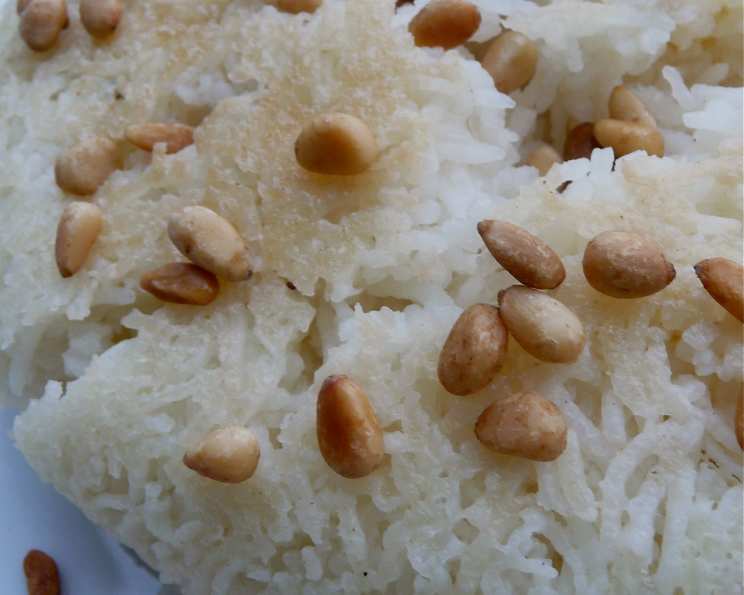
The Soulful Simplicity of Iraqi Rice (Timman)
I remember visiting my grandmother’s house as a child, the aroma of simmering stews and perfectly cooked rice always filled the air. Among her repertoire of comforting dishes, one stood out: Timman, Iraqi rice. It wasn’t just rice; it was an experience. Each fluffy grain, infused with savory stock and studded with toasted pine nuts, held the warmth of her kitchen and the love she poured into every meal. It was the foundation upon which countless family stories were built, and a taste that instantly transports me back to those cherished moments.
Recipe Overview
- Prep Time: 10 minutes
- Cook Time: 40 minutes
- Total Time: 50 minutes
- Servings: 3
- Yield: 3 cups
- Dietary Type: Gluten-Free
Ingredients
- 1 1/2 cups white basmati rice
- 2 tablespoons olive oil (or butter for those who eat dairy)
- 3 cups chicken stock (or beef stock, etc.)
- Salt to taste
- 1/4 cup pine nuts
- 2 paper towels, each cut in two
Equipment Needed
- Fine-mesh sieve
- Large pot with a tight-fitting lid
- Fork
- Small dry pan
Instructions
-
Begin by washing the rice thoroughly. Place it in a fine-mesh sieve and rinse under cold running water until the water runs clear. This removes excess starch, ensuring a light and fluffy final product. Drain the rice completely.
-
In a large-based pot, heat the olive oil (or butter) over medium-high heat. Add the drained rice to the pot and stir continuously for about two minutes. This toasting process is crucial; it helps prevent the rice from becoming mushy and adds a subtle nutty flavor.
-
Pour in the chicken stock (or your preferred stock). Bring the mixture to a high simmer, stirring once at the beginning to separate any rice grains that may have stuck to the bottom of the pot.
-
Once simmering, reduce the heat to medium-low. Cover the pot tightly with the lid. It is vital that the lid fits snugly to trap the steam, which is essential for cooking the rice evenly. Cook for 15 minutes.
-
After 15 minutes, carefully open the pot and gently fluff the rice with a fork. Be careful not to over-stir, as this can release starch and make the rice sticky.
-
This step is a traditional Iraqi technique for achieving extra fluffy rice. Place the cut pieces of paper towel around the rim of the pot, ensuring they cover the entire circumference. Then, replace the lid tightly on top of the paper towels. This helps absorb any excess moisture and create a drier, more separated grain.
-
Reduce the heat to low and leave the rice to steam for another 25 minutes. After this time, remove the paper towels. At this point, you can leave the rice on low heat for a little longer, if needed.
-
(Optional, for those with a stove-top oven combination): Alternatively, preheat your oven to 350°F (175°C). Instead of leaving the rice on low heat, place the pot on the burner that heat escapes from the oven. This keeps the rice warm and ready to eat for several hours, but only works if your stove is above your oven.
-
While the rice is steaming, prepare the pine nuts. In a small, dry pan (no oil needed), toast the pine nuts over medium-high heat. Watch them very carefully, as they can burn quickly. Stir or toss them frequently until they are golden brown and fragrant. This should take only a few minutes.
-
Once the rice is cooked, sprinkle the toasted pine nuts over the top and gently fluff with a fork to incorporate them evenly.
-
Serve hot and enjoy! This Iraqi rice is delicious with a variety of dishes, including meat stews, okra (bamia) dishes, or roasted chicken.
Expert Tips & Tricks
- Rice Washing is Key: Don’t skip the rinsing step. It makes a huge difference in the final texture.
- Toasting Enhances Flavor: Toasting the rice in oil or butter before adding the stock adds a subtle nuttiness that elevates the dish. Don’t skip this step!
- Lid Security: Ensure your pot lid is tight-fitting. If not, you can use a sheet of aluminum foil underneath the lid to create a better seal.
- Low and Slow: Cooking rice on low heat is crucial for even cooking and preventing burning.
- Pine Nut Watch: Keep a close eye on the pine nuts as they toast; they go from golden to burnt very quickly.
- Stock Quality Matters: Using a good-quality stock will significantly enhance the flavor of your rice. Homemade stock is always best, but a good store-bought option will also work.
- Make Ahead: The rice can be cooked ahead of time and reheated gently with a splash of stock or water.
Serving & Storage Suggestions
Serve the Iraqi rice hot, garnished with extra pine nuts and a sprinkle of fresh herbs like parsley or cilantro, if desired. It pairs beautifully with stews, grilled meats, or roasted vegetables.
Leftovers can be stored in an airtight container in the refrigerator for up to 3 days. To reheat, add a tablespoon or two of water or stock to the rice and microwave on low power, stirring occasionally, until heated through. You can also reheat it on the stovetop over low heat.
Freezing is not recommended, as the texture of the rice can change upon thawing.
Nutritional Information
| Nutrient | Amount per Serving | % Daily Value |
|---|---|---|
| Calories | 450 kcal | 23% |
| Total Fat | 18g | 28% |
| Saturated Fat | 4g | 20% |
| Cholesterol | 5mg | 2% |
| Sodium | 400mg | 17% |
| Total Carbohydrate | 65g | 22% |
| Dietary Fiber | 2g | 8% |
| Sugars | 1g | |
| Protein | 8g | 16% |
Variations & Substitutions
- Turmeric Rice: For a vibrant yellow hue and a subtle earthy flavor, add 1/2 teaspoon of turmeric to the rice along with the stock.
- Herb Infusion: Add fresh herbs like dill, parsley, or cilantro to the rice during the last 10 minutes of cooking for a fresh, aromatic twist.
- Nutty Variations: Experiment with other nuts like almonds, walnuts, or pistachios instead of pine nuts.
- Vegetarian Option: Use vegetable stock instead of chicken or beef stock for a vegetarian version.
- Brown Rice: While not traditional, you can use brown basmati rice. You’ll need to increase the cooking time and liquid accordingly, usually requiring around 4 cups of stock and approximately 45-50 minutes of cooking time.
FAQs (Frequently Asked Questions)
Q: Why is it important to wash the rice before cooking?
A: Washing the rice removes excess starch, which prevents the grains from sticking together and results in a fluffier texture.
Q: Can I use regular long-grain rice instead of basmati rice?
A: While you can, basmati rice is recommended for its delicate flavor and fluffy texture. Using another type of rice may alter the outcome.
Q: How do I know when the rice is fully cooked?
A: The rice is cooked when all the liquid has been absorbed and the grains are tender and fluffy.
Q: What if my rice is still hard after the recommended cooking time?
A: If the rice is still hard, add a little more stock (about 1/4 cup) and continue cooking on low heat until the liquid is absorbed and the rice is tender.
Q: Can I add vegetables to this dish?
A: Yes, you can add vegetables like peas, carrots, or diced onions to the rice during the last 10 minutes of cooking.
Final Thoughts
I hope this recipe for Timman, Iraqi rice, brings the same joy and comfort to your table that it has brought to mine for so many years. It’s a simple dish, yet incredibly flavorful and satisfying. Don’t be intimidated by the steps; each one contributes to the perfect texture and taste. Feel free to experiment with variations and make it your own. And most importantly, enjoy the process of cooking and sharing this dish with loved ones. Pair it with a hearty stew, grilled kabobs, or simply savor it on its own. I encourage you to try this recipe and share your creations and feedback. Happy cooking!