
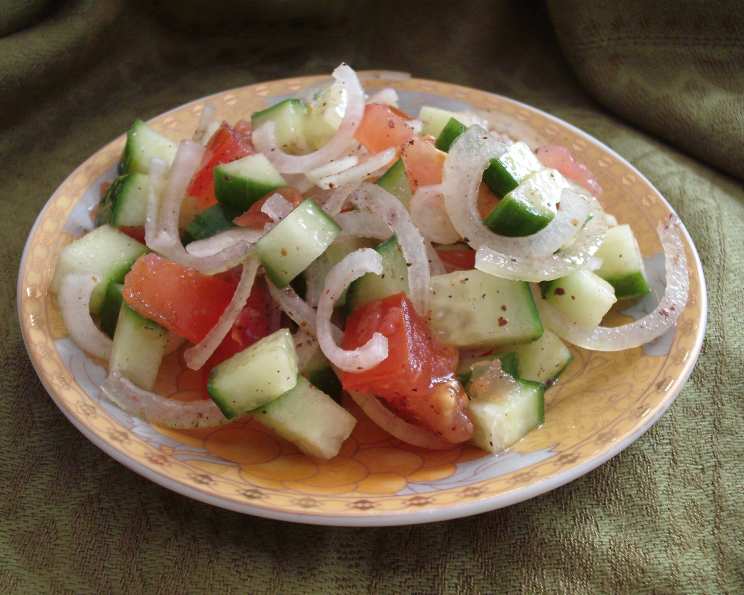
Iraqi Summag Salad: A Taste of Baghdad in Every Bite
The scent of sumac always takes me back to my grandmother’s kitchen. She wasn’t Iraqi, but a dear friend from Baghdad had gifted her a jar of the vibrant spice, and she incorporated it into everything – from roasted chicken to simple tomato salads. I remember the tart, lemony zing it added, transforming ordinary dishes into something truly special. This Iraqi Summag Salad, also known simply as Sumac Salad, is a perfect embodiment of that magic. It’s a simple combination of fresh vegetables, elevated by the distinctive flavor of sumac and a drizzle of olive oil. Every bite is a taste of sunshine and memories.
Recipe Overview
- Prep Time: 5 minutes
- Cook Time: 0 minutes
- Total Time: 5 minutes
- Servings: 4-6
- Yield: 1 salad bowl
- Dietary Type: Vegan, Gluten-Free
Ingredients
- 2 large cucumbers
- 1 large tomato
- ¼ medium onion
- 1 tablespoon sumac
- Salt to taste
- Olive oil
Equipment Needed
- Cutting board
- Knife
- Salad bowl
Instructions
-
Begin by preparing the cucumbers. Peel them in stripes, leaving some skin on for visual appeal and added texture.
-
Slice the peeled cucumbers in half lengthwise.
-
Slice each cucumber half into thin semi-circles, ideally no more than 1-2 mm thick. Thin slices are key for a delicate texture.
-
Place the sliced cucumbers into a salad bowl.
-
Chop the tomato into “salad size” pieces – not too large and not too small. Aim for bite-sized pieces that are easy to eat.
-
Add the chopped tomato to the cucumbers in the salad bowl.
-
Slice the onion into long, thin pieces. You can adjust the amount of onion to your preference. If you find raw onion too strong, you can soak it in cold water for a few minutes to mellow its flavor.
-
Add the sliced onion to the tomato and cucumber in the bowl.
-
Drizzle about 1 tablespoon of olive oil over the salad. Use a good quality extra virgin olive oil for the best flavor.
-
Add the sumac and salt to taste. Start with 1 tablespoon of sumac and adjust according to your preference. Sumac’s tartness can vary, so taste as you go.
-
Mix the salad well to ensure all the vegetables are evenly coated with the olive oil, sumac, and salt.
-
Serve immediately and enjoy!
Expert Tips & Tricks
- Cucumber Prep: For a slightly less watery salad, you can salt the sliced cucumbers and let them sit for 10-15 minutes before adding them to the salad. This will draw out some of the excess moisture. Rinse them well and pat dry before adding them to the other ingredients.
- Onion Taming: If you’re sensitive to raw onions, try using red onion instead of white or yellow. Red onion tends to be milder. Alternatively, quickly pickle the sliced onion in a mixture of vinegar, water, and sugar for a few minutes.
- Spice it up: For an extra layer of flavor, consider adding a pinch of dried mint or a squeeze of lemon juice.
- Sumac Selection: The quality of your sumac matters! Look for sumac that’s a vibrant, deep red color and has a noticeable lemony aroma. Avoid sumac that looks dull or has a musty smell.
Serving & Storage Suggestions
This Summag Salad is best served immediately after preparation to maintain the crispness of the vegetables. If you need to prepare it ahead of time, you can chop the vegetables and store them separately in the refrigerator. Mix them with the olive oil, sumac, and salt just before serving.
Leftovers can be stored in an airtight container in the refrigerator for up to 24 hours, but the vegetables will lose some of their crispness. It’s best to consume the salad as fresh as possible. Because of the fresh ingredients, this salad is not suitable for freezing.
Serve this salad as a refreshing side dish to grilled meats, fish, or vegetarian entrees. It pairs particularly well with Middle Eastern dishes like kebabs, falafel, or hummus. It also makes a great addition to a mezze platter.
Nutritional Information
| Nutrient | Amount per Serving | % Daily Value |
|---|---|---|
| Calories | 33.6 kcal | N/A |
| Calories from Fat | 2 g | 7% |
| Total Fat | 0.3 g | 0% |
| Saturated Fat | 0.1 g | 0% |
| Cholesterol | 0 mg | 0% |
| Sodium | 5.5 mg | 0% |
| Total Carbohydrate | 7.9 g | 2% |
| Dietary Fiber | 1.4 g | 5% |
| Sugars | 4 g | N/A |
| Protein | 1.4 g | 2% |
Note: Nutritional information is an estimate and may vary based on specific ingredients and serving sizes.
Variations & Substitutions
- Herbs: Add finely chopped fresh parsley, mint, or dill for extra freshness.
- Peppers: Include finely diced bell peppers (red, yellow, or green) for added color and crunch.
- Spice Level: Add a pinch of red pepper flakes or a finely chopped chili pepper for a spicy kick.
- Lemon Juice: A squeeze of fresh lemon juice can enhance the tartness and brighten the flavors.
- Cucumber Variety: Experiment with different types of cucumbers, such as Persian cucumbers or English cucumbers.
- Tomato Variety: Heirloom tomatoes or cherry tomatoes can add a different flavor profile.
- Vegan Cheese: Crumbled vegan feta or other plant-based cheese can add a salty and tangy element.
FAQs (Frequently Asked Questions)
Q: Can I make this salad ahead of time?
A: It’s best to serve this salad immediately after preparation to maintain the crispness of the vegetables. If you need to prepare it ahead, chop the vegetables and store them separately, then mix with the dressing just before serving.
Q: Can I use dried onion instead of fresh onion?
A: While you can use dried onion in a pinch, fresh onion provides a much better flavor and texture for this salad.
Q: What is sumac, and where can I find it?
A: Sumac is a Middle Eastern spice made from the dried and ground berries of the sumac plant. It has a tart, lemony flavor. You can typically find it in the spice aisle of well-stocked supermarkets or in Middle Eastern grocery stores.
Q: Can I use a different type of oil instead of olive oil?
A: While olive oil is traditional for this salad, you can use another neutral-flavored oil like avocado oil or grapeseed oil if you prefer. However, olive oil adds a distinctive flavor that complements the other ingredients.
Q: How long will the salad last in the refrigerator?
A: Leftovers can be stored in an airtight container in the refrigerator for up to 24 hours, but the vegetables will lose some of their crispness.
Final Thoughts
This Iraqi Summag Salad is more than just a simple side dish; it’s a celebration of fresh flavors and a connection to culinary traditions. The combination of crisp vegetables, tart sumac, and fragrant olive oil is both refreshing and satisfying. I encourage you to try this recipe and experience the taste of Baghdad in your own kitchen. Feel free to experiment with variations and adjustments to suit your preferences. Share your creations and feedback, and let’s keep the delicious traditions alive! Perhaps pair it with some grilled halloumi or alongside a hearty bowl of lentil soup. Enjoy!