
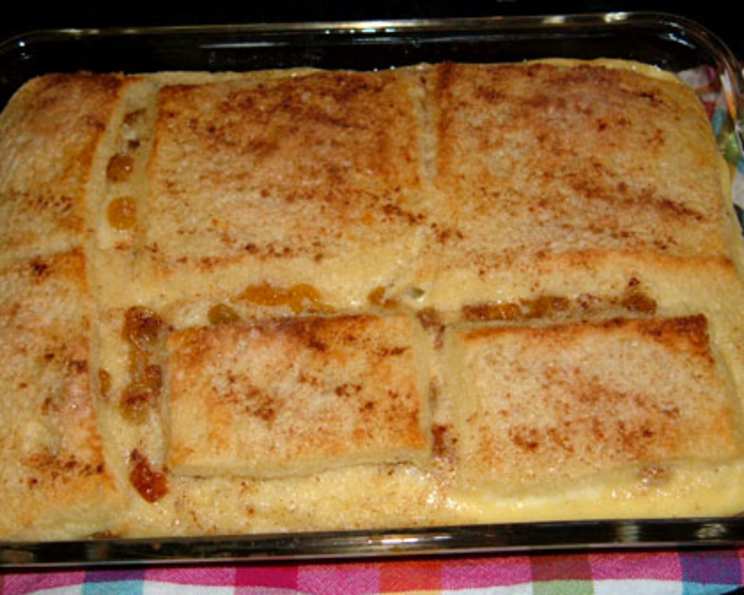
Irish Bread and Butter Pudding: A Taste of Home
The aroma alone transports me back to my grandmother’s cozy kitchen. Rain would be lashing against the windows, a fire crackling merrily in the hearth, and the comforting scent of vanilla and nutmeg would permeate the air. She’d always be in her floral apron, humming a forgotten tune as she pulled a bubbling, golden-brown Bread and Butter Pudding from the oven. That pudding, more than just a dessert, was a symbol of warmth, love, and simple, unfussy joy – a true taste of home.
Recipe Overview
- Prep Time: 20 minutes
- Cook Time: 1 hour
- Total Time: 1 hour 20 minutes
- Servings: 8-10
- Yield: 1 pudding
- Dietary Type: Vegetarian
Ingredients
- 12 slices dry white bread, crusts removed
- 1/4 cup sweet butter
- 1 teaspoon nutmeg
- 1 cup golden raisins
- 4 large eggs, lightly beaten
- 1 pint heavy cream
- 1 cup milk
- 1 teaspoon vanilla
- 3/4 cup superfine sugar
- 1 tablespoon white sugar
Equipment Needed
- 8-inch pottery or china dish
- Mixing bowl
- Whisk
- Fine sieve
- Bain-marie or roasting pan
Instructions
-
Preheat your oven to 350°F (180°C/ Gas Mark 4). Prepare your bain-marie by placing a roasting pan or large baking dish on the oven rack. Have a kettle of boiling water ready.
-
Generously butter the slices of dry white bread with sweet butter. This is crucial for richness and flavor, so don’t skimp!
-
Arrange four slices of the buttered bread, buttered side down, in a single layer in the 8-inch dish. It’s okay if you need to trim the bread slightly to fit snugly.
-
Sprinkle half of the nutmeg evenly over the layer of bread. Then, scatter half of the golden raisins across the nutmeg-dusted bread.
-
Arrange another layer of buttered bread, again buttered side down, over the fruit and spice mixture.
-
Sprinkle the remaining nutmeg and golden raisins on top of this second bread layer.
-
Cover with the remaining slices of buttered bread, buttered side down, creating the final layer.
-
In a large mixing bowl, whisk together the eggs, heavy cream, milk, vanilla, and superfine sugar. Ensure the sugar is fully dissolved.
-
Pour the egg and cream mixture over the bread layers through a fine sieve. This will help remove any lumps and ensure a silky-smooth custard.
-
Sprinkle the white sugar evenly over the top of the soaked bread. This will create a beautiful, caramelized crust.
-
Cover the dish loosely with foil and let it stand at room temperature for at least one hour. Alternatively, you can chill it overnight in the refrigerator. Soaking time allows the bread to fully absorb the custard, resulting in a wonderfully moist pudding.
-
Carefully place the dish in the preheated oven within the bain-marie. Pour the boiling water into the roasting pan until it reaches halfway up the sides of the baking dish. The water bath helps to cook the pudding gently and evenly, preventing it from drying out.
-
Bake in the middle of the oven for approximately one hour, or until the top is crisp and golden brown, and the custard is set. A slight jiggle in the very center is fine; it will continue to set as it cools.
-
Remove the pudding from the oven and let it cool slightly before serving.
Expert Tips & Tricks
- Use Stale Bread: The drier the bread, the better it will soak up the custard without becoming soggy. Leave your bread out overnight or lightly toast it in the oven.
- Spice it Up: Experiment with other spices like cinnamon, cardamom, or a pinch of ground ginger.
- Infuse the Cream: For an extra layer of flavor, infuse the cream with citrus zest (lemon or orange) or a vanilla bean by gently heating it before adding it to the egg mixture. Remove the zest or bean before whisking.
- Prevent Soggy Bottom: Ensure your bread is well-buttered and arranged tightly to prevent the custard from seeping to the bottom and creating a soggy layer.
- Check for Doneness: Insert a knife into the center of the pudding. If it comes out mostly clean, the pudding is done. A little moisture is okay.
- If the top is browning too quickly: Tent the dish with foil to prevent burning.
- Make-Ahead Tip: Prepare the pudding up to the baking stage and store it in the refrigerator overnight. Add an extra 15-20 minutes to the baking time when cooking from cold.
Serving & Storage Suggestions
Serve the Irish Bread and Butter Pudding warm, either on its own or with a dollop of whipped cream, a drizzle of custard, or a scoop of vanilla ice cream. A dusting of cinnamon or nutmeg also adds a nice touch.
Leftovers can be stored in the refrigerator for up to 3 days. Reheat gently in the oven or microwave until warmed through. The texture may change slightly upon reheating, but the flavor will still be delicious. Freezing is not recommended, as the texture of the custard can become grainy.
Nutritional Information
| Nutrient | Amount per Serving | % Daily Value |
|---|---|---|
| Calories | 549 kcal | 27% |
| Total Fat | 33g | 51% |
| Saturated Fat | 19g | 95% |
| Cholesterol | 207mg | 69% |
| Sodium | 331mg | 14% |
| Total Carbohydrate | 57g | 19% |
| Dietary Fiber | 2g | 6% |
| Sugars | 33g | N/A |
| Protein | 9g | 18% |
Note: Nutritional information is an estimate and may vary based on specific ingredients and portion sizes.
Variations & Substitutions
- Gluten-Free: Use gluten-free bread in place of white bread. You may need to adjust the soaking time, as gluten-free bread can sometimes absorb liquids more quickly.
- Dairy-Free: Substitute the heavy cream and milk with coconut cream and almond milk or other non-dairy alternatives. Use a plant-based butter substitute.
- Fruit Variations: Experiment with different dried fruits, such as cranberries, apricots, or cherries. You can also add fresh berries to the pudding after baking.
- Chocolate Chips: Add a handful of chocolate chips to the bread layers for a richer, more decadent flavor.
- Citrus Zest: Infuse the cream with lemon or orange zest for a bright, refreshing twist.
- Alcoholic Kick: Add a tablespoon or two of Irish whiskey or rum to the custard mixture for a boozy treat.
FAQs (Frequently Asked Questions)
Q: Can I use a different type of bread?
A: While white bread is traditional, you can use brioche, challah, or even croissants for a richer flavor. Ensure the bread is slightly stale for best results.
Q: Can I reduce the amount of sugar?
A: Yes, you can reduce the sugar to your preference. However, keep in mind that sugar contributes to the texture and caramelization of the pudding.
Q: Can I make this in individual ramekins?
A: Absolutely! Reduce the baking time accordingly. Check for doneness after about 30-40 minutes.
Q: What if I don’t have superfine sugar?
A: You can use regular granulated sugar, but it may take slightly longer to dissolve. Alternatively, you can pulse granulated sugar in a food processor until it’s finer.
Q: My pudding is browning too quickly. What should I do?
A: Tent the dish loosely with aluminum foil to prevent the top from burning.
Final Thoughts
This Irish Bread and Butter Pudding is more than just a recipe; it’s a connection to heritage, a warm embrace on a cold day, and a celebration of simple pleasures. I encourage you to try this recipe and experience the comforting magic for yourself. Feel free to experiment with variations and make it your own. And if you do, please share your feedback and creations! This pudding pairs perfectly with a cup of strong Irish tea or a glass of sweet dessert wine. Sláinte!