
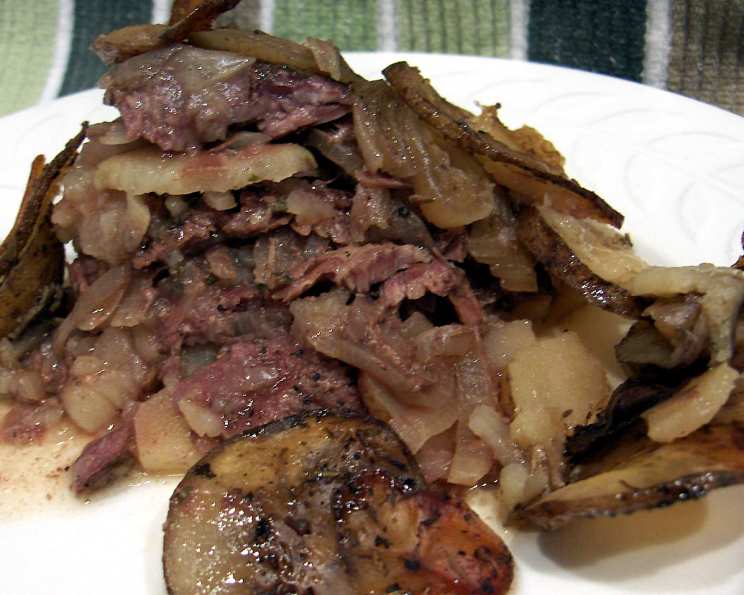
A Heartwarming Journey: Authentic Irish Lamb (or Beef) Stew
The scent of simmering meat, mingling with earthy potatoes and sweet onions, instantly transports me back to my grandmother’s kitchen. On cold winter evenings, her Irish stew was a beacon of warmth. It wasn’t just a meal; it was a hug in a bowl, a story whispered through generations. Each spoonful was a reminder of family, tradition, and the simple pleasure of shared nourishment. It’s a dish that nourishes not only the body, but the soul.
Recipe Overview
- Prep Time: 20 minutes
- Cook Time: 2 hours 30 minutes
- Total Time: 2 hours 50 minutes
- Servings: 4-6
- Yield: 1 large casserole dish
- Dietary Type: Varies (see notes below)
Ingredients
- 2 lbs boned lamb (Lamb is traditional) or 2 lbs boned beef, sliced, 1/4 inch slices
- 2 lbs peeled potatoes, thinly sliced (a mandolin slicer works best)
- 3 large onions, thinly sliced
- Salt and pepper, each layer to taste
- 2 tablespoons fresh parsley
- 1 teaspoon chopped fresh thyme or 1/2 teaspoon dried thyme
- 13 ounces water
Ingredient Notes:
- For a Gluten-Free version, ensure all ingredients are gluten-free.
- For a Dairy-Free version, this recipe is naturally dairy-free.
- For a lower-fat version, trim more of the fat from the lamb or beef before slicing.
- The type of potato will influence the texture. Waxy potatoes (like Yukon Gold) will hold their shape better, while starchier potatoes (like Russets) will break down and thicken the stew more.
Equipment Needed
- Large Casserole Dish with Lid
- Sharp Knife
- Cutting Board
- Mandolin slicer (optional, for thinly slicing potatoes)
- Measuring spoons
Instructions
-
Begin by trimming the meat, leaving just a little of the fat for flavor. Then slice the meat into approximately 1/4-inch thick pieces.
-
In a small bowl, combine 2 teaspoons of the fresh parsley (or all of the parsley if you’re not saving any for garnish) and the thyme.
-
Now, season the meat and vegetables. Generously season the meat with salt and pepper. Repeat the same process with the sliced potatoes and sliced onions. Sprinkle with half of the parsley-thyme mixture.
-
In the large casserole dish, begin layering the ingredients. Start with a layer of thinly sliced potatoes on the bottom of the dish.
-
Next, add a layer of sliced meat over the potatoes.
-
Then, cover the meat with a layer of sliced onions.
-
Repeat these layers – potatoes, meat, and onions – ensuring that you season each layer with salt, pepper, and the parsley-thyme mixture.
-
The final layer should be potatoes. This will help to create a nicely browned top during the last stage of cooking.
-
Carefully pour the water into the casserole dish.
-
Cover the casserole dish tightly with its lid. This is crucial for trapping the steam and ensuring that the stew cooks evenly and doesn’t dry out.
-
Place the covered casserole dish in a preheated oven at 275 degrees Fahrenheit (135 degrees Celsius).
-
Cook for 2 1/2 hours (150 minutes). During the cooking time, shake the casserole dish occasionally to prevent the ingredients from sticking to the bottom. Also, check the liquid level periodically. If the stew seems to be drying out too much, add a small amount of water, but only if absolutely necessary. The potatoes will release starch and thicken the stew as it cooks.
-
After 2 1/2 hours, remove the lid from the casserole dish.
-
Turn on the broiler to high heat.
-
Place the uncovered casserole dish under the hot broiler and broil until the potatoes on top are nicely browned and crisp. This should only take a few minutes, so watch it carefully to prevent burning.
-
Remove the stew from the oven. Sprinkle with the remaining fresh parsley.
-
Serve immediately and enjoy!
Expert Tips & Tricks
-
Browning the Meat: For a richer, deeper flavor, consider browning the meat in a skillet before layering it in the casserole. This adds an extra layer of caramelization that enhances the overall taste of the stew. Use a little olive oil or butter in the skillet and brown the meat in batches to avoid overcrowding.
-
Thickening the Stew: If, after cooking, the stew is not as thick as you’d like, you can remove a cup of the cooking liquid, mix it with a tablespoon of cornstarch or flour, and then stir it back into the stew. Bring it to a simmer on the stovetop for a few minutes until it thickens.
-
Make-Ahead Tip: This stew can be made a day ahead. Simply prepare it up to the point of baking, then cover and refrigerate. The next day, add about 15 minutes to the cooking time to ensure it is heated through.
-
Vegetable Variations: Feel free to add other root vegetables such as carrots, parsnips, or turnips. Simply peel and slice them and add them to the layers along with the potatoes and onions.
Serving & Storage Suggestions
Serve the Irish Lamb or Beef Stew hot, straight from the oven. It’s traditionally paired with Irish soda bread for soaking up the delicious gravy. A simple side salad of mixed greens can also complement the richness of the stew.
Storage:
- Room Temperature: Do not leave the stew at room temperature for more than 2 hours.
- Refrigerator: Store leftover stew in an airtight container in the refrigerator for up to 3-4 days.
- Freezer: For longer storage, freeze the stew in freezer-safe containers for up to 2-3 months.
Reheating:
- Stovetop: Reheat the stew on the stovetop over medium heat, stirring occasionally, until heated through. Add a little water or broth if it seems too thick.
- Microwave: Reheat individual portions in the microwave until heated through.
Nutritional Information
(Estimates, will vary based on specific ingredients and portion size)
| Nutrient | Amount per Serving | % Daily Value |
|---|---|---|
| Calories | 450 kcal | 23% |
| Total Fat | 20g | 31% |
| Saturated Fat | 8g | 40% |
| Cholesterol | 100mg | 33% |
| Sodium | 200mg | 9% |
| Total Carbohydrate | 30g | 11% |
| Dietary Fiber | 5g | 20% |
| Sugars | 8g | |
| Protein | 35g | 70% |
Variations & Substitutions
- Beef Stew: As noted, beef can be substituted for lamb for a slightly different flavor profile. Chuck roast works well.
- Vegetarian Option: Replace the meat with hearty mushrooms (such as cremini or portobello) and vegetable broth instead of water. Add a can of drained and rinsed lentils for extra protein.
- Spicy Kick: Add a pinch of red pepper flakes or a chopped jalapeno to the layers for a subtle heat.
- Beer Braised: Substitute half of the water with a dark Irish stout for a richer, more complex flavor.
- Crockpot/Slow Cooker Version: Layer the ingredients in a slow cooker in the same order. Cook on low for 8 hours, or on high for 4 hours.
FAQs (Frequently Asked Questions)
Q: Can I use different types of potatoes?
A: Absolutely! Waxy potatoes like Yukon Gold hold their shape well, while starchier potatoes like Russets will break down and thicken the stew more.
Q: Can I add other vegetables to the stew?
A: Yes, root vegetables like carrots, parsnips, or turnips are great additions. Add them to the layers along with the potatoes and onions.
Q: How do I prevent the stew from sticking to the bottom of the casserole dish?
A: Shake the casserole dish occasionally during cooking to prevent sticking. Also, ensure there is enough liquid in the dish.
Q: Can I make this stew in a slow cooker?
A: Yes, layer the ingredients in the slow cooker and cook on low for 8 hours or on high for 4 hours.
Q: How can I thicken the stew if it’s too runny?
A: Mix a tablespoon of cornstarch or flour with a cup of the cooking liquid, then stir it back into the stew and simmer until it thickens.
Final Thoughts
Irish Lamb (or Beef) Stew is more than just a recipe; it’s an invitation to create memories. Whether you’re recreating a beloved family tradition or starting a new one, I encourage you to try this recipe. Gather your ingredients, follow the steps, and let the aroma fill your kitchen with warmth and comfort. Don’t be afraid to personalize it with your favorite vegetables or a touch of spice. And most importantly, share it with those you love. Sláinte!