
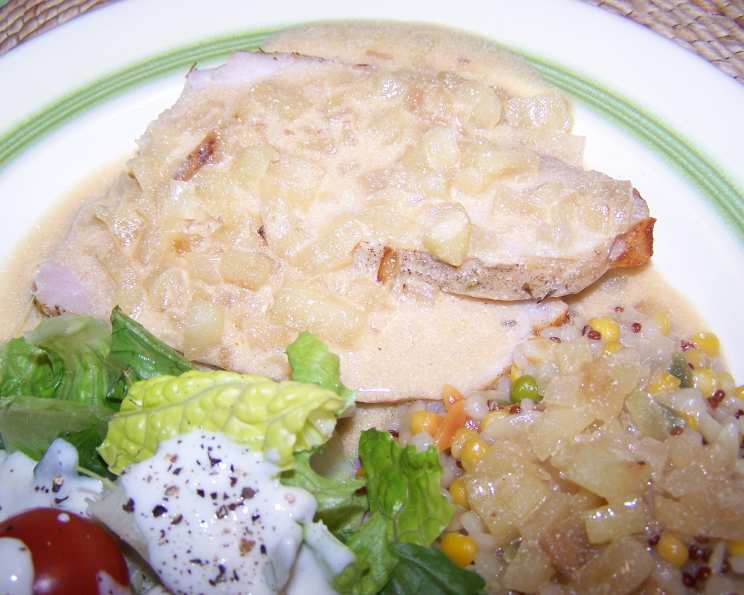
Irish Roast Pork With Cider Cream Sauce
The aroma alone transports me back to my grandmother’s kitchen. Every St. Patrick’s Day, amidst the sea of green and the lively Irish music, she’d present this magnificent roast. The succulent pork, infused with the warmth of sage and thyme, paired with that creamy, apple-kissed sauce… it was a taste of home, a taste of heritage, and a taste of pure comfort. It was the centerpiece of our celebration, a reminder of family, tradition, and the simple joy of sharing a beautiful meal together.
Recipe Overview
- Prep Time: 20 minutes
- Cook Time: 1 hour 45 minutes
- Total Time: 2 hours 5 minutes
- Servings: 8
- Yield: 1 Roast
- Dietary Type: Not Gluten-Free
Ingredients
- 2 tablespoons vegetable oil
- 3 cloves garlic, minced
- 1 tablespoon fresh sage, minced
- 1 tablespoon fresh thyme, minced
- 1 teaspoon salt
- ½ teaspoon pepper
- 1 (3 lb) boneless center cut pork loin roast or 1 (3 lb) rolled boneless pork roast, tied
For the Cider Cream:
- 2 tablespoons butter
- 2 Granny Smith apples, peeled, quartered, and thinly sliced crosswise
- 1 onion, diced
- 1 cup apple cider or 1 cup nonalcoholic apple cider
- 1 cup reduced-sodium chicken broth
- ¾ cup whipping cream
- 1 tablespoon grainy mustard or 1 tablespoon Dijon mustard
- 1 teaspoon cornstarch
Equipment Needed
- Small bowl
- Roasting pan
- Rack
- Cutting board
- Foil
- Medium saucepan
- Whisk
Instructions
-
In a small bowl, mix the vegetable oil, minced garlic, minced fresh sage, minced fresh thyme (or ½ teaspoon crumbled dried sage and thyme), salt, and pepper.
-
Rub the mixture all over the pork roast.
-
Cover the roast and refrigerate for 2 hours. (Make-ahead: Refrigerate for up to 24 hours.).
-
Place the roast on a rack in a roasting pan.
-
Roast in a 375°F (190°C) oven (or 350°F/180°C in a convection oven) until a meat thermometer inserted into the center registers 160°F (71°C), about 1 hour and 30 minutes. Tip: Using a reliable meat thermometer is key to achieving a perfectly cooked, juicy roast. Start checking the temperature after 1 hour to avoid overcooking.
-
Transfer the roast to a cutting board; tent with foil and let stand for 15 minutes before slicing. Tip: Allowing the roast to rest is crucial. It allows the juices to redistribute, resulting in a more tender and flavorful final product.
-
Make the Cider Cream: While the roast is cooking, skim fat from pan juices. Tip: Skimming the fat ensures a smoother, less greasy sauce.
-
Add the butter to the same pan and melt over medium heat.
-
Fry the sliced apples and diced onion, stirring often, for 5 minutes, until softened and slightly caramelized. Tip: Don’t rush this step; allowing the apples and onions to caramelize adds depth of flavor to the sauce.
-
Add the apple cider and bring to a boil, scraping up any brown bits from the bottom of the pan. Tip: Scraping up those browned bits, also known as fond, is essential for adding richness and complexity to the sauce.
-
Stir in the reduced-sodium chicken broth, whipping cream, and grainy mustard (or Dijon mustard); bring to a boil and then reduce the heat and let simmer until the sauce is reduced by half, about 8 minutes, allowing the flavors to meld. Tip: The sauce should thicken slightly as it reduces.
-
In a small bowl, combine the cornstarch with 1 tablespoon (25 mL) cold water to form a slurry.
-
Whisk the cornstarch slurry into the sauce and cook, stirring constantly, until thickened, about 1 minute. Tip: Whisk continuously to prevent lumps from forming. If lumps do occur, you can strain the sauce through a fine-mesh sieve.
-
Slice the rested pork roast and serve immediately with the Cider Cream.
Expert Tips & Tricks
- Herb Infusion: For an even deeper herbal flavor, try adding a sprig of rosemary to the roasting pan along with the pork. Remember to remove it before carving.
- Make-Ahead Sauce: The cider cream sauce can be made a day ahead. Store it in the refrigerator and gently reheat before serving. You may need to add a splash of broth or cream to loosen it if it thickens too much.
- Achieving the Perfect Sear: While this recipe focuses on roasting, you can sear the pork loin on all sides in a hot skillet before roasting to develop an even deeper, richer crust. Just be sure to adjust the roasting time accordingly.
- Apple Variety: While Granny Smith apples are recommended for their tartness, feel free to experiment with other varieties like Honeycrisp or Fuji for a sweeter sauce.
Serving & Storage Suggestions
Serve the Irish Roast Pork immediately after slicing with a generous ladle of the Cider Cream sauce. This dish pairs wonderfully with roasted root vegetables like carrots and parsnips, or a side of creamy mashed potatoes. For a true Irish feast, serve with buttered cabbage or colcannon.
Leftover roast pork can be stored in an airtight container in the refrigerator for up to 3 days. The Cider Cream sauce should also be stored separately in an airtight container and will last for about 2 days.
To reheat the pork, gently warm it in the oven at 300°F (150°C) with a little chicken broth to prevent it from drying out. The Cider Cream sauce can be reheated on the stovetop over low heat, stirring occasionally. Avoid boiling the sauce, as it may cause the cream to separate.
Nutritional Information
| Nutrient | Amount per Serving | % Daily Value |
|---|---|---|
| Calories | 525.5 kcal | N/A |
| Calories from Fat | 348g | 66% |
| Total Fat | 38.7 g | 59% |
| Saturated Fat | 15.8 g | 78% |
| Cholesterol | 140.3 mg | 46% |
| Sodium | 422.1 mg | 17% |
| Total Carbohydrate | 8.3 g | 2% |
| Dietary Fiber | 1.3 g | 5% |
| Sugars | 4.3 g | N/A |
| Protein | 35.4 g | 70% |
Note: Nutritional information is an estimate and may vary based on specific ingredients and portion sizes.
Variations & Substitutions
- Gluten-Free: While the recipe as written is not entirely gluten-free due to the potential presence of gluten in the chicken broth, you can easily make it gluten-free by using a gluten-free chicken broth.
- Dairy-Free Cider Sauce: You can substitute the whipping cream with a full-fat coconut milk or cashew cream for a dairy-free alternative. Be aware that this will alter the flavor profile slightly.
- Spiced Apple Cider: For a more festive flavor, use spiced apple cider in the sauce. This will add warmth and depth with notes of cinnamon, cloves, and nutmeg.
- Vegetarian Option: For a vegetarian option, consider using a large portobello mushroom cap in place of the pork loin. Marinate the mushroom in the herb mixture and roast until tender. Serve with the Cider Cream sauce as described.
FAQs (Frequently Asked Questions)
Q: Can I use a different cut of pork for this recipe?
A: While a boneless center cut pork loin roast is recommended, you can also use a pork tenderloin. However, pork tenderloin cooks much faster, so reduce the roasting time accordingly.
Q: Can I use regular apple juice instead of apple cider?
A: Apple cider will provide a richer and more complex flavor than apple juice. However, if you don’t have apple cider on hand, you can use apple juice as a substitute.
Q: How do I prevent the pork from drying out during roasting?
A: Be sure to follow the recommended roasting time and temperature, and use a meat thermometer to ensure the pork is cooked to the correct internal temperature. Tenting the pork with foil during the resting period also helps to retain moisture.
Q: Can I add other vegetables to the roasting pan?
A: Yes, you can add other vegetables like carrots, potatoes, and onions to the roasting pan during the last 45 minutes of cooking time. This will create a complete one-pan meal.
Q: What wine pairs well with this dish?
A: A crisp, dry white wine such as Riesling or Pinot Grigio would pair nicely with the Irish Roast Pork with Cider Cream Sauce. The acidity of the wine will complement the richness of the pork and sauce.
Final Thoughts
This Irish Roast Pork with Cider Cream Sauce is more than just a recipe; it’s an invitation to create memories. Whether you’re celebrating St. Patrick’s Day or simply looking for a delicious and comforting meal, this dish is sure to impress. So gather your loved ones, pour a glass of your favorite beverage, and enjoy the warmth and flavor of this classic Irish-inspired recipe. Don’t hesitate to experiment with the variations and make it your own. And please, share your feedback and photos – I’d love to see your culinary creations!