
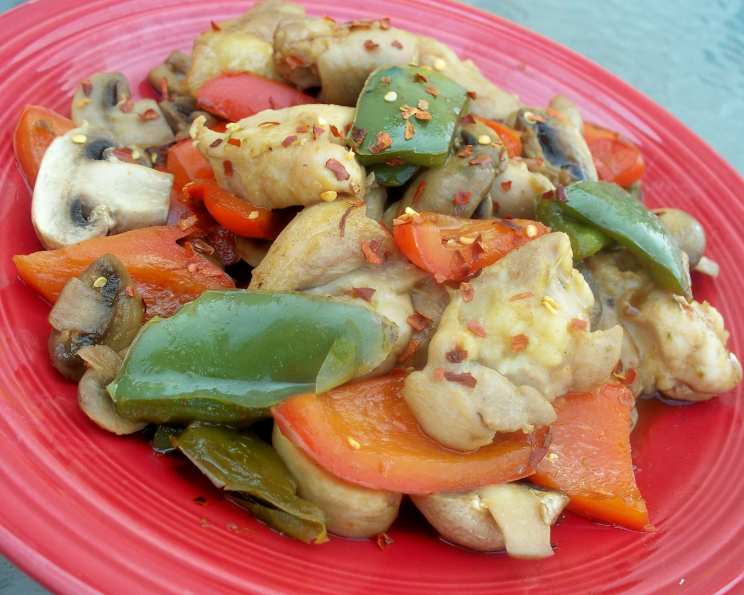
Iron Chef Winner’s Japanese Pan-Fried Chicken: A Taste of Triumph
The aroma of soy sauce, mirin, and sizzling chicken skin instantly transports me back to my tiny Tokyo apartment. I was a culinary student then, glued to the television, mesmerized as Katsuyo Kobayashi, a culinary force of nature, masterfully wielded her wok against Iron Chef Chen Kenichi. Her victory wasn’t just a win for female chefs but a testament to the beauty of simple, perfectly executed Japanese home cooking. I remember scribbling down notes, eager to recreate the magic, and this very recipe was my starting point.
Recipe Overview
- Prep Time: 10 minutes
- Cook Time: 20 minutes
- Total Time: 30 minutes
- Servings: 4
- Dietary Type: Gluten-Free (with gluten-free soy sauce)
Ingredients
- 2-3 boneless chicken thighs
- 8 fresh shiitake mushrooms
- 8 shishito green peppers or 3 small bell peppers
- 2-3 tablespoons mirin (or 2-3 tbsp. sake + 2 tsp. sugar)
- 2-3 tablespoons soy sauce
- Japanese sansho pepper (optional)
- Shichimi togarashi pepper or red chili pepper flakes (optional)
Equipment Needed
- Non-stick frying pan
- Cutting board
- Knife
- Platter for serving
Instructions
- Begin by preparing the chicken thighs. Inspect them for any excess fat and trim it away. This will help the skin crisp up beautifully.
- Next, prepare the shiitake mushrooms. Remove the hard end tips of the stems, which can be quite tough. Depending on their size, cut the mushrooms in half or into quarters. Larger mushrooms should be quartered to ensure even cooking.
- Prepare the peppers. If using shishito peppers, simply destem them. If you’re using bell peppers, destem, remove the seeds, and cut them into 4-6 pieces.
- Heat a non-stick frying pan over medium-high heat. Ensure the pan is hot before adding the chicken. This is crucial for achieving that desirable crispy skin.
- Place the chicken thighs, skin side down, in the hot pan. Cook until the skin crisps up and turns a beautiful golden-brown color. This usually takes about 5-7 minutes. Resist the urge to move the chicken around too much; let it develop a good crust.
- Turn the chicken and cook the other side until browned, about 3-5 minutes.
- Add the prepared mushrooms and peppers to the pan around the chicken.
- Continue cooking until the chicken is cooked through. An internal temperature of 165°F (74°C) is recommended. The vegetables should be tender-crisp.
- Once the chicken is cooked, add the mirin and soy sauce to the pan. This creates a delicious, glossy sauce.
- Turn the chicken and vegetables frequently to ensure they are evenly coated with the sauce. Allow the sauce to thicken slightly, about 1-2 minutes. Be careful not to burn the sauce.
- Remove the chicken from the pan and cut it into bite-size pieces. This makes it easier to eat and allows the sauce to coat every piece.
- Arrange the cut chicken and the cooked mushrooms and peppers artfully on a platter.
- Serve immediately, offering sansho pepper and shichimi togarashi as table condiments for those who like a little extra spice.
Expert Tips & Tricks
- Achieving Crispy Skin: The key to crispy chicken skin is a hot pan and dry chicken. Pat the chicken thighs dry with paper towels before cooking. This removes excess moisture that can prevent browning.
- Don’t Overcrowd the Pan: If you are cooking a larger batch, work in batches to avoid overcrowding the pan. Overcrowding lowers the pan temperature and results in steamed, not seared, chicken.
- Substitute for Mirin: If you don’t have mirin on hand, you can use a mixture of sake and sugar as a substitute. The sugar adds the necessary sweetness that mirin provides.
- Enhance the Sauce: For a deeper, more complex flavor, add a small knob of grated ginger or a clove of minced garlic to the pan along with the mirin and soy sauce.
- Make Ahead: The chicken can be cooked ahead of time and reheated. However, the skin will lose some of its crispness. To minimize this, reheat the chicken in a dry pan or under a broiler.
Serving & Storage Suggestions
Serve the Japanese Pan-Fried Chicken hot, right off the pan, for the best flavor and texture. It pairs beautifully with a bowl of steamed white rice or a simple Japanese salad. Garnish with chopped scallions or sesame seeds for an extra touch of elegance.
Leftovers can be stored in an airtight container in the refrigerator for up to 3 days. To reheat, gently warm the chicken in a pan over medium heat or in the microwave. Adding a splash of water or broth can help prevent the chicken from drying out. While freezing is possible, the texture of the chicken and vegetables may change upon thawing, so it is best enjoyed fresh or within a few days.
Nutritional Information
| Nutrient | Amount per Serving | % Daily Value |
|---|---|---|
| Calories | 250 kcal | 13% |
| Total Fat | 15g | 23% |
| Saturated Fat | 4g | 20% |
| Cholesterol | 80mg | 27% |
| Sodium | 700mg | 30% |
| Total Carbohydrate | 8g | 3% |
| Dietary Fiber | 2g | 7% |
| Sugars | 4g | 8% |
| Protein | 20g | 40% |
Note: Nutritional information is an estimate and can vary based on specific ingredients and portion sizes.
Variations & Substitutions
- Gluten-Free: Ensure the recipe is gluten-free by using tamari instead of traditional soy sauce. Tamari is a type of soy sauce made without wheat.
- Vegetarian: Substitute the chicken thighs with firm tofu or tempeh. Press the tofu to remove excess water and marinate it in a mixture of soy sauce, mirin, and grated ginger before pan-frying.
- Spicy: For an extra kick, add a pinch of red pepper flakes or a drizzle of chili oil to the sauce.
- Vegetable Variations: Feel free to experiment with other vegetables such as snap peas, broccoli florets, or thinly sliced carrots. Adjust cooking times accordingly to ensure they are cooked through but still retain some crunch.
FAQs (Frequently Asked Questions)
Q: Can I use chicken breast instead of chicken thighs?
A: Yes, you can use chicken breast, but be mindful that it tends to dry out more quickly than chicken thighs. Reduce the cooking time accordingly and consider pounding the chicken breast to an even thickness for quicker, more even cooking.
Q: What if I don’t have shishito peppers?
A: Bell peppers are an excellent substitute for shishito peppers. They offer a similar sweetness and texture, although they are not as mild.
Q: Can I make this recipe in advance?
A: Yes, you can cook the chicken and vegetables ahead of time and store them separately. However, the chicken skin will lose some of its crispness upon reheating. To minimize this, reheat the chicken in a dry pan or under a broiler.
Q: What is sansho pepper?
A: Sansho pepper is a Japanese spice made from the prickly ash tree. It has a unique citrusy aroma and a slight numbing sensation. It’s often used as a condiment to add a burst of flavor to dishes.
Q: How do I know when the chicken is cooked through?
A: The best way to ensure the chicken is cooked through is to use a meat thermometer. Insert the thermometer into the thickest part of the thigh, avoiding the bone. The internal temperature should reach 165°F (74°C).
Final Thoughts
So, there you have it – Iron Chef Winner’s Japanese Pan-Fried Chicken, a dish that is both simple and sublime. Don’t let the apparent simplicity fool you; the key lies in the quality of ingredients and the careful execution of each step. I urge you to give this recipe a try, and perhaps, like me, you’ll find yourself transported to a bustling Tokyo kitchen with every flavorful bite. Pair it with a chilled glass of sake or a refreshing green tea for a complete and satisfying Japanese culinary experience. And please, share your creations and modifications! I’m eager to hear how you’ve made this classic dish your own.