
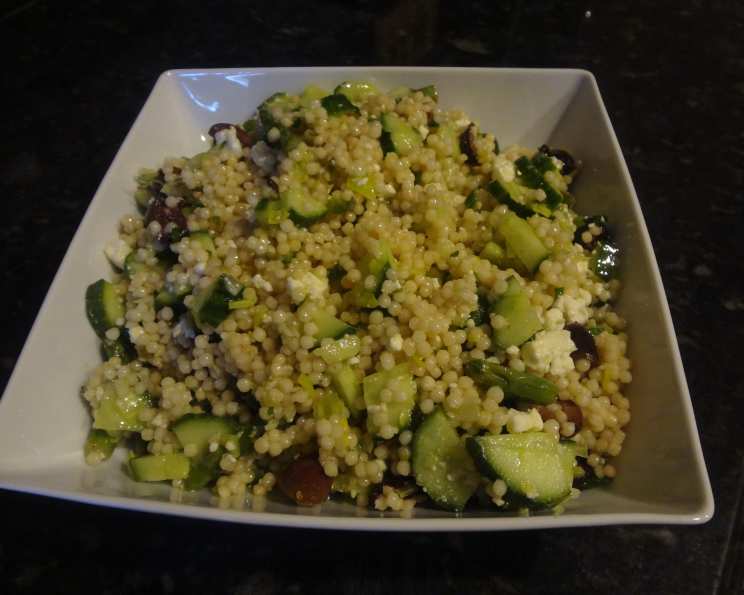
Israeli Couscous Salad With Asparagus, Cucumber, and Olives
The first time I tasted Israeli couscous was at a sun-drenched cafe overlooking the Mediterranean. It wasn’t the view that stole the show, though – it was the pearl-like couscous nestled amongst bright vegetables and briny olives. Each bite was an explosion of textures and flavors, a perfect harmony that transported me to that very moment, a feeling I try to recreate every time I make this salad. The memory of that first bite lingers still, a reminder that simple ingredients, prepared with care, can create something truly extraordinary.
Recipe Overview
- Prep Time: 20 minutes
- Cook Time: 10 minutes
- Total Time: 30 minutes
- Servings: 8
- Dietary Type: Vegetarian
Ingredients
- 1 garlic clove, peeled and finely minced
- 3 tablespoons fresh lemon juice
- 1 teaspoon Dijon mustard
- 1/2 cup extra virgin olive oil
- Salt, to taste
- Pepper, to taste
- 2 1/2 cups vegetable broth (homemade is best) or 2 1/2 cups chicken broth (homemade is best)
- 2 cups Israeli couscous, toasted
- 2 cups asparagus spears, cut into 1/2-inch pieces, blanched
- 2 cups English cucumbers, seeded, cut into 1/2-inch cubes
- 1/2 cup kalamata olives, pitted, cut in half
- 2 large green onions, chopped
- 1/4 cup fresh mint leaves (plus a few sprigs for garnish-NOT dried mint!)
- 1 1/2 cups feta cheese, crumbled
Equipment Needed
- Small non-reactive bowl
- Whisk
- Medium saucepan
- Serving bowl
Instructions
- In a small non-reactive bowl, combine the garlic, lemon juice, and Dijon mustard. It’s crucial to use a non-reactive bowl when working with acidic ingredients like lemon juice to prevent any metallic taste from developing.
- Whisk in the olive oil until the dressing is emulsified and slightly thickened. Season generously to taste with salt and pepper. Don’t be shy with the seasoning; it will balance the acidity of the lemon juice. Set the dressing aside.
- Bring the broth (vegetable or chicken) to a boil in a medium saucepan. Using homemade broth will significantly enhance the overall flavor, but a good quality store-bought broth works as well.
- Stir in the Israeli couscous. Ensure the couscous is evenly distributed in the broth to prevent clumping.
- Cover the saucepan, reduce the heat to medium-low, and simmer until the couscous is tender and all the broth is absorbed, approximately 10 minutes. Keep an eye on it to prevent scorching.
- Transfer the cooked couscous to a serving bowl. Sprinkle lightly with salt and pepper to season the couscous directly. This will help to layer the flavors effectively.
- Cool the couscous to room temperature. This is a crucial step. Warm couscous will wilt the fresh vegetables and melt the feta cheese, ruining the texture of the salad.
- Once the couscous is cooled, stir in the blanched asparagus, cucumber, olives, green onions, and 1/4 cup of fresh mint leaves. The asparagus should be bright green and slightly crisp-tender, not mushy.
- Add the prepared dressing to the salad and toss gently to coat. Be careful not to overmix, as this can make the feta cheese crumble too much.
- Gently mix in the feta cheese, distributing it evenly throughout the salad.
- Garnish with mint sprigs for a fresh and appealing presentation.
Expert Tips & Tricks
- Toast the Couscous: Before cooking the couscous, toast it in a dry pan over medium heat for a few minutes until it turns a light golden brown. This adds a nutty flavor and improves its texture.
- Blanch the Asparagus Perfectly: To ensure your asparagus is perfectly blanched, plunge it into boiling water for only 2-3 minutes, then immediately transfer it to an ice bath to stop the cooking process. This preserves its vibrant green color and crisp-tender texture.
- Make-Ahead Tip: You can prepare the couscous and dressing separately up to a day in advance. Store them in the refrigerator and combine them with the remaining ingredients just before serving.
- Adjust the Dressing: Taste the salad after adding the dressing and adjust the seasoning as needed. You might want to add a little more lemon juice for brightness or a pinch of salt to enhance the flavors.
- Spice it Up: Add a pinch of red pepper flakes to the dressing for a touch of heat.
Serving & Storage Suggestions
This Israeli couscous salad is best served chilled or at room temperature. It makes a wonderful side dish for grilled chicken, fish, or lamb. It’s also delicious on its own as a light lunch.
Leftovers can be stored in an airtight container in the refrigerator for up to 3 days. The texture of the couscous may change slightly over time, but the salad will still be flavorful. Avoid freezing this salad, as the vegetables will become mushy upon thawing.
Nutritional Information
| Nutrient | Amount per Serving | % Daily Value |
|---|---|---|
| Calories | 384.4 kcal | N/A |
| Calories from Fat | 187 g | 49% |
| Total Fat | 20.9 g | 32% |
| Saturated Fat | 6.3 g | 31% |
| Cholesterol | 25 mg | 8% |
| Sodium | 395.5 mg | 16% |
| Total Carbohydrate | 39.1 g | 13% |
| Dietary Fiber | 3.7 g | 14% |
| Sugars | 2.5 g | N/A |
| Protein | 11.1 g | 22% |
Variations & Substitutions
- Gluten-Free: Use a gluten-free couscous substitute, such as quinoa or rice, to make this salad gluten-free.
- Vegan: Omit the feta cheese or substitute it with a vegan feta alternative made from tofu or nuts.
- Herbs: Feel free to experiment with different herbs, such as parsley, dill, or basil, in addition to or in place of the mint.
- Vegetables: Add other seasonal vegetables, such as bell peppers, zucchini, or cherry tomatoes, for extra flavor and nutrition.
- Citrus: Try using lime juice instead of lemon juice for a different citrusy twist.
- Nuts: Add toasted pine nuts or slivered almonds for extra crunch and flavor.
FAQs (Frequently Asked Questions)
Q: Can I make this salad ahead of time?
A: Yes, you can prepare the couscous and dressing separately up to a day in advance. Combine them with the remaining ingredients just before serving to maintain the best texture.
Q: Can I use regular couscous instead of Israeli couscous?
A: While you can, Israeli couscous, also known as pearl couscous, has a chewier texture that is essential to this recipe. Regular couscous will result in a softer, less satisfying salad.
Q: How do I prevent the feta cheese from crumbling too much?
A: Gently toss the salad to avoid overmixing, and add the feta cheese at the very end.
Q: Can I use dried mint instead of fresh mint?
A: Fresh mint is highly recommended for its vibrant flavor. Dried mint will not provide the same refreshing taste.
Q: What’s the best way to blanch the asparagus?
A: Briefly cook the asparagus in boiling water for 2-3 minutes, then immediately transfer it to an ice bath to stop the cooking process and preserve its bright green color and crisp texture.
Final Thoughts
This Israeli couscous salad is more than just a recipe; it’s a vibrant tapestry of flavors and textures that’s perfect for any occasion. I encourage you to gather these simple ingredients, follow the steps, and experience the delightful harmony for yourself. Feel free to experiment with variations and make it your own. And when you do, I’d love to hear your feedback – what did you enjoy most? What twists did you add? Share your culinary journey, and let’s inspire each other to create more delicious memories. Bon appétit!