
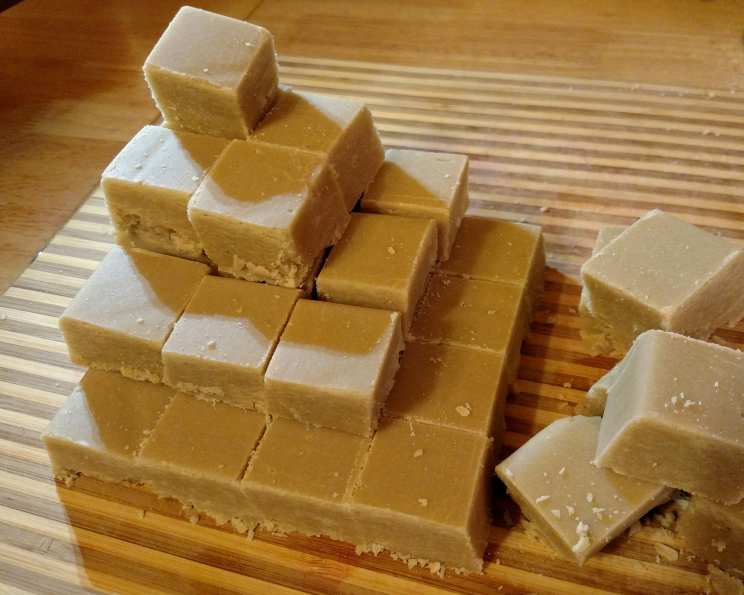
Unlocking the Secrets of Homemade Israeli Halva: A Chef’s Guide
The memory is etched in my mind: a bustling Jerusalem market, the air thick with the scent of spices and roasting nuts. My grandmother, Savta Rivka, led me by the hand, her eyes twinkling. We stopped at a small stall overflowing with colorful slabs of halva. “Taste,” she urged, handing me a piece. That first bite – the delicate sweetness, the melt-in-your-mouth texture, the rich sesame flavor – was pure magic. It was more than just a sweet; it was a taste of home, of heritage, of love.
Recipe Overview
- Prep Time: 15 minutes
- Cook Time: 20 minutes
- Total Time: 35 minutes
- Servings: 36
- Yield: 1 (8×8 or 9×9 inch) pan
- Dietary Type: Vegetarian, Gluten-Free (check vanilla extract if strictly gluten-free)
Ingredients
- 500 g tahini (about 2 cups; see notes below)
- 500 g sugar (about 2 ½ cups)
- 1 cup boiling water
- 1 teaspoon real vanilla extract
- ¼ teaspoon canola oil
Ingredient Notes:
- Tahini: It is crucial to use high-quality tahini made from 100% sesame seeds. The flavor of the tahini will directly impact the final flavor of the halva. Natural tahini tends to separate, so be sure to stir it thoroughly before measuring. The thicker paste at the bottom needs to be fully incorporated for accurate measurements.
- Vanilla Extract: Use real vanilla extract for the best flavor. Imitation vanilla can have a harsh aftertaste.
- Canola Oil: Any neutral oil will work for greasing the pan.
Equipment Needed
- 8×8 or 9×9 inch square baking pan
- Parchment paper
- Saucepan
- Larger saucepan
- Candy thermometer
- Stand mixer with paddle attachment (or hand mixer)
- Rubber spatula or wooden spoon
Instructions
-
Prepare the Pan: Line an 8×8 inch or 9×9 inch square baking pan with parchment paper, ensuring the paper extends up and over the sides. Lightly spray the parchment paper with canola oil. This will prevent the halva from sticking and make it easy to remove later.
-
Prepare the Tahini: Mix the tahini thoroughly in its container before measuring. The oil tends to separate, and you need to ensure a consistent texture for accurate measurements.
-
Boil the Water: Bring 1 cup of water to a rolling boil.
-
Heat the Tahini: In a saucepan, place the measured tahini over low heat. Stir in the vanilla extract. Continue to heat, stirring occasionally, until the tahini reaches approximately 50°C (120°F). Use a thermometer to monitor the temperature. It’s crucial not to heat the tahini too quickly or allow it to overheat, as it can scorch easily. Remove from heat once it reaches the target temperature.
-
Prepare the Sugar Syrup: While the tahini is heating, in a larger saucepan, pour the boiling water over the sugar. Stir until the sugar is completely dissolved.
-
Cook the Sugar Syrup: Place the saucepan with the sugar water over high heat. Bring the sugar water to a boil, continuing to cook until it reaches 121°C (250°F) on a candy thermometer. Be vigilant and do not let the temperature exceed 250°F.
-
Combine Tahini and Sugar Syrup: As the sugar water approaches the target temperature, ensure the tahini has reached its proper temperature. Once the sugar water reaches 121°C (250°F), immediately turn off the heat.
-
Mix the Halva: Pour the heated tahini into the bowl of a stand mixer fitted with the paddle attachment. Turn the mixer on low speed and carefully pour in the hot sugar water in a steady stream until the two are combined. Be extremely cautious, as the sugar water is scorching hot and can cause severe burns.
-
Achieve the Halva Consistency: Increase the mixer speed to medium (speed 3 on most stand mixers) and watch the mixture carefully. It should not take more than approximately 30 seconds to reach the desired consistency. You’ll know it’s ready when the mixture begins to pull away from the sides of the bowl. Stop mixing immediately at this point. Overmixing will result in a dry, crumbly halva.
-
Pour into the Pan: Immediately pour the mixture into the prepared pan. Work quickly, as the halva will begin to stiffen as it cools. Scrape any remaining mixture from the bowl with a rubber spatula.
-
Shape the Halva: Use a flat scraper or the back of a wide wooden spoon to press the mixture into a level, even layer in the pan.
-
Cool and Cut: Let the halva cool at room temperature for approximately 30 minutes. The halva will solidify as it cools.
-
Cut and Store: Once the halva is solidified, remove it from the pan using the parchment paper overhang. Cut the halva into 36 equal pieces (6 rows and 6 columns).
-
Storage: Wrap each piece of halva individually in plastic wrap or store it in an airtight container in the refrigerator. Properly stored, halva can last for months, although it is unlikely to remain uneaten for that long!
Expert Tips & Tricks
- Temperature Control: The key to perfect halva is precise temperature control. Invest in a good-quality candy thermometer and monitor both the tahini and the sugar syrup carefully.
- Tahini Quality: Opt for tahini made from Ethiopian sesame seeds for the most authentic and flavorful halva.
- Mixing Time: Pay close attention during the mixing stage. Stopping the mixer at the right moment is crucial for achieving the characteristic flaky texture.
- Scorched Tahini: If the tahini scorches, unfortunately, it’s best to start over. The burnt flavor will ruin the entire batch.
- Hard Halva: If your halva turns out too hard, you likely cooked the sugar syrup to a temperature slightly above 250°F. Next time, pay closer attention to the candy thermometer.
- Soft Halva: If your halva is too soft, you may have not cooked the sugar syrup to a high enough temperature.
Serving & Storage Suggestions
Halva is a delightful treat to enjoy on its own, served with a cup of strong coffee or tea. It also makes a wonderful addition to a cheese board or dessert platter. For a more elaborate presentation, drizzle the halva with honey or sprinkle it with chopped pistachios.
Store the halva wrapped individually or in an airtight container in the refrigerator for optimal freshness and texture. While it can be stored at room temperature, it may become slightly softer. Halva can last for several months in the refrigerator. It does not freeze well as freezing can alter its texture.
Nutritional Information
| Nutrient | Amount per Serving | % Daily Value |
|---|---|---|
| Calories | 133.5 kcal | N/A |
| Calories from Fat | N/A | 45% |
| Total Fat | 6.7 g | 10% |
| Saturated Fat | 0.9 g | 4% |
| Cholesterol | 0 mg | 0% |
| Sodium | 10.6 mg | 0% |
| Total Carbohydrate | 17.5 g | 5% |
| Dietary Fiber | 1.3 g | 5% |
| Sugars | 13.9 g | N/A |
| Protein | 2.5 g | 4% |
Note: Nutritional information is an estimate and may vary based on specific ingredients and preparation methods.
Variations & Substitutions
- Chocolate Halva: Add 2 tablespoons of cocoa powder to the tahini while heating it.
- Pistachio Halva: Sprinkle chopped pistachios on top of the halva after pouring it into the pan.
- Coffee Halva: Add 1 teaspoon of instant coffee powder to the sugar syrup while cooking.
- Sesame Seed Halva: Sprinkle toasted sesame seeds on top before cooling.
- Nut-Free Halva: This recipe is naturally nut-free, making it a great option for those with allergies. However, always check the labels of your ingredients to ensure they are processed in a nut-free facility.
FAQs (Frequently Asked Questions)
Q: Why is my halva grainy?
A: Graininess can occur if the sugar syrup wasn’t fully dissolved before boiling, or if the tahini was overheated. Make sure to dissolve the sugar completely and monitor the tahini’s temperature carefully.
Q: Can I use a hand mixer instead of a stand mixer?
A: Yes, a hand mixer can be used, but it requires a bit more effort. Be prepared to mix quickly and efficiently as the mixture thickens rapidly.
Q: How do I prevent the halva from sticking to the pan?
A: Lining the pan with parchment paper that overhangs the sides and lightly spraying it with oil is the best way to prevent sticking.
Q: Can I reduce the amount of sugar?
A: Reducing the sugar significantly can affect the texture and stability of the halva. It’s not recommended to reduce it by more than a small amount (e.g., 10%), and the final product may be slightly softer.
Q: How long does halva last?
A: Properly stored in an airtight container in the refrigerator, halva can last for several months. The high sugar content acts as a natural preservative.
Final Thoughts
Now it’s your turn to create your own batch of this delectable treat! Don’t be intimidated by the few steps involved; with careful attention to detail and a bit of patience, you’ll be rewarded with authentic, homemade Israeli halva. Share your creations with friends and family, and let them experience the magic of this Middle Eastern delight. And please, share your experience, variations, and questions in the comments below – I’d love to hear about your halva journey! B’teavon! (Bon appétit!)