
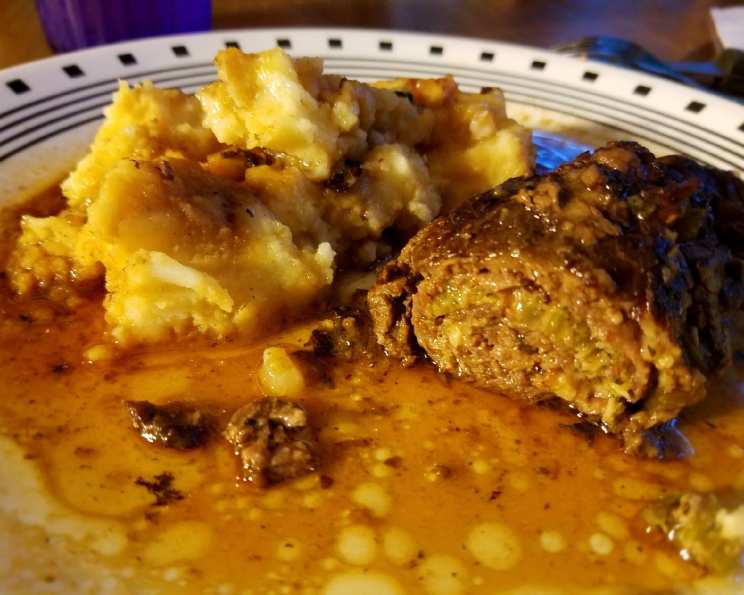
Italian Beef Roulades: A Taste of Nonna’s Kitchen
The aroma of simmering beef and red wine takes me back to my grandmother’s kitchen in Little Italy. Every Sunday, the air would be thick with the scent of garlic, herbs, and slowly braised meat. Nonna’s roulades, thin slices of beef wrapped around a savory filling and braised to tender perfection, were always the highlight. They were more than just a meal; they were a symbol of family, love, and the simple pleasures of life. This recipe is my attempt to recreate that magic, to share a piece of my heritage with you.
Recipe Overview
- Prep Time: 20 minutes
- Cook Time: 50 minutes
- Total Time: 1 hour 10 minutes
- Servings: 6
- Yield: 12 Roulades
- Dietary Type: Not specified
Ingredients
- ½ cup chopped green onion
- 2 garlic cloves, minced
- ¼ cup chopped celery
- ¼ cup minced parsley
- 1 cup fresh breadcrumbs
- 1 teaspoon salt
- ¼ teaspoon pepper
- ¾ cup Parmesan cheese
- 12 slices bottom round steaks (paper-thin slices) or 12 slices tenderloin (paper-thin slices)
- ½ cup olive oil
- 3 cups beef stock
- 1 ½ cups dry red wine
- 1 bay leaf
- 1 (12 ounce) package spinach noodles
Equipment Needed
- Large Mixing Bowl
- Cutting Board
- Sharp Knife
- Large Skillet or Dutch Oven
- Toothpicks or Kitchen String
- Slotted Spoon
Instructions
-
In a large mixing bowl, combine the chopped green onion, minced garlic, chopped celery, and minced parsley. This fragrant mixture forms the base of our savory filling.
-
Add the fresh breadcrumbs, salt, pepper, and Parmesan cheese to the bowl.
-
Blend all the ingredients thoroughly with your hands or a spoon until evenly combined. The filling should be moist and hold together well.
-
Lay out the paper-thin slices of beef on a clean work surface.
-
Spread 1-2 tablespoons of the prepared filling evenly onto each slice of meat. Don’t overfill, as this will make the roulades difficult to roll.
-
Drizzle a small amount of olive oil over the filling on each slice of meat. This adds richness and helps bind the filling.
-
Carefully roll up each slice of meat, starting from one end, to form a tight roulade.
-
Secure each roulade with a toothpick or tie it with a piece of kitchen string. This will prevent the filling from escaping during cooking.
-
Heat a small amount of olive oil in a large skillet or Dutch oven over medium-high heat.
-
Brown the roulades on all sides in the hot olive oil. This step is crucial for developing flavor and creating a beautiful sear. Work in batches if necessary to avoid overcrowding the pan.
-
Once the roulades are browned, add the beef stock, red wine, and bay leaf to the skillet or Dutch oven.
-
Bring the liquid to a simmer, then reduce the heat to low, cover the skillet or Dutch oven, and let the roulades simmer for 30 minutes, or until the beef is tender and the filling is cooked through.
-
After simmering, remove the meat from the skillet or Dutch oven using a slotted spoon and set aside.
-
Increase the heat to medium-high and allow the liquid in the skillet or Dutch oven to reduce until it thickens slightly into a flavorful sauce. This will concentrate the flavors of the beef stock and red wine.
-
While the sauce is reducing, cook the spinach noodles according to package directions.
-
Once the noodles are cooked and the sauce is reduced, it’s time to assemble the dish.
-
Serve the roulades over a bed of spinach noodles, spooning the reduced sauce generously over the top.
-
Garnish with fresh parsley, if desired, for a pop of color and added freshness.
Expert Tips & Tricks
- For even more flavor, marinate the beef slices in a mixture of olive oil, garlic, and herbs for at least 30 minutes before filling and rolling.
- If you can’t find paper-thin slices of bottom round or tenderloin, you can ask your butcher to slice the meat for you. Alternatively, you can use a meat mallet to pound thicker slices of meat until they are thin enough to roll easily.
- To prevent the filling from drying out during cooking, consider adding a tablespoon or two of ricotta cheese or a beaten egg to the filling mixture.
- Don’t skip the browning step! Searing the roulades before simmering adds depth and complexity to the flavor.
- If the sauce doesn’t thicken enough during reduction, you can whisk in a small amount of cornstarch slurry (1 tablespoon cornstarch mixed with 2 tablespoons cold water) to help it thicken.
Serving & Storage Suggestions
Serve the Italian Beef Roulades immediately after cooking for the best flavor and texture. Garnish with freshly chopped parsley for a pop of color and aroma.
Leftover roulades can be stored in an airtight container in the refrigerator for up to 3 days. To reheat, gently warm them in a skillet with a little bit of the sauce, or in the microwave. The sauce can also be stored separately in the refrigerator.
For longer storage, the roulades can be frozen for up to 2 months. Thaw them overnight in the refrigerator before reheating.
Nutritional Information
| Nutrient | Amount per Serving | % Daily Value |
|---|---|---|
| Calories | 560 kcal | N/A |
| Total Fat | 23.7 g | 36% |
| Saturated Fat | 5.1 g | 25% |
| Cholesterol | 11 mg | 3% |
| Sodium | 1131 mg | 47% |
| Total Carbohydrate | 59 g | 19% |
| Dietary Fiber | 7.3 g | 29% |
| Sugars | 2 g | N/A |
| Protein | 16.6 g | N/A |
Note: Nutritional information is an estimate and may vary based on specific ingredients and preparation methods.
Variations & Substitutions
- Gluten-Free: Use gluten-free breadcrumbs in the filling and serve the roulades over gluten-free pasta or polenta.
- Vegetarian: Substitute the beef with thick slices of eggplant or zucchini, grilled or lightly pan-fried.
- Spicy: Add a pinch of red pepper flakes to the filling for a touch of heat.
- Cheese: Experiment with different types of cheese in the filling, such as mozzarella, provolone, or ricotta.
- Herbs: Use a variety of fresh herbs in the filling, such as basil, oregano, or thyme.
FAQs (Frequently Asked Questions)
Q: Can I make these roulades ahead of time?
A: Yes, you can prepare the roulades up to a day in advance and store them in the refrigerator until ready to cook. You can also make the filling ahead of time and store it separately.
Q: Can I use a different cut of beef?
A: While bottom round or tenderloin are ideal for their tenderness and ability to be sliced thinly, you can experiment with other cuts of beef, such as flank steak or skirt steak. Just make sure to slice them thinly and pound them with a meat mallet to tenderize them.
Q: How do I prevent the roulades from falling apart during cooking?
A: Make sure to secure the roulades tightly with toothpicks or kitchen string. Also, avoid overcrowding the pan when browning them, as this can cause them to steam instead of sear properly.
Q: Can I use dried herbs instead of fresh herbs?
A: While fresh herbs are always preferable for their flavor and aroma, you can substitute dried herbs if necessary. Use about 1 teaspoon of dried herbs for every tablespoon of fresh herbs.
Q: What kind of wine should I use for the sauce?
A: A dry red wine, such as Chianti, Merlot, or Cabernet Sauvignon, works well in this recipe. Avoid using sweet wines, as they can make the sauce too sweet.
Final Thoughts
Italian Beef Roulades are a labor of love, but the result is well worth the effort. These tender, flavorful rolls are perfect for a special occasion or a cozy family dinner. Don’t be afraid to experiment with different fillings and variations to make this dish your own. And most importantly, enjoy the process of cooking and sharing this delicious meal with loved ones. Buon appetito!