
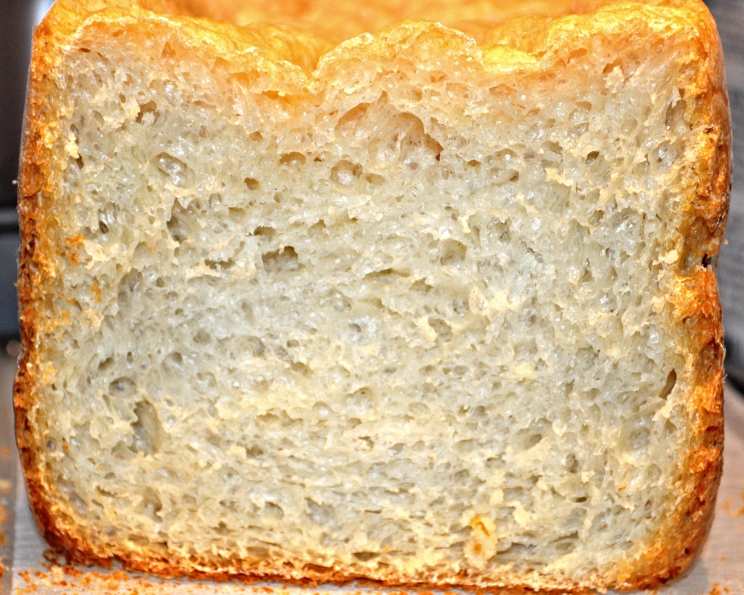
Italian Milano Sourdough Bread With No Salt for ABM
The scent of sourdough baking always takes me back to my grandmother’s kitchen in Milan. She would tirelessly knead and proof her dough, a symphony of patience that filled the small apartment with a warmth that chased away the Milanese chill. I remember her telling me that even without salt, a good sourdough starter could impart enough flavor to make a truly special loaf. This salt-free version reminds me of her dedication to simple, wholesome food, crafted with love and care, and perfect for those mindful of their sodium intake.
Recipe Overview
- Prep Time: 15 minutes
- Cook Time: 3 hours 5 minutes
- Total Time: 3 hours 20 minutes
- Yields: 1 1/2 pounds
- Serves: 15
- Dietary Type: Low Sodium
Ingredients
- 3/4 cup water, plus 1 tablespoon water
- 3 cups unbleached white flour
- 3/4 cup sourdough starter
- 1 tablespoon unsweetened applesauce
- 2 tablespoons granulated sugar
- 2 teaspoons bread machine yeast
Equipment Needed
- Bread Machine
- Measuring cups and spoons
- Oven (optional, for baking by hand)
- Baking sheet (optional, for baking by hand)
Instructions
- Add all the ingredients to your bread machine pan following your manufacturer’s recommendations. Begin with the 3/4 cup water plus the 1 tablespoon water.
- Next, add the 3 cups of unbleached white flour.
- Follow with the 3/4 cup of sourdough starter.
- Add the 1 tablespoon of unsweetened applesauce.
- Include the 2 tablespoons of granulated sugar.
- Finally, add the 2 teaspoons of bread machine yeast.
- Set the bread machine to the Basic White cycle or its equivalent setting. Allow the machine to complete its cycle.
- Remember to replenish your sourdough starter after using it. Feed it with 3/4 cup flour and 3/4 cup water. Mix well and store it according to your preferred method.
- If you prefer to bake the bread by hand, combine the ingredients in the order listed, starting with the water. Knead the dough until it is smooth and elastic.
- Shape the dough into a sourdough loaf.
- Preheat your oven to 400 degrees Fahrenheit.
- Bake the loaf for approximately 15 minutes.
- When the bread is done, remove it from the oven and let it cool completely on a wire rack before slicing and serving.
Expert Tips & Tricks
- The sourdough starter is the heart of this recipe. A well-fed, active starter will give you the best flavor and rise. If your starter is sluggish, feed it for a few days before baking to ensure it’s at its peak.
- The applesauce adds a touch of sweetness and helps to keep the bread moist, even without salt. Don’t skip it!
- If you find the dough is too sticky in the bread machine, add a tablespoon of flour at a time until it forms a smooth ball.
- For a deeper sourdough flavor, you can retard the dough in the refrigerator overnight after the first rise. This will slow down the fermentation process and allow the flavors to develop more fully. Let the dough come to room temperature before baking.
- To test for doneness when baking by hand, insert a wooden skewer into the center of the loaf. If it comes out clean, the bread is done. You can also check the internal temperature with a thermometer; it should be around 200-210 degrees Fahrenheit.
- If the top of the loaf is browning too quickly during baking, tent it loosely with foil.
- Don’t slice the bread while it’s still warm. Allowing it to cool completely will prevent it from becoming gummy.
Serving & Storage Suggestions
This Italian Milano Sourdough Bread, baked without salt, is best served fresh. Its subtle tang and soft texture make it an excellent accompaniment to soups, salads, and pasta dishes. It’s also perfect for making sandwiches or toasting for breakfast.
Because this bread contains no salt, it won’t last as long as commercially baked bread. It’s best consumed within one day of baking. To store, wrap it tightly in plastic wrap or place it in an airtight container at room temperature.
If you want to extend its shelf life, you can slice the bread and freeze it. To reheat, thaw the slices at room temperature or in the microwave, then toast them lightly. You can also reheat the entire loaf in a low oven (300 degrees Fahrenheit) for about 10-15 minutes.
Nutritional Information
| Nutrient | Amount per Serving | % Daily Value |
|---|---|---|
| Calories | 99.7 kcal | N/A |
| Calories from Fat | 2 g | 3% |
| Total Fat | 0.3 g | 0% |
| Saturated Fat | 0 g | 0% |
| Cholesterol | 0 mg | 0% |
| Sodium | 1.2 mg | 0% |
| Total Carbohydrate | 21.1 g | 7% |
| Dietary Fiber | 0.8 g | 3% |
| Sugars | 1.8 g | N/A |
| Protein | 2.8 g | 5% |
Note: Nutritional information is an estimate and may vary based on specific ingredients and portion sizes.
Variations & Substitutions
- Gluten-Free Version: While this recipe is designed for wheat flour, you can experiment with gluten-free flour blends. Be aware that the texture and rise may be different, and you may need to adjust the amount of liquid. A blend specifically designed for bread making will likely yield the best results.
- Sweet Sourdough: For a sweeter loaf, increase the sugar to 1/4 cup. You can also add a touch of vanilla extract for extra flavor.
- Herb-Infused Sourdough: Add 1-2 tablespoons of dried herbs like rosemary, thyme, or oregano to the dough for a savory twist.
- Whole Wheat Sourdough: Replace up to half of the white flour with whole wheat flour for a nuttier flavor and added fiber.
- Spiced Sourdough: Incorporate warming spices like cinnamon, nutmeg, or cardamom for a festive flavor, particularly during the holidays.
FAQs (Frequently Asked Questions)
Q: Why is there no salt in this recipe?
A: This recipe is specifically designed for individuals on very low sodium diets. Eliminating salt helps to significantly reduce the sodium content of the bread.
Q: Will the bread taste good without salt?
A: Yes! The sourdough starter contributes a tangy, complex flavor that compensates for the lack of salt. The applesauce and sugar also add a subtle sweetness.
Q: How do I know if my sourdough starter is ready to use?
A: An active starter will be bubbly and have doubled in size after feeding. It should also have a slightly sour, yeasty aroma.
Q: Can I use a different type of flour?
A: While unbleached white flour is recommended for this recipe, you can experiment with other flours. However, be aware that the texture and rise may be affected.
Q: How long will this bread last?
A: Because it contains no salt, this bread will not last as long as commercially baked bread. It’s best consumed within one day of baking.
Final Thoughts
Baking this Italian Milano Sourdough Bread is more than just following a recipe; it’s about connecting with tradition, embracing simple ingredients, and creating something wholesome and nourishing. Don’t be afraid to experiment with variations and make it your own. I encourage you to try this recipe, especially if you’re looking for a delicious, low-sodium bread option. Share your creations and any feedback you have – I’d love to hear about your baking adventures! Perhaps pair it with a hearty minestrone soup or a vibrant Caprese salad for a truly Italian-inspired meal. Buon appetito!