
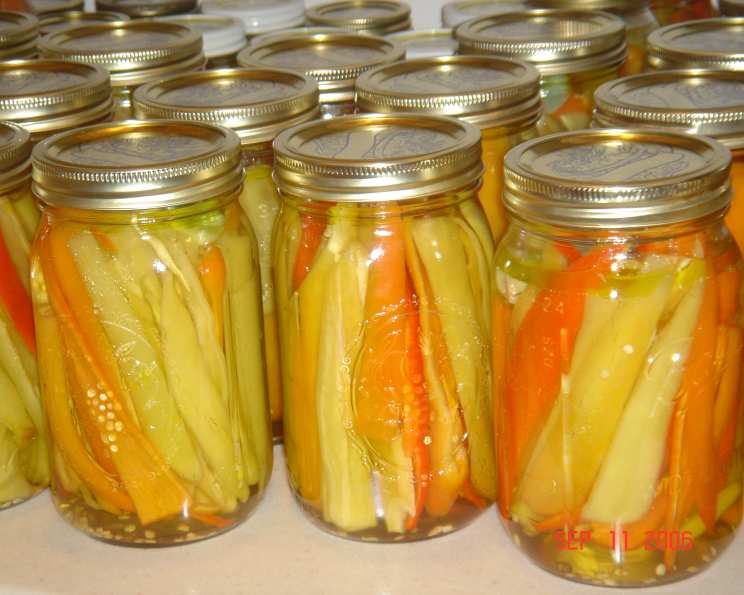
Zesty Delight: Crafting Homemade Italian Pickled Banana Peppers
The scent of vinegar simmering on the stove always transports me back to my Nonna’s kitchen. As a child, I remember watching her, her hands moving with practiced ease, as she transformed piles of colorful peppers into jars of tangy, spicy goodness. The vibrant colors, the sharp aroma, and the anticipation of that first bite – it’s a memory etched in my heart, and one I’m thrilled to share with you today.
Recipe Overview
- Prep Time: 1 hour
- Cook Time: 35 minutes
- Total Time: 1 hour 35 minutes
- Yields: Approximately 24 pint jars
- Dietary Type: Vegan, Gluten-Free
Ingredients
- 1 bushel fresh hot Hungarian peppers (makes approximately 24 pint jars)
- 48 fresh garlic cloves (2 cloves per pint jar)
- 1/4 cup canning salt (1/2 tsp per pint jar)
- 1/2 cup olive oil (1 tsp per pint jar) or 1/2 cup vegetable oil, if you prefer (1 tsp per pint jar)
Brine:
- 4 cups 5% vinegar
- 4 cups water
- 3 cups sugar
Equipment Needed
- Large pot for boiling water
- Canning jars (pint-sized)
- Jar lifter
- Large bowls
- Gloves (for handling peppers)
- Cookie tin or other weight
- Slotted spoon or tongs
- Large stock pot for brine
Instructions
- Prepare the Peppers: Wearing gloves to protect your skin from the pepper’s heat, thoroughly wash the Hungarian peppers. Core each pepper and cut them into strips approximately 1 inch long. Removing some of the seeds and membranes will reduce the heat level, but it’s a personal preference.
- Peel the Garlic: Peel all 48 garlic cloves. Set aside.
- Pack the Jars: Pack the prepared pepper strips tightly into clean canning jars, leaving about 1/2 inch of headspace at the top.
- Initial Hot Water Bath: Place approximately 5 filled jars on a counter. Carefully pour boiling water into each jar, filling them to the rim. Cover the jars with a cookie tin or another flat, heat-resistant object, and weight it down to hold in the heat. Let the jars stand for 5 minutes. This initial water bath helps to pre-heat the jars and further cleanse the peppers.
- Drain and Add Seasonings: Pour off the boiling water from each jar. Into each jar, add 2 peeled garlic cloves, 1/2 teaspoon of canning salt, and 1 teaspoon of olive oil (or vegetable oil, if using).
- Prepare the Brine: In a large stock pot, combine 4 cups of 5% vinegar, 4 cups of water, and 3 cups of sugar. Bring the mixture to a rolling boil, stirring until the sugar is completely dissolved. This is your pickling brine.
- Fill with Brine: Carefully pour the boiling brine into each jar, leaving approximately 1/2 inch of headspace from the top. Use a ladle and a canning funnel to prevent spills.
- Seal the Jars: Place a clean lid on each jar, ensuring it is properly aligned. Screw on a canning ring until it is fingertip tight (not too loose, not too tight). Remember to have lids in a bath of hot water for 5 minutes prior to placing on the jar
- Process the Jars (Water Bath Canning): This step is crucial for long-term preservation. If you are new to canning, familiarize yourself with proper water bath canning techniques. Place the filled jars into a boiling water bath canner, ensuring the jars are completely submerged under at least 1 inch of water. Bring the water to a rolling boil and process for 15 minutes.
- Cool and Check Seals: Carefully remove the jars from the water bath using a jar lifter and place them on a towel-lined surface to cool. Allow the jars to cool completely, undisturbed, for at least 12-24 hours. As the jars cool, you should hear a “pop” sound as the lids seal.
- Verify the Seal: After the jars have cooled completely, check the seal of each jar by pressing down on the center of the lid. If the lid doesn’t flex or move, it is properly sealed. If the lid flexes, the jar is not properly sealed and should be reprocessed with a new lid or stored in the refrigerator and used within a few weeks.
- Label and Store: Label each jar with the date and contents. Store the sealed jars in a cool, dark place for at least 2-3 weeks before opening to allow the flavors to fully develop.
Expert Tips & Tricks
- Heat Control: The heat level of Hungarian peppers can vary. Taste a small piece of pepper before processing to gauge its spiciness. Adjust the amount of seeds and membranes you remove accordingly. For a milder pickle, remove most of the seeds and membranes.
- Jar Preparation: Ensure your canning jars and lids are clean and sterilized before use. This helps prevent spoilage.
- Brine Consistency: Make sure the sugar is completely dissolved in the vinegar and water mixture before pouring it into the jars. Undissolved sugar can affect the flavor and preservation of the peppers.
- Oil Optional: The small amount of oil in each jar is optional, but it can help to create a slightly richer flavor.
- Cooling is Key: Allow the jars to cool completely, undisturbed, after processing. This ensures a proper seal.
- Metal Lids: Always use new lids when canning. Used lids may not seal properly.
Serving & Storage Suggestions
These Italian Pickled Banana Peppers are incredibly versatile. Serve them sliced lengthwise on burgers, pizzas, salads, or antipasto platters. They make a delicious addition to sandwiches, tacos, and even omelets.
- Storage: Properly sealed jars can be stored in a cool, dark place for at least 1 year. Once opened, refrigerate the jar and consume the peppers within a few weeks.
- Serving: Serve chilled or at room temperature.
- Reheating: These peppers are typically not reheated.
Nutritional Information
Note: Nutritional information is an estimate and may vary based on specific ingredients and portion sizes.
| Nutrient | Amount per Serving | % Daily Value |
|---|---|---|
| Calories | 152.6 kcal | N/A |
| Calories from Fat | 40 g | 27% |
| Total Fat | 4.5 g | 6% |
| Saturated Fat | 0.6 g | 3% |
| Cholesterol | 0 mg | 0% |
| Sodium | 1182.2 mg | 49% |
| Total Carbohydrate | 27 g | 8% |
| Dietary Fiber | 0.1 g | 0% |
| Sugars | 25 g | 100% |
| Protein | 0.4 g | 0% |
Variations & Substitutions
- Spice Level: Use different types of peppers to adjust the heat level. Jalapeños, serranos, or even habaneros can be added for extra spice.
- Sweetness: Adjust the amount of sugar in the brine to your preference. You can also use honey or maple syrup as a natural sweetener. A sugar substitute like Splenda can also be used.
- Vinegar: Experiment with different types of vinegar, such as white wine vinegar or apple cider vinegar, to change the flavor profile.
- Herbs and Spices: Add other herbs and spices to the brine for extra flavor. Try adding oregano, basil, peppercorns, or red pepper flakes.
- Garlic Lovers: Feel free to add more garlic cloves to each jar for a more intense garlic flavor.
FAQs (Frequently Asked Questions)
Q: Do I really need to wear gloves when handling the peppers?
A: Yes! Capsaicin, the compound that makes peppers spicy, can cause skin irritation. Gloves will protect your hands from burning sensations.
Q: Why is it important to use canning salt instead of regular table salt?
A: Canning salt does not contain iodine or anti-caking agents, which can discolor the peppers and affect the brine’s clarity.
Q: How long should I wait before eating the pickled peppers?
A: It’s best to wait at least 2-3 weeks for the flavors to fully develop and meld together.
Q: Can I use different sized jars for this recipe?
A: Yes, but you’ll need to adjust the processing time accordingly. Consult a reliable canning guide for proper processing times based on jar size.
Q: What do I do if a jar doesn’t seal properly?
A: If a jar doesn’t seal within 24 hours, you have two options: reprocess the jar with a new lid, ensuring a clean rim, or store the jar in the refrigerator and consume the peppers within a few weeks.
Final Thoughts
Pickling banana peppers at home is a satisfying way to preserve the flavors of the harvest and enjoy a taste of summer all year round. Don’t be intimidated by the canning process; with a little patience and attention to detail, you can create jars of zesty, tangy peppers that will elevate your meals and delight your taste buds. So, gather your ingredients, put on your gloves, and embark on this culinary adventure. I encourage you to experiment with different variations and share your creations with friends and family. Buon appetito!