
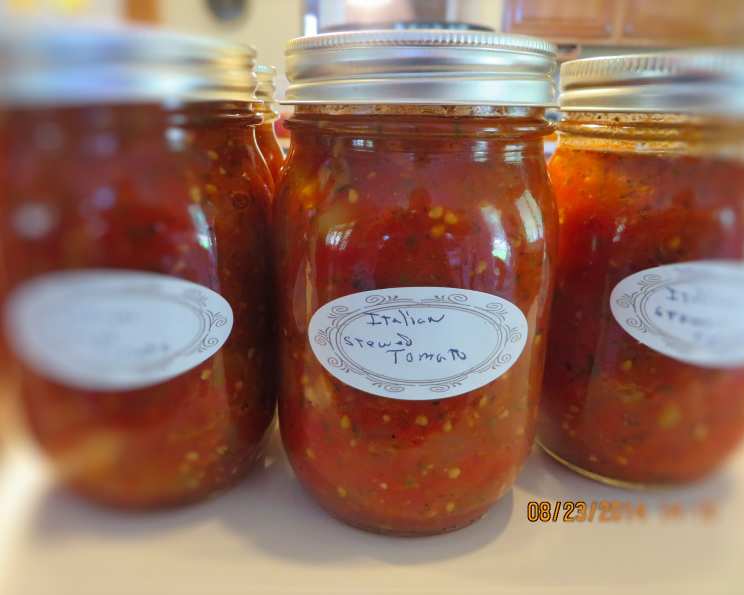
The Soul of Italy: Homemade Stewed Tomatoes
The scent always takes me back. My Nonna Emilia, a whirlwind of flour and olive oil, would spend late summer days transforming bushels of sun-ripened tomatoes into jars of liquid sunshine. The entire house would be permeated with the sweet, tangy aroma of simmering tomatoes, garlic, and herbs – a smell that, to this day, is the very essence of home for me. While this recipe isn’t exactly Nonna’s (hers was a closely guarded secret!), it captures the same rustic charm and comforting flavors that made her stewed tomatoes legendary in our family.
Recipe Overview
- Prep Time: 45 minutes
- Cook Time: 1 hour
- Total Time: 1 hour 45 minutes
- Yields: Approximately 9 pints
- Serves: 4-6
- Dietary Type: Vegan
Ingredients
- 18 cups diced tomatoes (about 50 roma tomatoes)
- 1 1⁄2 cups diced bell pepper
- 2 1⁄2 cups diced onions
- 1 1⁄4 cups diced celery
- 2 tablespoons minced garlic
- 1⁄4 cup Italian spices (a good quality blend makes all the difference)
- 1 tablespoon sugar (adjust to taste depending on tomato sweetness)
- 2 tablespoons kosher salt
- 1 teaspoon black pepper
- 1 tablespoon celery salt
- 1 tablespoon parsley flakes
- 1⁄2 cup extra virgin olive oil
- 1⁄8 cup white vinegar (adds a crucial tang)
Equipment Needed
- Large stockpot or Dutch oven
- Large mixing bowl
- Canning jars and lids
- Large pot for boiling jars
- Jar lifter (optional, but recommended for safety)
- Small saucepan
Instructions
-
Prepare the Tomatoes: Begin by scoring an “X” on the bottom of each tomato. This will make peeling them much easier.
-
Blanch the Tomatoes: Bring a large pot of water to a rolling boil. Working in batches of about 8 tomatoes, gently lower them into the boiling water for about 15 to 30 seconds, or until the skin starts to lift around the scored “X”.
-
Ice Bath: Immediately transfer the blanched tomatoes to a bowl filled with ice water. This stops the cooking process and helps the skins slip off easily.
-
Peel and Quarter: Once cooled, peel the tomatoes, removing the skins entirely. Then, quarter each tomato and place them in a large mixing bowl.
-
Sauté the Garlic: In a large stockpot or Dutch oven, heat the extra virgin olive oil over medium heat. Add the minced garlic and sauté for about 2 minutes, until fragrant but not browned. Be careful not to burn the garlic, as this will impart a bitter taste.
-
Add Vegetables: Add the diced onions, diced bell pepper, and diced celery to the pot. Stir to coat the vegetables with the olive oil. Sauté until the vegetables begin to soften, about 5-7 minutes.
-
Deglaze with Vinegar: Pour in the white vinegar. This will help to deglaze the bottom of the pot, lifting up any flavorful browned bits that have accumulated.
-
Season the Vegetables: Add the Italian spices, sugar, kosher salt, black pepper, celery salt, and parsley flakes to the pot. Stir well to combine and allow the spices to bloom, simmering for about 5 minutes. The aroma will be incredible!
-
Simmer the Tomatoes: Add the quartered tomatoes to the pot. Stir gently to combine all ingredients. Bring the mixture to a simmer, then reduce the heat to low, cover, and simmer for 45 minutes, stirring occasionally to prevent sticking.
-
Prepare Canning Jars: While the tomatoes are simmering, wash your canning jars and lids thoroughly with hot, soapy water. Rinse well and set aside.
-
Soften Jar Lids: Place the canning lids in a small saucepan filled with warm (but not boiling) water. This will soften the rubber sealing compound on the lids, ensuring a good seal.
-
Boil Water for Canning Bath: In a large pot, bring enough water to a boil to fully submerge the filled canning jars.
-
Fill the Jars: Carefully ladle the hot stewed tomatoes into the prepared canning jars, leaving about 1/2 inch of headspace at the top of each jar.
-
Remove Air Bubbles: Gently tap the jars on a towel-lined counter to release any trapped air bubbles. You can also use a clean utensil to gently press the tomatoes to release the air.
-
Wipe Rims and Seal: Wipe the rims of the jars clean with a damp cloth. Place a lid on each jar, and then screw on a ring until it is fingertip tight. Do not overtighten.
-
Process in Boiling Water Bath: Carefully lower the filled jars into the boiling water bath, ensuring that they are fully submerged. Bring the water back to a boil, then process for 20 minutes.
-
Cool and Check Seals: Carefully remove the jars from the water bath using a jar lifter and place them on a towel-lined surface to cool. Do not disturb them during cooling.
-
Listen for the Pop: As the jars cool, you should hear a “pop” sound as the lids seal.
-
Test the Seals: After the jars have cooled completely (about 12-24 hours), check the seals. Press down on the center of each lid. If the lid doesn’t flex or pop back up, the jar is sealed properly. If the lid flexes, the jar did not seal properly and should be refrigerated and used within a week, or reprocessed with a new lid.
-
Invert Jars (Optional): Immediately after removing the jars from the boiling water, carefully tighten the lids, invert the jars, and let stand for at least 15 minutes to ensure a proper seal. After 15 minutes, flip the jars back to an upright position, and they should be sealed when cooled. If not sealed, repeat the boiling water bath process.
-
Store: Store the sealed jars in a cool, dark place.
Expert Tips & Tricks
- Tomato Variety: Roma tomatoes are ideal because they have a meaty texture and fewer seeds, but you can use other varieties, such as San Marzano. If using juicier tomatoes, you may need to simmer the mixture for a longer time to reduce the liquid.
- Spice Level: Adjust the amount of Italian spices and black pepper to suit your taste. You can also add a pinch of red pepper flakes for a little heat.
- Fresh Herbs: For an even fresher flavor, substitute the parsley flakes with fresh parsley, finely chopped. Add it towards the end of the simmering process to preserve its flavor.
- Freezing: If you don’t want to can the stewed tomatoes, you can freeze them. Allow the mixture to cool completely, then transfer it to freezer-safe containers or bags. Leave some headspace in the containers to allow for expansion.
- Thickening: If you prefer a thicker consistency, you can add a tablespoon of cornstarch mixed with a little cold water to the stewed tomatoes during the last 10 minutes of simmering.
Serving & Storage Suggestions
Serve these Italian-style stewed tomatoes warm as a side dish with grilled meats, fish, or poultry. They are also delicious served over pasta, polenta, or rice. You can also use them as a base for soups, stews, and sauces.
- Room Temperature: Once opened, store in the refrigerator. Canned stewed tomatoes should be shelf-stable for at least 1 year.
- Refrigerator: Store opened jars in the refrigerator for up to 1 week.
- Freezer: Frozen stewed tomatoes can be stored in the freezer for up to 6 months. Thaw in the refrigerator before reheating.
- Reheating: Reheat the stewed tomatoes in a saucepan over medium heat, stirring occasionally, until heated through.
Nutritional Information
Please note that these are estimated values and may vary based on specific ingredients and portion sizes.
| Nutrient | Amount per Serving | % Daily Value |
|---|---|---|
| Calories | 556 kcal | N/A |
| Total Fat | 30.2g | 46% |
| Saturated Fat | 4.6g | 23% |
| Cholesterol | 0mg | 0% |
| Sodium | 3569.8mg | 148% |
| Total Carbohydrate | 73.4g | 24% |
| Dietary Fiber | 22.7g | 90% |
| Sugars | 29.6g | 118% |
| Protein | 13.2g | 26% |
Variations & Substitutions
- Spicy Stewed Tomatoes: Add a pinch of red pepper flakes or a diced jalapeño pepper to the vegetables while sautéing for a spicy kick.
- Smoked Paprika: Add a teaspoon of smoked paprika for a smoky flavor.
- Herbs de Provence: Substitute the Italian spices with Herbs de Provence for a different flavor profile.
- Fire Roasted Tomatoes: Incorporate a can of fire-roasted tomatoes for added depth of flavor.
- Add Bacon: Sauté some diced bacon with the garlic, onions, peppers, and celery for a richer flavor.
- Vegetarian: Substitute the water with vegetable broth for added flavor.
- Low-Sodium: Use low-sodium canned tomatoes and reduce the amount of added salt.
FAQs (Frequently Asked Questions)
Q: Why do I need to blanch and peel the tomatoes?
A: Blanching and peeling the tomatoes removes the skins, which can be tough and bitter. It also improves the overall texture of the stewed tomatoes.
Q: Can I use canned diced tomatoes instead of fresh?
A: Yes, you can use canned diced tomatoes if fresh tomatoes are not available. Use approximately 12 cups of canned diced tomatoes and adjust the cooking time accordingly.
Q: How do I know if my canning jars are sealed properly?
A: After the jars have cooled completely, press down on the center of each lid. If the lid doesn’t flex or pop back up, the jar is sealed properly.
Q: What can I do if my stewed tomatoes are too acidic?
A: Adding a pinch of sugar or a small amount of baking soda can help to neutralize the acidity.
Q: Can I use a pressure canner instead of a boiling water bath?
A: Yes, you can use a pressure canner. Follow the manufacturer’s instructions for your specific pressure canner, and adjust the processing time accordingly.
Final Thoughts
I encourage you to give these Italian-style stewed tomatoes a try. They are a delicious and versatile addition to any meal, and the process of making them is incredibly rewarding. Whether you’re a seasoned canner or a beginner cook, this recipe is sure to become a new family favorite. Don’t be afraid to experiment with different spices and herbs to create your own unique flavor profile. And please, share your feedback and creations – I’d love to hear about your experiences! These stewed tomatoes are a perfect complement to a crusty loaf of Italian bread and a glass of Chianti. Buon appetito!