
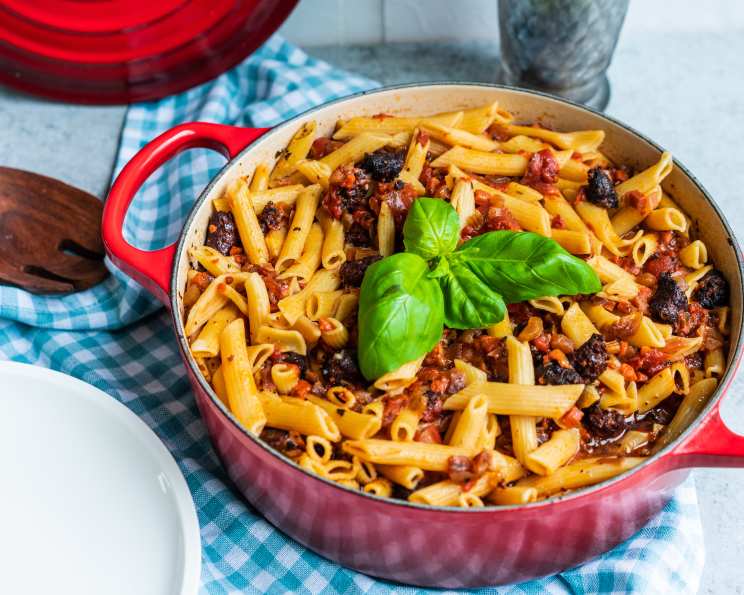
Italian Tomato Sausage Ragu With Penne
The scent of simmering tomatoes, garlic, and sausage always transports me back to my grandmother’s kitchen. Nonna Emilia, a formidable woman with flour perpetually dusted on her apron, could coax magic from the simplest ingredients. This Ragu, a slightly adapted version of her family recipe, embodies that same rustic charm and deep, comforting flavor. It’s a dish that’s meant to be shared, enjoyed with boisterous conversation, and maybe even a glass or two of good red wine.
Recipe Overview
- Prep Time: 20 minutes
- Cook Time: 1 hour 20 minutes
- Total Time: 1 hour 40 minutes
- Servings: 6
- Yield: About 8 cups of Ragu
- Dietary Type: Not Gluten-Free
Ingredients
- 1/4 cup olive oil
- 12 ounces Italian sausages, casings removed (can use more)
- 1-2 tablespoons fresh minced garlic
- 2 teaspoons red pepper flakes (you can use more if you like spicy)
- 1 teaspoon dried oregano (optional or adjust to suit heat level)
- 2-3 carrots, peeled and cut into about 1/2-inch cubes
- 1 large onion, chopped
- 1 celery stalk, finely chopped
- 3 cups whole canned tomatoes, finely chopped (I use one 28-ounce can of whole tomatoes, drained then chop the tomatoes)
- 1 cup chicken broth (more if needed)
- 1/3 cup dry red wine
- 1/2 cup chopped fresh basil
- Salt & freshly ground black pepper (to taste)
- 12 ounces penne pasta
- 1 1/2 cups grated parmesan cheese (or to taste)
Equipment Needed
- Large skillet
- Large pot
- Wooden spoon or spatula
- Knife
- Cutting board
Instructions
- In a large skillet, heat the olive oil over medium heat. Make sure the oil shimmers slightly before adding the sausage.
- Add the Italian sausage meat, garlic, oregano, and red pepper flakes to the skillet. Sauté until the sausage is browned, breaking up the meat with a fork or spatula. This should take approximately 7 minutes. The goal is to crumble the sausage evenly and render some of the fat.
- Add the finely chopped carrots, onion, and celery to the skillet. Sauté the vegetables for about 10 minutes, stirring occasionally, until they begin to soften and the onion becomes translucent. This step, known as a mirepoix, forms the aromatic base of the ragu.
- Mix in the chopped canned tomatoes. Reduce the heat to low, cover the skillet, and simmer for about 20 minutes, stirring occasionally. This allows the tomatoes to break down and meld with the other flavors.
- Add 1 cup of chicken broth and the dry red wine to the skillet. Simmer uncovered until the liquid is slightly reduced, about 20 minutes. The wine adds depth and complexity to the sauce, while the chicken broth provides moisture and richness.
- Add the fresh basil. Cover the skillet and simmer until the vegetables are very tender, stirring occasionally.
- Continue to simmer for about 45-50 minutes, adding more chicken broth by about 1/4 cup if the liquid evaporates too quickly. Cook until the Ragu thickens to the desired consistency. Stir occasionally to prevent sticking and ensure even cooking. The longer it simmers, the more the flavors will meld together.
- Season the Ragu with salt and freshly ground black pepper to taste. Be sure to taste and adjust the seasoning as needed.
- While the Ragu is simmering, cook the penne pasta in a large pot of boiling salted water until just firm-tender (al dente). Drain the pasta, but reserve about 1/2 cup of the cooking water. The starchy water helps the sauce cling to the pasta.
- Return the drained penne pasta to the pot. Add the Ragu to the pot and mix to combine, ensuring the pasta is evenly coated with the sauce.
- Add about 1/2 – 3/4 cup of Parmesan cheese and 2-3 tablespoons of olive oil to the pasta and Ragu mixture. Mix to combine. The Parmesan adds richness and a salty, savory flavor.
- If the mixture seems too dry, add some of the reserved cooking water from the pasta, a little at a time, until you reach the desired consistency.
- Season with more salt and pepper to taste.
- Divide the pasta and Ragu onto plates and top with more Parmesan cheese before serving.
Expert Tips & Tricks
- For an even deeper flavor, consider browning the sausage in batches to avoid overcrowding the pan. This allows the sausage to caramelize properly.
- Don’t be afraid to adjust the amount of red pepper flakes to suit your taste. If you’re not a fan of spice, you can omit them altogether.
- If you don’t have fresh basil on hand, you can use dried basil. Use about 1 teaspoon of dried basil for every tablespoon of fresh basil. Add the dried basil earlier in the cooking process to allow the flavors to develop.
- For a richer sauce, you can add a splash of heavy cream or half-and-half at the end of cooking.
Serving & Storage Suggestions
Serve the Italian Tomato Sausage Ragu with Penne immediately while it’s hot and the Parmesan cheese is melted and gooey. A sprinkle of fresh basil adds a touch of freshness and visual appeal. Crusty bread is perfect for soaking up any remaining sauce.
Leftovers can be stored in an airtight container in the refrigerator for up to 3 days. To reheat, gently warm the Ragu on the stovetop over medium-low heat, adding a splash of broth or water if needed to prevent it from drying out. You can also reheat it in the microwave in short intervals, stirring in between.
For longer storage, you can freeze the Ragu in an airtight container for up to 2 months. Thaw it in the refrigerator overnight before reheating. Be aware that the texture of the sauce may change slightly after freezing.
Nutritional Information
| Nutrient | Amount per Serving | % Daily Value |
|---|---|---|
| Calories | 650 kcal | N/A |
| Calories from Fat | 302 g | 46% |
| Total Fat | 33.6 g | 51% |
| Saturated Fat | 11.4 g | 56% |
| Cholesterol | 54.6 mg | 18% |
| Sodium | 1391.4 mg | 57% |
| Total Carbohydrate | 59.4 g | 19% |
| Dietary Fiber | 8.9 g | 35% |
| Sugars | 6 g | 24% |
| Protein | 27.4 g | 54% |
Note: Nutritional information is an estimate and can vary based on specific ingredients and portion sizes.
Variations & Substitutions
- Spicy Ragu: Add more red pepper flakes or a pinch of cayenne pepper for a spicier kick. You can also use hot Italian sausage.
- Vegetarian Ragu: Omit the sausage and add more vegetables, such as mushrooms, zucchini, or bell peppers. You can also use a plant-based sausage substitute.
- Gluten-Free: Use gluten-free penne pasta. Ensure all other ingredients are also gluten-free.
- Creamy Ragu: Stir in a dollop of ricotta cheese or mascarpone at the end of cooking for a creamier, richer sauce.
- Different Pasta Shapes: Feel free to substitute penne with other pasta shapes like rigatoni, fusilli, or even spaghetti.
- Wine Substitution: If you do not want to use red wine, you can substitute it with additional chicken broth or tomato juice.
FAQs (Frequently Asked Questions)
Q: Can I make this Ragu ahead of time?
A: Absolutely! In fact, the flavor improves if you make it a day or two in advance and refrigerate it. This allows the flavors to meld together even more. Just rewarm it gently on the stovetop before serving.
Q: Can I use ground beef or pork instead of Italian sausage?
A: While Italian sausage is preferred for its unique flavor profile, you can certainly use a mixture of ground beef and pork. Season it generously with Italian herbs and spices to mimic the flavor of Italian sausage.
Q: How do I prevent the Ragu from sticking to the bottom of the skillet?
A: Stir the Ragu occasionally, especially during the simmering process. If it starts to stick, add a small amount of broth or water to loosen the bottom.
Q: Can I freeze this Ragu?
A: Yes, you can freeze the Ragu in an airtight container for up to 2 months. Thaw it in the refrigerator overnight before reheating.
Q: What is the best type of canned tomatoes to use?
A: Whole canned tomatoes are generally preferred as they offer the best flavor and texture. Drain them before chopping and adding them to the Ragu. San Marzano tomatoes are an excellent choice if you can find them.
Final Thoughts
This Italian Tomato Sausage Ragu with Penne is more than just a recipe; it’s an invitation to gather around the table, share a meal, and create lasting memories. Don’t be afraid to experiment with the ingredients and make it your own. Whether you stick to the original recipe or add your personal touch, I hope this dish brings as much comfort and joy to your table as it does to mine. Mangia! And please, let me know what you think – I’m always eager to hear about your culinary adventures.