
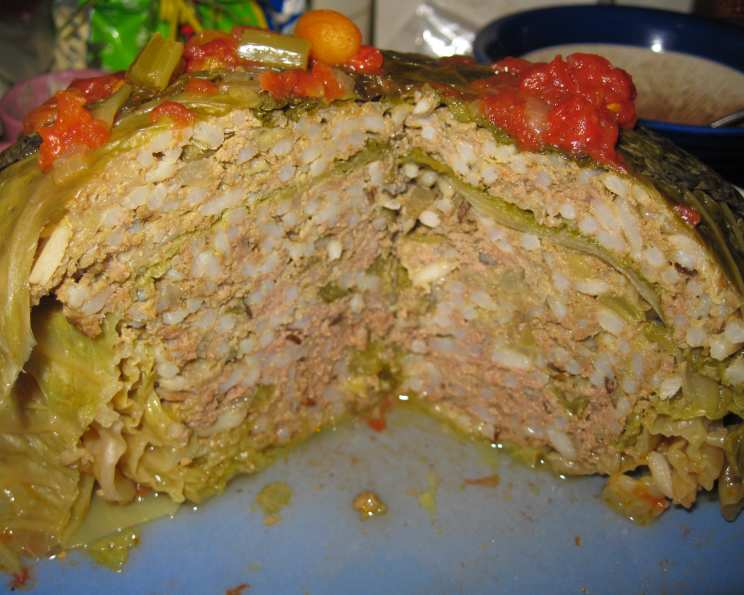
Jacques’ Stuffed Cabbage: A Rustic Masterpiece
I can still picture my grandmother in her bustling kitchen, a cloud of steam perpetually clinging to her glasses. While she wasn’t formally trained, she possessed an innate culinary wisdom. One of my fondest memories is watching her deftly assemble stuffed cabbage rolls, a dish that always felt like a warm hug on a chilly evening. Though her method was different from Jacques Pépin’s ingenious whole-cabbage approach, the aroma of cooked cabbage, savory meat, and sweet tomato sauce instantly transports me back to her cozy kitchen and the love-filled meals we shared. Years later, discovering Jacques Pépin’s version was like finding a new, exciting chapter in a beloved family story.
Recipe Overview
- Prep Time: 45 minutes
- Cook Time: 2 hours
- Total Time: 2 hours 45 minutes
- Servings: 4
- Dietary Type: Comfort Food
Ingredients
- 1 1/2 lbs savoy cabbage
For the stuffing:
- 1 tablespoon olive oil
- 1 cup onion, chopped
- 1 cup celery, cut into 1/2 inch dice
- 1 tablespoon garlic clove, minced
- Salt & freshly ground black pepper
- 2 teaspoons caraway seeds
- 1 teaspoon ground coriander (optional)
- 1/4 cup chicken stock
- 1 1/4 cups cooked rice
- 3/4 lb ground beef
For the sauce:
- 1 tablespoon olive oil
- 1 1/2 cups onions, chopped
- 1 cup celery, cut into 1/2 inch dice
- 1 cup carrot, cut into 1/2 inch dice
- 3 cups tomatoes, drained and chopped (canned)
- Salt & freshly ground black pepper
- 2 bay leaves
- 1 cup chicken stock
- 1 cup dry white wine
Equipment Needed
- Large pot
- Large sauté pan
- Mixing bowl
- Casserole dish or oven-proof pot
- Aluminum foil
Instructions
-
Begin by preparing the cabbage. Carefully remove the 12 outermost leaves. This is best done by gently peeling them away from the core, being careful not to tear them.
-
Blanch the removed cabbage leaves for a few minutes in a large pot of boiling, salted water. This will soften them and make them pliable for stuffing.
-
Rinse the blanched leaves immediately in cold water to stop the cooking process. This will preserve their vibrant green color and prevent them from becoming mushy. Drain well and let them dry slightly.
-
Using a sharp knife, carefully cut out a v-shaped “notch” to remove some of the tough rib of each leaf. This will make the leaves easier to fold and create a more even texture in the finished dish. Set the prepared leaves aside.
-
Core the remainder of the cabbage and chop the inner leaves into approximately 1-inch pieces. You should have about 2 cups of chopped cabbage. Wash the chopped cabbage and set it aside.
-
Preheat your oven to 375 degrees F (190 degrees C).
-
Now, prepare the stuffing. Heat the olive oil in a large sauté pan over medium-high heat. Add the chopped onion and celery and sauté, tossing and stirring frequently, until they begin to soften, about 5 minutes.
-
Add the minced garlic and chopped cabbage to the pan. Cook for another minute or so, tossing and stirring to combine.
-
Season the mixture with salt, pepper, caraway seeds, and ground coriander (if using).
-
Pour in the chicken stock, cover the pan, bring to a boil, then reduce the heat and simmer, stirring occasionally, until most of the liquid has evaporated and the vegetables are soft, about 10 to 15 minutes. If too much liquid remains, simply remove the cover and continue cooking until it evaporates.
-
Remove the cooked vegetables from the pan and transfer them to a large mixing bowl. Allow the mixture to cool slightly.
-
Once the vegetables are cool enough to handle, add the cooked rice and ground beef to the bowl. Mix well with your hands to thoroughly combine all of the ingredients.
-
Be sure to season the stuffing mixture generously, as this is the heart of the dish. To test the seasoning, fry a small amount in a little butter to taste. Adjust the salt and pepper as needed.
-
Prepare the sauce. Set a casserole dish or other oven-proof pot on the stovetop and heat over medium-high heat. Add the olive oil, chopped onion, celery, and carrots.
-
Sauté the vegetables until they begin to soften, about 4 to 5 minutes.
-
Stir in the chopped tomatoes, salt, pepper, and bay leaves. Cover the pot and simmer the sauce on low heat while you stuff the cabbage.
-
Now comes the “fun part,” as Jacques would say – stuffing the cabbage using his ingenious method. Lay a large square of aluminum foil flat on your work surface.
-
Place the four largest blanched cabbage leaves on the foil. They should overlap and form a circle, with the “notch” on the outside of the circle. This creates a base to hold the stuffing.
-
Spread 1/3 of the stuffing mixture on top of the cabbage leaves, leaving about a 2- to 3-inch margin all around the edge.
-
Repeat the layering process using the next largest leaves and another 1/3 of the stuffing.
-
Finish with the smallest leaves and the remaining stuffing.
-
Now, use the aluminum foil to reshape the cabbage into its original ball shape. This might seem a little unorthodox, but trust the process!
-
Lift the corners and outside edges of the foil and bring them toward the center, so that the bottom layers of cabbage come up and cover the smaller leaf layers.
-
Keep pressing and forming the cabbage into a ball shape. You will likely have a small opening at the top of the foil.
-
Pour the white wine and chicken stock into the casserole dish with the simmering tomato sauce.
-
Invert the cabbage ball and carefully place it into the sauce with the opening facing down. This will help to seal in the moisture and flavors.
-
Bring the sauce to a boil over high heat, then cover the casserole dish and place it in the center of the preheated oven.
-
Cook for 2 hours. The cabbage should be tender and the flavors should have melded together beautifully.
-
Once cooked, carefully remove the cabbage from the oven and transfer it to a serving platter. This can be done with a large wire pasta server or a heavy spatula. Remember that the opening should still be facing down.
-
Pierce the foil and gently remove it from around and under the cabbage, without disturbing its shape.
-
Cut the stuffed cabbage into wedges to serve. Spoon the sauce over the top or serve it on the side.
Expert Tips & Tricks
- For a richer flavor, brown the ground beef in the sauté pan before adding the onions and celery.
- Don’t be afraid to experiment with different types of ground meat. Ground pork, veal, or lamb would all be delicious in this recipe.
- If you don’t have dry white wine on hand, you can substitute with additional chicken stock or vegetable broth.
- To prevent the bottom of the cabbage from sticking to the casserole dish, line the bottom with a few extra cabbage leaves before adding the sauce.
Serving & Storage Suggestions
Serve Jacques’ Stuffed Cabbage hot, straight from the oven, garnished with a sprig of fresh parsley or a dollop of sour cream. Leftovers can be stored in an airtight container in the refrigerator for up to 3 days. To reheat, simply microwave individual portions or bake the entire cabbage in a preheated oven at 350 degrees F (175 degrees C) until heated through. You can also freeze individual portions for up to 2 months. Thaw overnight in the refrigerator before reheating.
Nutritional Information
| Nutrient | Amount per Serving | % Daily Value |
|---|---|---|
| Calories | 531.2 kcal | N/A |
| Calories from Fat | 192 g | 36% |
| Total Fat | 21.4 g | 32% |
| Saturated Fat | 6.3 g | 31% |
| Cholesterol | 60.1 mg | 20% |
| Sodium | 283.8 mg | 11% |
| Total Carbohydrate | 52 g | 17% |
| Dietary Fiber | 10.5 g | 42% |
| Sugars | 15.6 g | N/A |
| Protein | 25.6 g | 51% |
Variations & Substitutions
- Vegetarian/Vegan: Substitute the ground beef with lentils, mushrooms, or a plant-based ground meat alternative. Use vegetable broth instead of chicken stock.
- Gluten-Free: Ensure that the rice used is gluten-free.
- Spicy: Add a pinch of red pepper flakes to the stuffing mixture for a touch of heat.
- Regional: Experiment with different herbs and spices to reflect your favorite regional cuisines. For example, add dill and sour cream for a Scandinavian twist, or paprika and marjoram for a Hungarian flair.
FAQs (Frequently Asked Questions)
Q: Can I use green cabbage instead of Savoy cabbage?
A: While Savoy cabbage is preferred for its tender leaves, green cabbage can be used as a substitute. Just be sure to blanch the leaves for a slightly longer time to soften them.
Q: Can I prepare the stuffed cabbage ahead of time?
A: Yes, you can assemble the stuffed cabbage up to 24 hours in advance. Store it covered in the refrigerator and bake as directed when ready to serve.
Q: What is the best way to prevent the cabbage from falling apart when serving?
A: Ensure the cabbage is cooked thoroughly, but not overcooked. Allow it to rest for a few minutes after removing it from the oven before cutting into wedges. Using a sharp knife also helps.
Q: Can I add other vegetables to the stuffing?
A: Absolutely! Feel free to add other chopped vegetables such as bell peppers, zucchini, or mushrooms to the stuffing mixture.
Q: Can I use pre-cooked rice?
A: Yes, using pre-cooked rice is perfectly acceptable and will save you some time. Just make sure it’s cooled before adding it to the stuffing mixture.
Final Thoughts
Jacques Pépin’s Stuffed Cabbage is more than just a recipe; it’s an invitation to slow down, embrace the process, and create something truly special. The combination of tender cabbage, savory stuffing, and rich tomato sauce is a symphony of flavors that will warm your heart and soul. I encourage you to try this rustic masterpiece and share it with your loved ones. Feel free to adapt the recipe to your own taste and preferences. Perhaps pair it with a crisp green salad and a glass of your favorite red wine for a truly unforgettable meal. Bon appétit!