
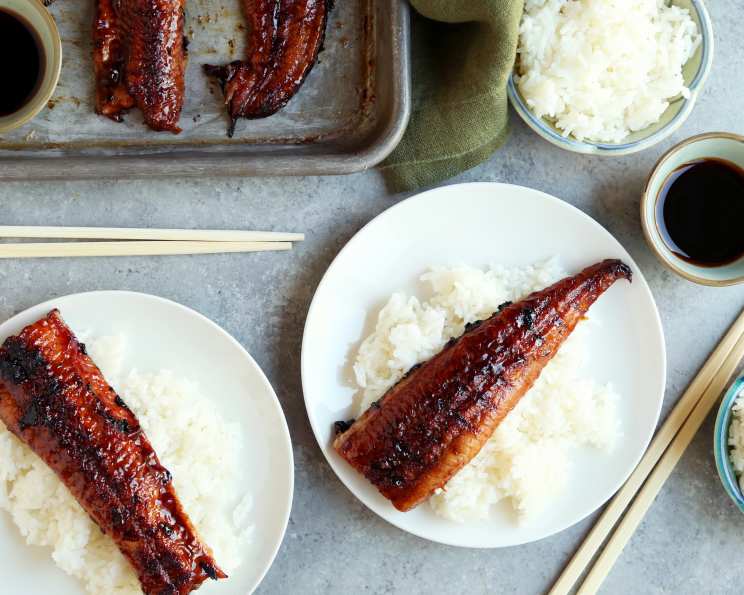
Unagi Kabayaki: A Taste of Japan
The first time I tasted Unagi Kabayaki, I was a wide-eyed culinary student in Tokyo. The smoky, sweet, and savory aroma wafted from a tiny, unassuming restaurant in the backstreets of Ginza. The chef, a stoic man with decades etched on his face, presented the glistening eel on a bed of perfectly steamed rice. Each bite was an explosion of umami, a symphony of textures, and a cultural experience I’ve cherished ever since. Recreating that magic in my own kitchen has become a personal quest, one that I’m excited to share with you.
Recipe Overview
- Prep Time: 10 minutes
- Cook Time: 15 minutes
- Total Time: 25 minutes
- Servings: 4
- Dietary Type: Pescatarian
Ingredients
- 1 lb eel steak
- 3 tablespoons sake
- 2 tablespoons mirin
- 2 tablespoons soy sauce
- 4 teaspoons sugar
- 1/2 cup fish stock (preferably Dashi)
Equipment Needed
- Small pot
- Grill (preheated)
- Skewers
Instructions
- In a small pot, combine the sake, mirin, soy sauce, sugar, and fish stock (or Dashi).
- Bring the mixture to a boil over medium heat, then reduce the heat and simmer until the sauce has reduced by half, becoming slightly thickened and syrupy. This reduction process concentrates the flavors. Keep a close eye on it to prevent burning.
- Skewer the eel steaks so that they will remain flat during cooking. This ensures even cooking and prevents curling. Use two skewers per steak if necessary for better control.
- Place the skewered eel skin-side down on a preheated grill set to high heat. Cook for approximately 3 minutes. The skin should start to char and crisp up slightly.
- Carefully flip the eel and cook for another 3 minutes on the flesh side. The flesh will become opaque and slightly firm.
- Baste the skin-side of the eel generously with the prepared sauce. Flip the eel and cook for 1 minute, allowing the sauce to caramelize slightly.
- Baste the meat side of the eel with the sauce. Flip again and cook for another minute. This layering of sauce creates the characteristic glazed finish.
- Repeat the previous step (basting and flipping) once more to achieve a rich, glossy coating. The eel is ready when it’s beautifully glazed and cooked through.
- Serve hot over steamed rice, garnished with sesame seeds and finely chopped scallions, if desired.
Expert Tips & Tricks
- For the best flavor, use high-quality sake, mirin, and soy sauce. Japanese brands are ideal.
- If you can’t find Dashi, you can make your own or use a good-quality vegetable broth as a substitute. However, Dashi provides a distinct umami flavor that enhances the dish.
- Don’t overcrowd the grill. Cook the eel steaks in batches if necessary to ensure even cooking and proper charring.
- Be careful not to overcook the eel, as it can become dry. The basting process helps to keep it moist and flavorful.
- The sauce can be made ahead of time and stored in the refrigerator for up to 3 days.
- If you don’t have a grill, you can use a broiler. Broil the eel skin-side up for the first 3 minutes, then flip and continue with the basting and cooking process. Watch carefully to prevent burning.
Serving & Storage Suggestions
Unagi Kabayaki is traditionally served hot over a bed of steaming white rice, known as Unadon. The rice soaks up the delicious sauce, creating a harmonious and satisfying meal. Garnish with sesame seeds and finely chopped scallions for added flavor and visual appeal. Pickled ginger (gari) is also a common accompaniment, providing a refreshing palate cleanser.
Leftovers can be stored in an airtight container in the refrigerator for up to 2 days. Reheat gently in a microwave or oven. Reheating on the grill is not recommended as it may dry out the eel.
Room temperature is not recommended for eel.
Nutritional Information
| Nutrient | Amount per Serving | % Daily Value |
|---|---|---|
| Calories | 247 kcal | N/A |
| Calories from Fat | 61 g | 25% |
| Total Fat | 6.9 g | 10% |
| Saturated Fat | 2.6 g | 12% |
| Cholesterol | 89.9 mg | 29% |
| Sodium | 663.6 mg | 27% |
| Total Carbohydrate | 5.7 g | 1% |
| Dietary Fiber | 0.1 g | 0% |
| Sugars | 4.5 g | 17% |
| Protein | 35.1 g | 70% |
Variations & Substitutions
- Spicy Unagi Kabayaki: Add a pinch of red pepper flakes to the sauce for a touch of heat.
- Ginger-infused Sauce: Grate a small piece of fresh ginger into the sauce for a more complex flavor.
- Maple Syrup: Substitute the sugar with maple syrup for a different sweetness profile.
- Vegetarian Option: While traditional Unagi Kabayaki uses eel, you can try this recipe with grilled portobello mushrooms for a vegetarian alternative. Slice the mushrooms thickly and marinate them in the sauce before grilling.
FAQs (Frequently Asked Questions)
Q: Can I use frozen eel for this recipe?
A: Yes, you can use frozen eel. Thaw it completely before cooking and pat it dry with paper towels to remove any excess moisture.
Q: Where can I find eel steak?
A: Eel steak is typically available at Asian markets or specialty seafood stores. You may also be able to find it online.
Q: What is Mirin?
A: Mirin is a sweet Japanese rice wine used for cooking. It adds a subtle sweetness and glaze to dishes.
Q: Can I make this recipe without a grill?
A: Yes, you can use a broiler or a stovetop grill pan as alternatives. Adjust cooking times accordingly.
Q: How do I know when the eel is cooked through?
A: The eel is cooked through when the flesh is opaque and slightly firm to the touch. Avoid overcooking, as it can become dry.
Final Thoughts
Unagi Kabayaki is more than just a dish; it’s an experience. It’s a taste of Japanese tradition, a celebration of umami, and a testament to the power of simple ingredients transformed with care. Don’t be intimidated by the seemingly exotic nature of eel – this recipe is surprisingly easy to master. Gather your ingredients, fire up the grill, and embark on a culinary journey to Japan. I encourage you to share your creations and experiences. Perhaps serve it with a crisp, dry sake or a refreshing Japanese beer for the perfect pairing. Enjoy!