
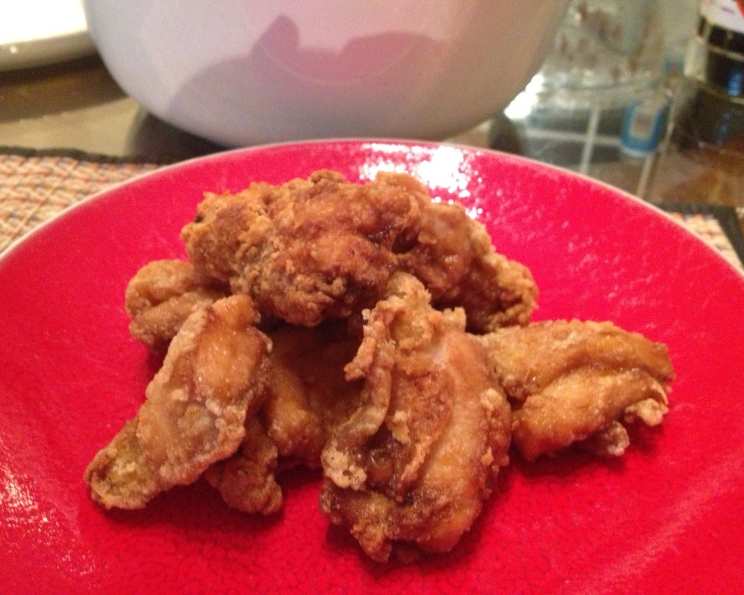
Japanese Crispy Fried Chicken (Kara-Age): A Taste of Tokyo at Home
The first time I tasted truly authentic kara-age was at a tiny, bustling izakaya tucked away in a back alley of Shinjuku. The aroma of hot oil and savory spices hung in the air, a comforting blanket against the cool Tokyo evening. I remember the anticipation as the golden-brown morsels were placed before me, each piece glistening invitingly. The first bite was pure bliss – an explosion of crispy, salty, savory goodness giving way to juicy, tender chicken. It was more than just fried chicken; it was an experience, a little piece of Tokyo magic I’ve been chasing ever since.
Recipe Overview
- Prep Time: 20 minutes
- Cook Time: 20 minutes
- Total Time: 40 minutes
- Servings: 4-6
- Yield: About 20-25 pieces
- Dietary Type: Not Gluten-Free
Ingredients
- 1 lb boneless chicken thighs, skin on if possible
- ½ tablespoon freshly grated ginger
- 1-2 cloves freshly grated garlic
- 3 tablespoons soy sauce
- 1 tablespoon sake (Japanese rice wine)
- Ground black pepper, to taste
- 1 cup potato starch, for dusting
- Vegetable oil, for frying
Equipment Needed
- Large ziploc bag or container
- Deep frying pan or wok
- Chopsticks or tongs
Instructions
-
Begin by preparing the chicken. Cut the boneless chicken thighs into bite-sized pieces, roughly 1-inch cubes. This size ensures even cooking and maximum crispiness.
-
Next, prepare the marinade. In a large ziplock bag or a non-reactive container, combine the freshly grated ginger, freshly grated garlic, soy sauce, and sake. This marinade is the key to infusing the chicken with that signature kara-age flavor.
-
Add the cut chicken to the marinade, ensuring that each piece is well coated. Seal the bag or cover the container tightly. Gently massage the chicken to distribute the marinade evenly.
-
Place the marinated chicken in the refrigerator and let it rest for at least 15-20 minutes. This allows the flavors to penetrate the chicken, resulting in a more flavorful and juicy final product. Longer marinating times (up to a few hours) are also acceptable and will intensify the flavor.
-
While the chicken is marinating, prepare for frying. Pour vegetable oil into a deep frying pan or wok. You’ll need enough oil to fully submerge the chicken pieces.
-
Heat the vegetable oil over medium-high heat to 180 degrees Celsius (350°F). Use a thermometer to ensure accuracy. If you don’t have a thermometer, you can test the oil by dropping a small piece of chicken into it. If the chicken sizzles immediately and turns golden brown within a few minutes, the oil is ready.
-
Remove the marinated chicken from the refrigerator. In a separate bowl or plate, spread the potato starch.
-
Dredge each piece of chicken in the potato starch, ensuring that it is fully coated. Shake off any excess starch. The potato starch is crucial for achieving that signature crispy texture.
-
Carefully place the chicken pieces into the hot oil, being careful not to overcrowd the pan. Overcrowding will lower the oil temperature and result in soggy chicken. Fry in batches, if necessary.
-
Fry the chicken for approximately 3-4 minutes per side, or until golden brown and crispy. To ensure even cooking, turn the chicken occasionally with chopsticks or tongs.
-
For extra crispiness, use chopsticks or tongs to lift the chicken from the oil periodically, allowing it to air out briefly. This helps to evaporate excess moisture and promote browning. This step isn’t strictly necessary, but it definitely makes a difference!
-
Once the chicken is cooked through and golden brown, remove it from the oil with chopsticks or tongs and place it on a wire rack lined with paper towels to drain any excess oil.
-
Season with ground black pepper to taste while the chicken is still hot.
-
Serve immediately and enjoy!
Expert Tips & Tricks
- Dark Meat is Key: While you can use chicken breast, chicken thighs are far superior for kara-age. The higher fat content in the thighs keeps the chicken incredibly juicy and prevents it from drying out during frying.
- Double Fry for Extra Crispiness: For an even crispier texture, try double frying. Fry the chicken at 325°F (160°C) for 5 minutes, let it rest for 5 minutes, then fry again at 350°F (180°C) for 2-3 minutes until golden brown.
- Don’t Overcrowd: As mentioned earlier, overcrowding the pan is a common mistake. It lowers the oil temperature, resulting in soggy chicken. Fry in batches to maintain the oil temperature.
- Starch Selection: While potato starch is preferred for its light and crispy texture, cornstarch can be used as a substitute if potato starch is unavailable.
- Flavor Boost: Experiment with adding a pinch of ginger powder or garlic powder to the potato starch for an extra layer of flavor.
Serving & Storage Suggestions
Kara-age is best served immediately while it’s hot and crispy. It’s delicious on its own or with a squeeze of lemon or a dipping sauce like Japanese mayonnaise (Kewpie), sriracha mayo, or a simple soy sauce and rice vinegar mixture.
Leftovers can be stored in an airtight container in the refrigerator for up to 3 days. To reheat, bake in a preheated oven at 350°F (175°C) for 10-15 minutes, or until heated through. You can also reheat in an air fryer for a similar result. Microwaving is not recommended as it will make the chicken soggy.
Freezing is not ideal, as the chicken will lose some of its crispiness upon thawing. However, if you must freeze, wrap the chicken tightly in plastic wrap and then place it in a freezer-safe bag or container. It can be stored in the freezer for up to 2 months. Thaw overnight in the refrigerator before reheating.
Nutritional Information
| Nutrient | Amount per Serving | % Daily Value |
|---|---|---|
| Calories | 400 kcal | 20% |
| Total Fat | 25g | 38% |
| Saturated Fat | 5g | 25% |
| Cholesterol | 100mg | 33% |
| Sodium | 900mg | 38% |
| Total Carbohydrate | 35g | 12% |
| Dietary Fiber | 3g | 12% |
| Sugars | 2g | – |
| Protein | 25g | 50% |
Note: Nutritional information is an estimate and may vary based on specific ingredients and cooking methods.
Variations & Substitutions
- Gluten-Free Kara-Age: Substitute the soy sauce with tamari (gluten-free soy sauce) and use rice flour or a gluten-free all-purpose flour blend instead of potato starch.
- Spicy Kara-Age: Add a pinch of cayenne pepper or a dash of chili oil to the marinade for a spicy kick.
- Lemon Pepper Kara-Age: Mix lemon zest and freshly ground black pepper into the potato starch before dredging the chicken.
- Garlic Lover’s Kara-Age: Increase the amount of garlic in the marinade or add some garlic powder to the potato starch.
- Ginger Forward Kara-Age: Likewise, increase the amount of ginger.
FAQs (Frequently Asked Questions)
Q: Can I use chicken breast instead of chicken thighs?
A: While you can use chicken breast, it tends to dry out more easily during frying. If using chicken breast, be sure not to overcook it and consider brining it beforehand to help retain moisture. Chicken thighs are the preferred choice for the juiciest kara-age.
Q: Can I marinate the chicken for longer than 20 minutes?
A: Yes, you can marinate the chicken for several hours or even overnight in the refrigerator. Longer marinating times will result in a more flavorful and tender chicken.
Q: What kind of oil is best for frying kara-age?
A: Vegetable oil, canola oil, or peanut oil are all good choices for frying kara-age. These oils have a high smoke point, which is important for deep frying.
Q: How do I know when the chicken is cooked through?
A: The chicken is cooked through when it reaches an internal temperature of 165°F (74°C). You can use a meat thermometer to check the temperature. The chicken should also be golden brown and crispy on the outside.
Q: My kara-age isn’t crispy enough. What am I doing wrong?
A: There are several reasons why your kara-age might not be crispy enough. Make sure your oil is hot enough (350°F or 180°C), don’t overcrowd the pan, and use potato starch rather than flour. Try double frying for extra crispiness.
Final Thoughts
Kara-age is more than just fried chicken; it’s a culinary adventure that transports you to the vibrant streets of Japan. Don’t be intimidated by the process – it’s surprisingly simple to recreate this iconic dish in your own kitchen. So gather your ingredients, put on some Japanese city-pop, and prepare to be amazed by the incredible flavor and satisfying crunch of homemade kara-age. I highly encourage you to try this recipe and share your results. Pair it with a crisp Japanese beer or a refreshing highball for the full izakaya experience. Kanpai!