
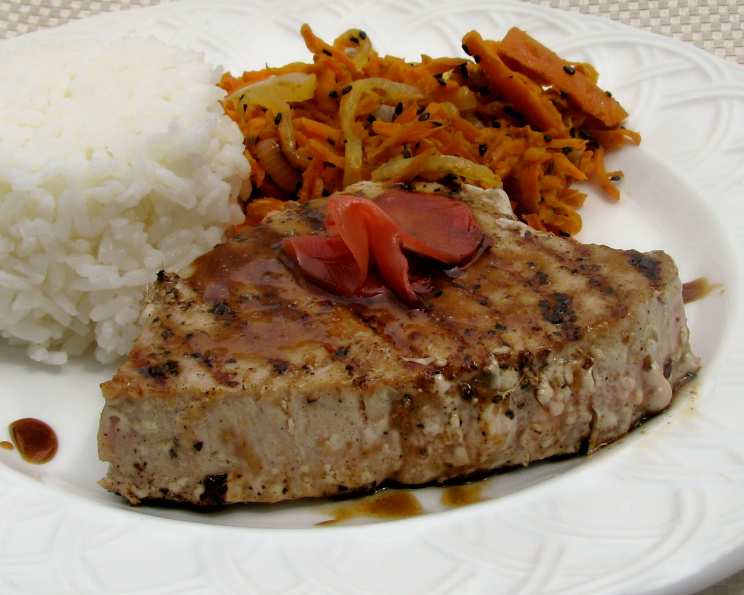
Japanese Grilled Tuna with Wasabi Soy Glaze
I still remember the first time I tasted truly exceptional grilled tuna. It was a tiny, unassuming restaurant in Kyoto, tucked away on a side street I’d stumbled upon during a downpour. The air hung thick with the scent of soy and grilling fish. What arrived was a ruby-red steak, kissed by fire, with a glaze that sang of sweet umami and a subtle, thrilling heat. That single bite sparked a lifelong pursuit of recreating that perfect balance, a journey that eventually led me to this recipe.
Recipe Overview
- Prep Time: 45 minutes (includes marinating)
- Cook Time: 4 minutes (for rare)
- Total Time: 49 minutes
- Servings: 4
- Dietary Type: Dairy-Free
Ingredients
- 1 tablespoon sesame oil
- 1 tablespoon vegetable oil
- 1 tablespoon grated gingerroot
- 1 tablespoon cracked black pepper (freshly cracked is best!)
- 4 (8 ounce) tuna steaks, about 1-inch thick
- Kosher salt, to taste
Wasabi Soy Sauce Glaze
- ½ cup granulated sugar
- ½ cup water
- ½ cup rice vinegar
- ¼ cup light soy sauce
- 4 slices ginger, smashed
- 2 teaspoons wasabi powder
- 1 tablespoon water
Equipment Needed
- Small bowl
- Plastic bag (for cracking pepper)
- Rolling pin or heavy pot
- Small saucepan
- Whisk
- Grill (gas or charcoal)
- Squeeze bottle or fork (for glazing)
Instructions
- In a small bowl, combine the sesame oil, vegetable oil, grated gingerroot, and cracked black pepper. This aromatic mixture will form the base of our marinade, infusing the tuna with incredible flavor.
- Brush the oil mixture generously onto both sides of the tuna steaks. Ensure each steak is thoroughly coated, paying special attention to the edges.
- Sprinkle the tuna steaks liberally with kosher salt. Don’t be shy! The salt will help to season the tuna and draw out moisture, resulting in a more flavorful and tender final product.
- Place the marinated tuna steaks in a dish and let them marinate in the refrigerator for 30 minutes. This allows the flavors to penetrate the fish.
- While the tuna is marinating, prepare the Wasabi Soy Sauce Glaze. In a small saucepan, combine the granulated sugar, water, rice vinegar, light soy sauce, and smashed ginger slices.
- Stir the mixture to dissolve the sugar. Ensure no sugar granules remain undissolved before proceeding to the next step.
- Bring the mixture to a boil over high heat. Once boiling, reduce the heat and simmer until the glaze has thickened and become syrupy, about 15 minutes. The glaze should coat the back of a spoon.
- While the glaze is simmering, prepare the wasabi paste. In a small bowl, combine the wasabi powder and water. Stir until a smooth paste forms.
- Remove the glaze from the heat and whisk in the wasabi paste. Be careful, as adding the wasabi can create some steam.
- Allow the glaze to cool to room temperature before using. The glaze can be prepared ahead of time and stored in the refrigerator for up to two weeks. If it becomes too thick, thin it down with a little water before using.
- Preheat your grill to high heat. Ensure the grill grates are clean and lightly oiled to prevent the tuna from sticking.
- Remove the tuna steaks from the marinade.
- Grill the tuna for 2 minutes per side with the lid closed for very rare. For medium-rare, grill for 3 to 4 minutes per side. Remember, tuna is best served rare to medium-rare to maintain its tenderness and flavor. Overcooking will result in a dry, less enjoyable steak.
- Remove the tuna from the grill and let it rest for a few minutes before serving.
- Use either a squeeze bottle or a fork to streak the glaze generously over the grilled tuna.
Expert Tips & Tricks
- For the best flavor, use high-quality sushi-grade tuna.
- Don’t overcook the tuna! Rare to medium-rare is ideal. Use a meat thermometer to ensure accuracy. The internal temperature for medium-rare is 125-130°F (52-54°C).
- Freshly cracked black pepper makes a significant difference in flavor compared to pre-ground pepper.
- If you don’t have a grill, you can pan-sear the tuna in a hot skillet with a little oil. Cook for the same amount of time as grilling.
- For a deeper, richer flavor, try using dark soy sauce instead of light soy sauce in the glaze.
- If you prefer a spicier glaze, add more wasabi paste to taste.
- To ensure even cooking, make sure your tuna steaks are of uniform thickness.
Serving & Storage Suggestions
Serve the Japanese Grilled Tuna with Wasabi Soy Glaze immediately after grilling. It pairs beautifully with steamed rice, a refreshing cucumber salad, or grilled asparagus. Garnish with sesame seeds and thinly sliced scallions for an extra touch of elegance.
Leftover tuna should be stored in an airtight container in the refrigerator for up to 24 hours. It’s best enjoyed cold or at room temperature, as reheating can cause it to become dry. The glaze can be stored separately in the refrigerator for up to two weeks.
Nutritional Information
| Nutrient | Amount per Serving | % Daily Value |
|---|---|---|
| Calories | 499.7 kcal | N/A |
| Calories from Fat | 161 kcal | N/A |
| Total Fat | 18 g | 27% |
| Saturated Fat | 3.8 g | 18% |
| Cholesterol | 86.2 mg | 28% |
| Sodium | 1115.6 mg | 46% |
| Total Carbohydrate | 27.3 g | 9% |
| Dietary Fiber | 0.6 g | 2% |
| Sugars | 25.3 g | N/A |
| Protein | 55 g | N/A |
Variations & Substitutions
- Gluten-Free: Use tamari instead of soy sauce in the glaze to make this recipe gluten-free.
- Spicy Tuna: Add a pinch of red pepper flakes to the marinade for a spicy kick.
- Citrus Glaze: Substitute some of the rice vinegar in the glaze with lemon or lime juice for a brighter, more citrusy flavor.
- Different Fish: While tuna is traditional, this recipe also works well with other firm-fleshed fish like swordfish or salmon. Just adjust the cooking time accordingly.
FAQs (Frequently Asked Questions)
Q: Can I use a different type of oil for the marinade?
A: Yes, you can substitute other oils like avocado oil or grapeseed oil, but sesame oil adds a distinct, nutty flavor that complements the other ingredients beautifully.
Q: How can I tell if the tuna is cooked to the right level of doneness?
A: The best way is to use a meat thermometer. For rare, the internal temperature should be around 115-125°F (46-52°C). For medium-rare, it should be 125-130°F (52-54°C).
Q: Can I make the glaze ahead of time?
A: Absolutely! The glaze can be made up to two weeks in advance and stored in the refrigerator. Just be sure to thin it with a little water if it becomes too thick.
Q: What’s the best way to crack peppercorns without a pepper grinder?
A: Place the peppercorns in a plastic bag and bash them with a rolling pin or the back of a heavy pot.
Q: Is it safe to eat tuna rare?
A: As long as you’re using high-quality, sushi-grade tuna from a reputable source, it’s generally safe to eat it rare. However, if you have any concerns, consult with your doctor.
Final Thoughts
This Japanese Grilled Tuna with Wasabi Soy Glaze is more than just a recipe; it’s an invitation to experience the vibrant flavors of Japan in your own kitchen. Don’t be intimidated by the seemingly complex steps; the process is surprisingly straightforward, and the result is truly rewarding. So, fire up your grill, gather your ingredients, and prepare to be transported to a tiny Kyoto restaurant with every delectable bite. And please, share your creations and feedback – I’d love to hear about your culinary journey! Consider pairing this dish with a chilled bottle of sake or a crisp, dry white wine for the ultimate dining experience.