
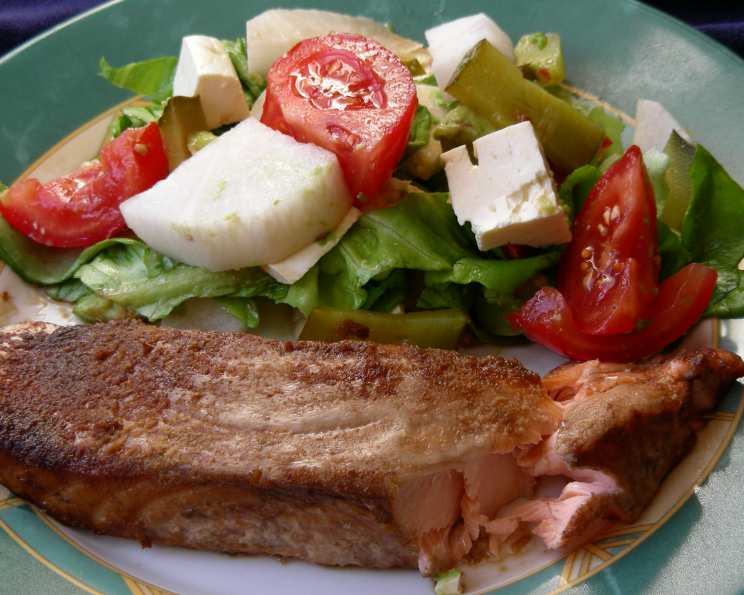
Japanese Marinated Salmon Fillet: A Taste of Umami
I remember the first time I tasted salmon prepared this way. It was at a tiny, unassuming restaurant in Kyoto, tucked away on a side street. The chef, a kind woman with hands that moved with the grace of a dancer, presented the dish simply: a glistening piece of salmon, its surface shimmering with a subtle glaze. One bite, and I was transported. The delicate sweetness, the salty depth, the whisper of ginger and garlic – it was an explosion of flavor that lingered long after the last morsel was gone. I knew I had to recreate this magic at home.
Recipe Overview
- Prep Time: 15 minutes
- Cook Time: 15-20 minutes
- Total Time: 1 hour 30 minutes (includes marinating time)
- Servings: 4
- Dietary Type: Pescatarian
Ingredients
- 1 lb salmon fillet
- 2 tablespoons reduced sodium soy sauce
- 1 tablespoon lemon juice
- 1 tablespoon brown sugar
- 1 tablespoon garlic, minced
- 1 teaspoon ginger, minced
Equipment Needed
- 8-inch square baking dish
- Small bowl
- Whisk or fork
- Plastic wrap
- Aluminum foil
Instructions
-
Arrange the salmon fillet, skin-side up, in an 8-inch square baking dish. This ensures even cooking and prevents the fish from sticking to the bottom.
-
In a small bowl, whisk together the reduced sodium soy sauce, lemon juice, brown sugar, minced garlic, and minced ginger. Stir until the brown sugar has completely dissolved. This creates a balanced marinade with sweet, savory, and acidic notes that complement the richness of the salmon.
-
Pour the marinade over the salmon, turning the fish over once to ensure it’s evenly coated. This step is crucial for infusing the salmon with the delicious flavors of the marinade.
-
Cover the baking dish tightly with plastic wrap and chill in the refrigerator for one hour. This marinating time allows the flavors to penetrate the salmon, resulting in a more flavorful and tender dish. Don’t skip this step!
-
Preheat your oven to 375 degrees Fahrenheit (190 degrees Celsius). Make sure your oven is properly preheated to ensure even cooking.
-
Remove the plastic wrap from the baking dish. Cover the dish tightly with aluminum foil. This helps to trap moisture and prevents the salmon from drying out during baking.
-
Bake for 15-20 minutes, or until the salmon is cooked through and flakes easily with a fork. The exact cooking time will depend on the thickness of your salmon fillet. Start checking for doneness at 15 minutes. To check for doneness, gently insert a fork into the thickest part of the salmon. If it flakes easily, it’s ready.
Expert Tips & Tricks
- For a deeper flavor: Marinate the salmon for longer than one hour. You can marinate it for up to four hours in the refrigerator. Just be sure to keep it covered.
- Spice it up: Add a pinch of red pepper flakes to the marinade for a subtle kick of heat.
- Make ahead: Prepare the marinade ahead of time and store it in the refrigerator for up to 24 hours. This saves time on busy weeknights.
- Broiling for a glazed finish: For a slightly caramelized and glazed finish, remove the foil during the last 2-3 minutes of baking and broil the salmon on high, keeping a close eye on it to prevent burning.
- Don’t overcook: Overcooked salmon is dry and tough. Use a meat thermometer to ensure the internal temperature reaches 145°F (63°C).
- Freshness matters: Use the freshest salmon you can find. The quality of the salmon will significantly impact the final flavor of the dish. Look for bright, firm fillets with a fresh, clean smell.
- Even thickness: If your salmon fillet is uneven in thickness, consider folding the thinner end under to ensure even cooking.
- Ginger Grating Hack: Instead of mincing fresh ginger, use a microplane grater to create a fine paste. This intensifies the ginger flavor and prevents stringy pieces.
Serving & Storage Suggestions
Serve the Japanese Marinated Salmon Fillet immediately after cooking for the best flavor and texture. It pairs beautifully with steamed rice, roasted vegetables, or a fresh salad. Garnish with a sprinkle of sesame seeds and some chopped green onions for added flavor and visual appeal.
To store leftovers, let the salmon cool completely before transferring it to an airtight container. Store in the refrigerator for up to 3 days. Reheat gently in a microwave or oven until warmed through. Avoid over-reheating, as this can dry out the salmon.
Storage Times:
- Room Temperature: Do not leave cooked salmon at room temperature for more than 2 hours.
- Refrigerator: 3 days
- Freezer: Freezing cooked salmon is not recommended as it can significantly alter the texture.
Nutritional Information
| Nutrient | Amount per Serving | % Daily Value |
|---|---|---|
| Calories | 155.3 kcal | N/A |
| Calories from Fat | 35 g | 23% |
| Total Fat | 4 g | 6% |
| Saturated Fat | 0.7 g | 3% |
| Cholesterol | 59.1 mg | 19% |
| Sodium | 378 mg | 15% |
| Total Carbohydrate | 5.5 g | 1% |
| Dietary Fiber | 0.2 g | 0% |
| Sugars | 3.6 g | N/A |
| Protein | 23.3 g | 46% |
Note: Nutritional information is an estimate and may vary based on specific ingredients and portion sizes.
Variations & Substitutions
- Gluten-Free: Ensure the soy sauce is gluten-free (tamari is a great substitute).
- Lower Sugar: Use a sugar substitute like erythritol or stevia in place of brown sugar.
- Citrus Twist: Try using orange juice or grapefruit juice instead of lemon juice for a different citrus flavor.
- Herbaceous Note: Add a teaspoon of grated fresh ginger and a tablespoon of chopped cilantro to the marinade for a more complex flavor profile.
- Spicy Kick: Add a pinch of cayenne pepper or a few drops of sriracha to the marinade for a spicy version.
- Maple Glaze: Replace the brown sugar with maple syrup for a richer, more nuanced sweetness.
FAQs (Frequently Asked Questions)
Q: Can I use frozen salmon for this recipe?
A: Yes, you can use frozen salmon. Thaw it completely in the refrigerator before marinating and cooking. Ensure all excess water is patted dry before marinating.
Q: How do I know when the salmon is cooked through?
A: The salmon is cooked through when it flakes easily with a fork and the internal temperature reaches 145°F (63°C).
Q: Can I grill the salmon instead of baking it?
A: Yes, you can grill the salmon. Place the salmon skin-side down on a preheated grill and cook for about 4-6 minutes per side, or until cooked through.
Q: Can I marinate the salmon overnight?
A: While a longer marinating time can enhance flavor, marinating overnight can sometimes result in a mushy texture. It is best to limit the marinating time to a maximum of 4 hours.
Q: What can I serve with this salmon?
A: This salmon pairs well with steamed rice, quinoa, roasted vegetables (such as broccoli, asparagus, or green beans), or a fresh salad.
Final Thoughts
This Japanese Marinated Salmon Fillet is a testament to the power of simple ingredients and careful preparation. The combination of savory, sweet, and tangy flavors creates a truly unforgettable culinary experience. Don’t be intimidated by the seemingly exotic flavors; this recipe is surprisingly easy to make at home. I encourage you to give it a try and share your experience with others. Pair it with a crisp glass of sake or a light white wine for a complete and satisfying meal. Happy cooking!