
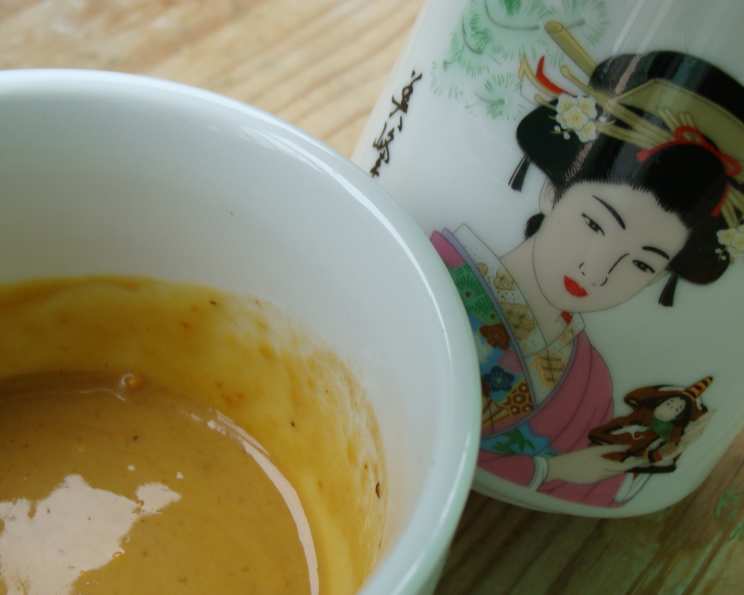
The Zesty Kick: Mastering Karashi, Japanese Mustard Dipping Sauce
I remember the first time I encountered karashi. It wasn’t in some fancy Tokyo restaurant, but at a humble street food stall in Osaka. I was hesitantly eyeing a plate of gyoza, unsure of what to dip them in. The vendor, a kind-faced woman with a warm smile, pointed to a small dish filled with an unassuming yellow paste. “Try this,” she insisted. One tiny dab later, and my taste buds exploded. The initial sweetness gave way to a surprisingly potent heat, a flavor so intense and unique it instantly elevated the simple dumplings to something extraordinary. That day, karashi transcended from just a condiment to a core culinary memory.
Recipe Overview
- Prep Time: 5 minutes
- Cook Time: 0 minutes
- Total Time: 5 minutes
- Servings: 1
- Dietary Type: Vegetarian
Ingredients
- 2 tablespoons soy sauce
- 2 tablespoons sake
- 1 tablespoon Dijon mustard
- 1/4 teaspoon hot pepper sauce
Equipment Needed
- Small bowl
- Whisk or fork
Instructions
- In a small bowl, combine the soy sauce and sake.
- Add the Dijon mustard to the mixture.
- Carefully incorporate the hot pepper sauce.
- Whisk or stir vigorously until all ingredients are thoroughly blended and the sauce is smooth.
- Taste the sauce and adjust the amount of hot pepper sauce to your liking. Some like it hotter, some milder. Start with a small amount and increase gradually.
Expert Tips & Tricks
- Mustard Magic: While the recipe calls for Dijon mustard, feel free to experiment with other types of mustard for slightly different flavor profiles. A grainy mustard will add texture, while a whole-grain mustard will bring a different kind of zest.
- Sake Substitute: If you don’t have sake on hand, a dry sherry can be used as a substitute. In a pinch, a little water will work, but it dilutes the flavor slightly, so consider adding a touch more soy sauce.
- Heat Control: Be cautious with the hot pepper sauce. It’s easier to add more heat than to take it away. Start with a tiny amount and gradually increase until you reach your desired spice level. Consider using chili oil for a richer, nuanced heat.
- Flavor Boost: A tiny drop of sesame oil can add a fantastic nutty aroma to the dipping sauce. Just be careful not to overpower the other flavors; a little goes a long way.
- Sweetness Adjustment: If you prefer a slightly sweeter karashi, consider adding a tiny splash of mirin (sweet rice wine) or a pinch of sugar.
Serving & Storage Suggestions
Serve your homemade karashi dipping sauce immediately for the best flavor and aroma. It’s an excellent accompaniment to gyoza, egg rolls, spring rolls, and other fried or steamed appetizers. It also works surprisingly well with grilled meats or vegetables, adding a zesty kick to simple dishes.
If you have any leftovers, store the sauce in an airtight container in the refrigerator. It will keep for a short period, about 2-3 days, though the flavors may mellow slightly over time. While it can be kept, this sauce is best freshly made, so try to only prepare as much as you anticipate using at one time. The sauce is not suitable for freezing, as the texture and flavor will be negatively affected.
Nutritional Information
| Nutrient | Amount per Serving | % Daily Value |
|---|---|---|
| Calories | 71 kcal | 4% |
| Total Fat | 4.6 g | 6% |
| Saturated Fat | 0.4 g | 2% |
| Cholesterol | 0 mg | 0% |
| Sodium | 2211 mg | 92% |
| Total Carbohydrate | 4.7 g | 2% |
| Dietary Fiber | 0.8 g | 3% |
| Sugars | 1.1 g | 2% |
| Protein | 4.5 g | 9% |
Note: Nutritional information is an estimate and may vary based on specific ingredients and portion sizes.
Variations & Substitutions
- Gluten-Free Karashi: Ensure that your soy sauce is gluten-free (tamari is a great option). Most Dijon mustards are naturally gluten-free, but double-check the label to be sure.
- Vegan Karashi: This recipe is already vegan!
- Spicy Citrus Karashi: Add a teaspoon of yuzu juice or lime juice along with a pinch of yuzu zest or lime zest for a bright, citrusy twist. Adjust the amount of hot pepper sauce to compensate for the added acidity.
- Japanese Mustard Powder: For a more authentic Japanese experience, substitute Dijon mustard with Japanese mustard powder (karashi). Mix the powder with a little warm water to form a paste before adding it to the other ingredients. Be warned, Japanese mustard powder is much hotter than Dijon, so use it sparingly!
- Milder Karashi: Reduce or omit the hot pepper sauce entirely for a milder flavor. You can also add a touch more sake or soy sauce to dilute the heat.
FAQs (Frequently Asked Questions)
Q: Can I make this ahead of time?
A: Yes, you can make karashi a few hours in advance. Store it in an airtight container in the refrigerator until ready to serve. However, the flavors are best when freshly made.
Q: What can I substitute for sake?
A: If you don’t have sake on hand, a dry sherry or even a bit of dry white wine can be used as a substitute.
Q: How long does this sauce last?
A: Karashi will last for about 2-3 days in the refrigerator in an airtight container, though the flavors may mellow over time.
Q: Can I use a different type of hot sauce?
A: Absolutely! Experiment with your favorite hot pepper sauces. Just be mindful of the heat level and adjust accordingly.
Q: I don’t like spicy food. Can I still make this?
A: Of course! Simply omit the hot pepper sauce entirely or use a very small amount for just a hint of warmth.
Final Thoughts
There you have it – a simple yet intensely flavorful karashi dipping sauce, ready to elevate your favorite Asian appetizers and beyond. Don’t be afraid to experiment with the ingredients and adjust the flavors to suit your personal preferences. I encourage you to step into your kitchen, try this recipe, and share your creations and feedback with me! This is more than just a recipe; it’s an invitation to explore the vibrant world of Japanese cuisine and add a touch of zest to your everyday meals. Enjoy!