
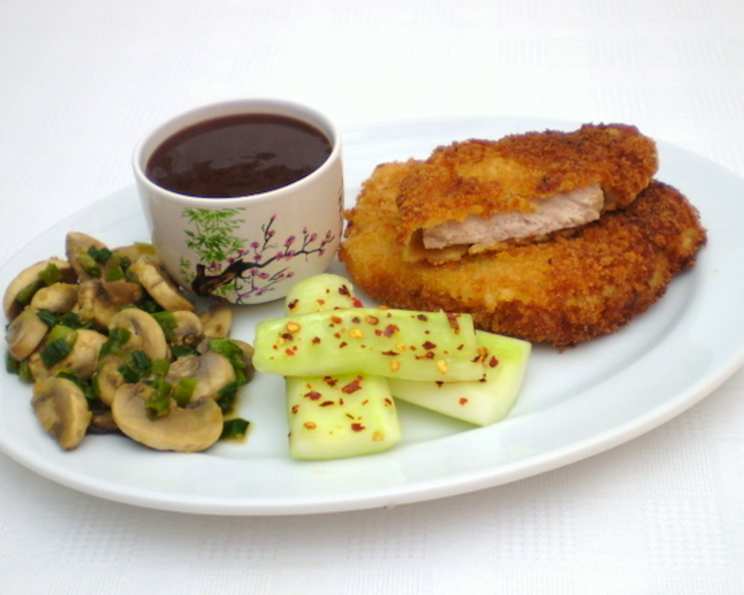
Japanese-Style Crispy Pork: A Culinary Journey
The sizzle of peanut oil, the aroma of toasted spices, and the satisfying crunch of panko breadcrumbs – these are the sense memories that transport me back to a tiny, bustling kitchen in Osaka. My grandmother, a woman of few words but incredible culinary skill, would often make this dish. It wasn’t just food; it was an experience – a warm, comforting embrace in the form of perfectly crisp pork, a spicy, cooling contrast of cucumbers, and the umami-rich depth of tonkatsu sauce. Each bite was a testament to simple ingredients transformed into something extraordinary.
Recipe Overview
- Prep Time: 20 minutes
- Cook Time: 15-20 minutes
- Total Time: 35-40 minutes
- Servings: 4
- Yield: 4 cutlets
- Dietary Type: Varies (see substitutions for gluten-free)
Ingredients
- 1 lb thin-cut boneless pork chops or 1 lb pork cutlet, trimmed
- Kosher salt
- 2 tablespoons rice wine (sake) or 2 tablespoons sherry wine
- 1 1/2 teaspoons finely grated peeled ginger
- 2 medium cucumbers
- 1/2 – 1 teaspoon sugar
- 2 teaspoons rice wine vinegar
- 1 1/2 teaspoons red pepper flakes
- 3 large eggs
- 2 cups panko breadcrumbs (Japanese breadcrumbs)
- 3/4 cup cornstarch
- Peanut oil, for frying
- 1/4 cup Tonkatsu sauce (a sweet-spicy Japanese dipping sauce)
Equipment Needed
- Cutting board
- Chef’s knife
- Shallow bowls or dishes (3)
- Large skillet
- Paper towels
- Tongs
Instructions
-
Begin by prepping the pork. Generously season the pork chops or cutlets with kosher salt on both sides. Don’t be shy with the salt – it’s crucial for flavor.
-
In a small bowl, mix together the rice wine (or sherry wine) and 1 teaspoon of the finely grated ginger. This mixture will serve as a quick marinade, adding a touch of sweetness and warmth to the pork.
-
Spread the rice wine and ginger mixture evenly over both sides of the pork. This tenderizes the meat and infuses it with flavor.
-
Stack the pork chops or cutlets on top of each other. This allows the marinade to penetrate all the layers effectively. Set the stack aside to marinate for at least 10 minutes, or up to 30 minutes in the refrigerator.
-
While the pork marinates, prepare the spicy cucumbers. Peel, quarter, and seed the 2 medium cucumbers.
-
Cut the cucumber quarters into 4-inch spears. Aim for uniform sizes for even flavor distribution.
-
In a medium bowl, toss the cucumber spears with the sugar and rice wine vinegar. The sugar balances the vinegar’s acidity, while the vinegar adds a refreshing tang.
-
Now, prepare the spiced salt. In a dry skillet over medium heat, toast the red pepper flakes with 1 tablespoon of kosher salt for about 4 minutes. Stir frequently to prevent burning. Toasting the spices releases their aromatic oils, intensifying their flavor.
-
Once toasted, remove the spiced salt from the skillet and set aside to cool.
-
Prepare the breading station. In a shallow bowl, beat the 3 large eggs with 1/2 cup of water. The water thins the eggs, creating a lighter coating.
-
Place the 2 cups of panko breadcrumbs and 3/4 cup of cornstarch in two separate shallow bowls. Make sure you use panko breadcrumbs for the best results – their larger size creates a superior crispy texture compared to regular breadcrumbs.
-
Dredge each piece of pork thoroughly in the cornstarch, ensuring it’s fully coated. The cornstarch helps the egg adhere to the pork and contributes to the crispy texture.
-
Dip the cornstarch-coated pork into the beaten egg mixture, ensuring it’s completely submerged.
-
Coat the egg-dipped pork with the panko breadcrumbs, pressing gently to help them adhere. Make sure every surface is covered with panko for maximum crispiness.
-
Heat approximately 1/4 inch of peanut oil in a large skillet over medium-high heat. The oil should be hot enough to sizzle gently when a breadcrumb is dropped in. Peanut oil has a high smoke point, making it ideal for frying.
-
Carefully fry the pork in batches, being careful not to overcrowd the skillet. Overcrowding will lower the oil temperature, resulting in soggy pork.
-
Fry the pork for 3 to 4 minutes per side, or until golden brown and cooked through. The internal temperature of the pork should reach 145°F (63°C).
-
Once cooked, remove the pork from the skillet and place it on a plate lined with paper towels to drain excess oil.
-
Sprinkle the cucumbers with some of the spiced salt, adjusting the amount to your preference. The spiced salt adds a flavorful kick to the cooling cucumbers.
-
In a small bowl, mix together the tonkatsu sauce and the remaining 1/2 teaspoon of finely grated ginger. This creates a flavorful dipping sauce with a hint of warmth.
-
Serve the crispy pork immediately with the spicy cucumbers and tonkatsu sauce.
Expert Tips & Tricks
- Panko is key: Don’t substitute regular breadcrumbs for panko; it won’t give you the same light, crispy texture.
- Don’t overcrowd the pan: Fry in batches to maintain oil temperature.
- Double Fry: For extra crispness, fry the pork once at a slightly lower temperature (325°F), let it rest for a few minutes, then fry again at a higher temperature (375°F) until golden brown.
- Make Ahead: You can bread the pork ahead of time and store it in the refrigerator for up to 24 hours before frying. This allows the breading to adhere even better.
Serving & Storage Suggestions
Serve immediately while the pork is at its crispiest. This dish is fantastic with a side of steamed rice and a simple green salad.
Leftovers can be stored in an airtight container in the refrigerator for up to 3 days. Reheat in a 350°F oven or in an air fryer to restore some of the crispness. Microwaving is not recommended as it will make the pork soggy.
Nutritional Information
| Nutrient | Amount per Serving | % Daily Value |
|---|---|---|
| Calories | 573 kcal | N/A |
| Total Fat | 14.6g | 22% |
| Saturated Fat | 4.7g | 23% |
| Cholesterol | 215.5mg | 71% |
| Sodium | 508.7mg | 21% |
| Total Carbohydrate | 68.3g | 22% |
| Dietary Fiber | 3.7g | 14% |
| Sugars | 6.6g | N/A |
| Protein | 37.6g | 75% |
Note: Nutritional information is an estimate and may vary based on specific ingredients and cooking methods.
Variations & Substitutions
- Gluten-Free: Use gluten-free panko breadcrumbs and gluten-free cornstarch. Tamari can be used as a substitute for Tonkatsu sauce.
- Spicy: Add more red pepper flakes to the cucumber mixture or a dash of chili oil to the tonkatsu sauce.
- Vegetarian: Substitute thick slices of firm tofu for the pork. Press the tofu to remove excess moisture before breading and frying.
- Herbs: Add finely chopped fresh herbs like cilantro or parsley to the panko breadcrumbs for added flavor and color.
FAQs (Frequently Asked Questions)
Q: Can I use pork loin instead of pork chops?
A: Yes, you can use pork loin. Just make sure to slice it thinly (about 1/4 inch thick) against the grain for tenderness.
Q: What can I use if I don’t have rice wine (sake)?
A: Dry sherry or even a dry white wine can be used as a substitute for rice wine.
Q: How do I keep the panko from burning while frying?
A: Maintain the oil temperature at a consistent medium-high heat. If the panko starts to brown too quickly, reduce the heat slightly.
Q: Can I bake the pork instead of frying it?
A: While frying provides the best crispness, you can bake the pork. Place the breaded pork on a baking sheet lined with parchment paper, drizzle with oil, and bake at 400°F (200°C) for about 15-20 minutes, flipping halfway through.
Q: What is Tonkatsu sauce, and can I make it at home?
A: Tonkatsu sauce is a sweet and tangy Japanese sauce. You can make your own by mixing 2 tablespoons each of ketchup, Worcestershire sauce, and sugar with 1 tablespoon of water.
Final Thoughts
Now it’s your turn! Gather your ingredients, embrace the sizzle, and create your own unforgettable Japanese-style crispy pork. Whether you’re a seasoned chef or a beginner in the kitchen, this recipe is a fantastic way to explore new flavors and techniques. Don’t hesitate to experiment with variations and substitutions to make it your own. Serve it with a chilled glass of sake or a crisp Japanese beer and enjoy! Share your creations and feedback – I’d love to see your culinary masterpieces!